
We begin the concert with Guilliame Connesson’s “Celephais” from Les Cités de Lovecraft, inspired by the fantasy stories of H.P. Lovecraft. Awadagin Pratt returns to perform Mozart’s Piano Concerto No. 23. The Syracuse Orchestra also presents Symphony No. 5 by Prokofiev, which is one of his most popular works and was his hymn to a “free and happy man”.
PROGRAM
GUILLAUME CONNESSON: Celephais from Les Cités de Lovecraft
MOZART: Concerto No. 23 in A major for Piano and Orchestra, K. 488
PROKOFIEV: Symphony No. 5 in B-flat major, Opus 100
Thank you to our generous sponsors!
Thank you to our Series sponsors!
Masterworks Series Sponsor:

Exclusive Auto Sponsor:

Masterworks Series Media Sponsor:

Thank you to our concert sponsors!
David Abrams

PROGRAM NOTES
“He’s one of the most phenomenal orchestrators alive—and maybe ever, full stop.” Strong words from tonight’s conductor Jacob Joyce about French composer Guillaume Connesson (b. 1970)—but after listening to Céléphaïs (the first tone poem in his triptych, Les Cités de Lovecraft), you’re liable to agree. The work, composed in 2017, is a musical description of the city Celephaïs, a dream city that appears in the writings of the early twentieth-century science-fiction and fantasy writer H.P. Lovecraft. It’s a place ...
“He’s one of the most phenomenal orchestrators alive—and maybe ever, full stop.” Strong words from tonight’s conductor Jacob Joyce about French composer Guillaume Connesson (b. 1970)—but after listening to Céléphaïs (the first tone poem in his triptych, Les Cités de Lovecraft), you’re liable to agree. The work, composed in 2017, is a musical description of the city Celephaïs, a dream city that appears in the writings of the early twentieth-century science-fiction and fantasy writer H.P. Lovecraft. It’s a place where time stands still and nothing corrodes; and in describing it, Lovecraft favored extravagant prose and garish imagery, which takes their cues from a wide range of writers from Poe through the French Symbolists on to Oscar Wilde.
Connesson, who has been a fan of the writer since his teenage years, took full advantage of, as Jacob puts it, “his ability to write for specific sections of the orchestra in a way that’s very idiomatic, very Ravel-like. It also reminds me a little bit of the Stravinsky ballets, especially Firebird.” According to the score, Céléphaïs takes us through bronze gates along onyx streets to a turquoise temple and “The Rose Crystal Palace of Seventy Delights,” ending with a long crescendo that marks the “Seven Processions of Priests crowned in Orchids.” And the music is just as luxurious, as rich, as sparkling, and as colorful as the imagery, full of infectious dance rhythms and sumptuous melodies. In sum, it’s an extremely alluring work, both sophisticated and listener-friendly, and it’s hard to understand why it’s not better known.
The Symphony No. 5 by Sergei Prokofiev (1891-1953) is superbly orchestrated too. But while Prokofiev could, as Jacob says, write “sparkling orchestration that you find in Connesson”—and while he was capable of magic and enchantment (as in Cinderella)—the sound of the Fifth, for reasons that will be clear, is much more grounded in the grit of the real world. Even so, says Jacob, “It has moments where the real draw, or the real attraction, is the orchestration and his unique choices and combinations of instruments, playing techniques, and the like.” But besides the color, Jacob points out, there are two other important lenses through which you can approach the piece: the political and the formal.
With the permission of the Soviet government, Prokofiev had been living in Europe (especially Paris) and the United States for nearly two decades, but he chose to return to the Soviet Union at the height of Stalinism in 1936. In so doing, he willingly backed off from his earlier edgy style, instead committing himself to writing more accessible music aimed at a broader public. He found the circumstances in Russia less congenial than he had hoped (in fact, even with his softened style, he was excoriated by the powers-that-be in 1948 for excessive modernism). Nonetheless, many of his most popular compositions were written under those harsh and often oppressive circumstances: Peter and the Wolf, Alexander Nevsky, and Romeo and Juliet were among them, as was the Fifth Symphony.
The Fifth was written in 1944, during the Second World War, while Prokofiev was living at the Ivanovo Composers’ House about 150 miles from Moscow. Two years earlier, Dmitri Shostakovich—Prokofiev’s rival as the Great Soviet Composer—had composed his massive Seventh Symphony during the German siege of Leningrad. As with all of Shostakovich’s music, there’s some doubt about its inner meanings, but it certainly served as a musical symbol of resistance and resilience, both in the Soviet Union and in the West, where it was taken up immediately by conductors like Toscanini (who was not normally sympathetic to new music) and Stokowski (who was). By the time Prokofiev got around to his Fifth—his first symphony in sixteen years—the military situation had changed. Indeed, the premiere, the last time the composer conducted, took place at almost the exact moment that the Red Army pushed across the Vistula into German-held territory. Pianist Sviatoslav Richter, a close friend of the composer, described Prokofiev waiting on the podium for artillery salvoes celebrating the event to recede, bathed in a mysterious “light [that] poured down on him from on high.” That description testifies to the power of the occasion; no surprise, then, that the work overwhelmed its first audience, who saw in it a kind of transcendence.
Lots of works that are connected to specific occasions, of course, are quickly forgotten once the occasion has passed. Prokofiev’s Fifth, however, has continued to inspire audiences for over eighty years, standing with Beethoven’s Fifth as one of the great victory symphonies. It has survived, I think, because it does more than simply celebrate victory—in a sense, it enacts it. Here’s where the formal elements become important. Structurally, the symphony relies on traditional forms that are fairly well marked; and each of the four movements begins relatively simply. Each, however, finds its path obstructed. As Jacob puts it, “A lot of the things that you expect to get concluded end up crashing in on themselves instead. It’s kind of a symphony of deferral of any resolution.”
The two main themes of the opening Andante, for instance, are flavored with the honey that characterizes Prokofiev’s most lyrical music—but almost before we’ve gotten accustomed to them, each theme is attacked by acid, leading to an especially tense development. And while the tension eventually resolves in an unusually prolonged coda, for much of the movement we are on the edge of our seats wondering whether the music will end in a whimper or in triumph.
There’s a similar disruption in the second movement. It begins in a jaunty way, with an almost jazzy feel, and the opening section leads to a contrasting section that makes clear we are in a standard ABA form. But there’s plenty of disorientation in that B section, and when the A section returns, it’s almost nightmarish in its mechanistic advance. Then, too, notes Jacob, “For the end of the third movement, you would expect a beautiful major final chord that’s been set up for 10 minutes. You kind of get it, but it’s voiced very oddly, and it’s clearly not a full resolution.” As a result, by the time we reach the closing pages of the finale, we feel the thrill of a truly hard-won victory.
In between these two overwhelming and brilliantly orchestrated works, we have something less explosive: the Piano Concerto No. 23 in A, K. 488 by Wolfgang Amadeus Mozart (1756–1791). Composed in Vienna in 1786, it aims for a fairly intimate sound— dispensing with oboes, trumpets, and drums, but emphasizing the dark sound of the clarinets, with which he was increasingly fascinated. It has come to be one of Mozart’s most oft-performed and recorded piano concertos—although its character is slightly elusive. It was, for instance, the only Mozart concerto recorded by the super-virtuoso Vladimir Horowitz, but it’s neither an intensely dramatic piece nor in any way a show-off piece for the pianist. And while the Concerto No. 23 has also been championed by numerous jazz artists (Chick Corea, Keith Jarrett, Jacques Loussier), nothing in it quite matches the screwball finale of the Concerto No. 19 for syncopated uplift.
It may be the concerto’s proximity to The Marriage of Figaro (finished less than two months later) that provides the strongest clue to its character. Mozart’s concertos are often known for their operatic qualities, with the soloist taking on the qualities of a singer, and that certainly happens in the slow movement here. Specifically, the concerto’s breathtaking central Adagio—in the key of F-sharp minor, rare for Mozart—may bring to mind “Porgi, amor, qualche ristoro,” the famous aria from Figaro, in which the abandoned countess mourns over the Count’s infidelities. Certainly, the Concerto’s slow movement is similar in spirit: poignant but not tragic, regretful but not self-pitying. If there’s any movement in Mozart’s concertos that can bring tears, it’s this one.
Peter J. Rabinowitz
Have any comments or questions? Please write to me at prabinowitz@SyracuseOrchestra.org
FEATURED ARTISTS
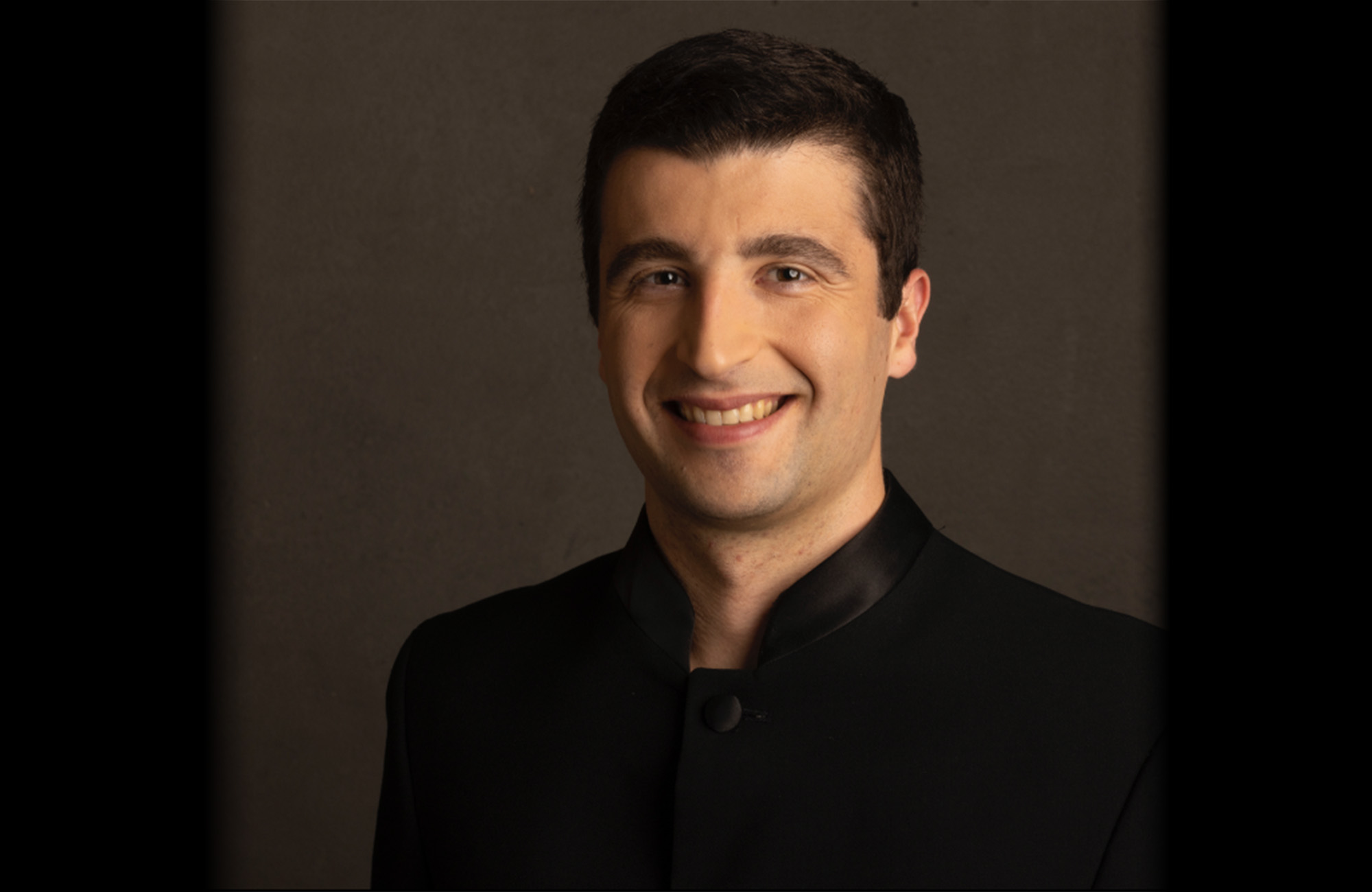
Currently serving as the Associate Conductor of the Pittsburgh Symphony Orchestra and the Music Director of the Pittsburgh Youth Symphony Orchestra, Jacob Joyce, age 31, is quickly gaining recognition as a dynamic and innovative presence on the podium. Joyce recently stepped in on short notice for performances on the PSO’...
Currently serving as the Associate Conductor of the Pittsburgh Symphony Orchestra and the Music Director of the Pittsburgh Youth Symphony Orchestra, Jacob Joyce, age 31, is quickly gaining recognition as a dynamic and innovative presence on the podium. Joyce recently stepped in on short notice for performances on the PSO’s subscription series of Sibelius’s Symphony No. 5 and Bernstein’s Serenade with James Ehnes, to widespread critical acclaim. He also recently concluded his tenure as the Resident Conductor of the Indianapolis Symphony Orchestra, and has made his debut with several American orchestras in past seasons, including the Detroit, St. Louis, Houston, Colorado, Florida, Ann Arbor, and Baton Rouge symphonies. Abroad, Mr. Joyce has conducted the London Symphony Orchestra, the NDR-Sinfonieorchester, the hr-Sinfonieorchester Frankfurt, and the Frankfurt Museumsorchester. For his work in Indianapolis and around the world, he was awarded a Solti Career Assistance Award in 2020.
Mr. Joyce previously served as the Conducting Fellow for the Fort Worth Symphony, with whom he collaborates frequently, and has also held positions as the Associate Conductor of the Yale Symphony Orchestra, Music Director of the Berkeley College Orchestra, Music Director of the Opera Theater of Yale College, and Cover Conductor of the Handel and Haydn Society of Boston. An avid promoter of contemporary music, he has conducted several premieres of orchestral and operatic works. Mr. Joyce is also an advocate for bringing classical music to new audiences. He is the host and creator of the podcast Attention to Detail: The Classical Music Listening Guide, which provides people of all backgrounds with basic techniques for listening to classical music. He also works extensively with educators, music teachers, and orchestra directors, providing career advice and instruction to students across the country.
Mr. Joyce studied Orchestral Conducting with Hugh Wolff at the New England Conservatory. He has also received instruction at the Tanglewood Music Center and the American Academy of Conducting at Aspen. In recognition of his work, Joyce was awarded the Robert Spano Conducting Prize at Aspen, and was a semifinalist in the LSO Donatella Flick Conducting Competition and the Solti International Conducting Competition. Mr. Joyce graduated from Yale College in 2014, with a B.A. in Music and Economics. He also received a M.M. in Violin Performance from the Yale School of Music in 2015, studying with Syoko Aki.
As a violinist, Mr. Joyce has performed with several orchestras nationwide, and was awarded the Broadus Erle Prize for an Outstanding Violinist at the Yale School of Music. He served as the concertmaster of the Yale Symphony Orchestra, and performed regularly with the Boston Philharmonic and the Atlantic Symphony. He has previously attended the Tanglewood Music Center, the Bowdoin International Music Festival, and Encore School for Strings.
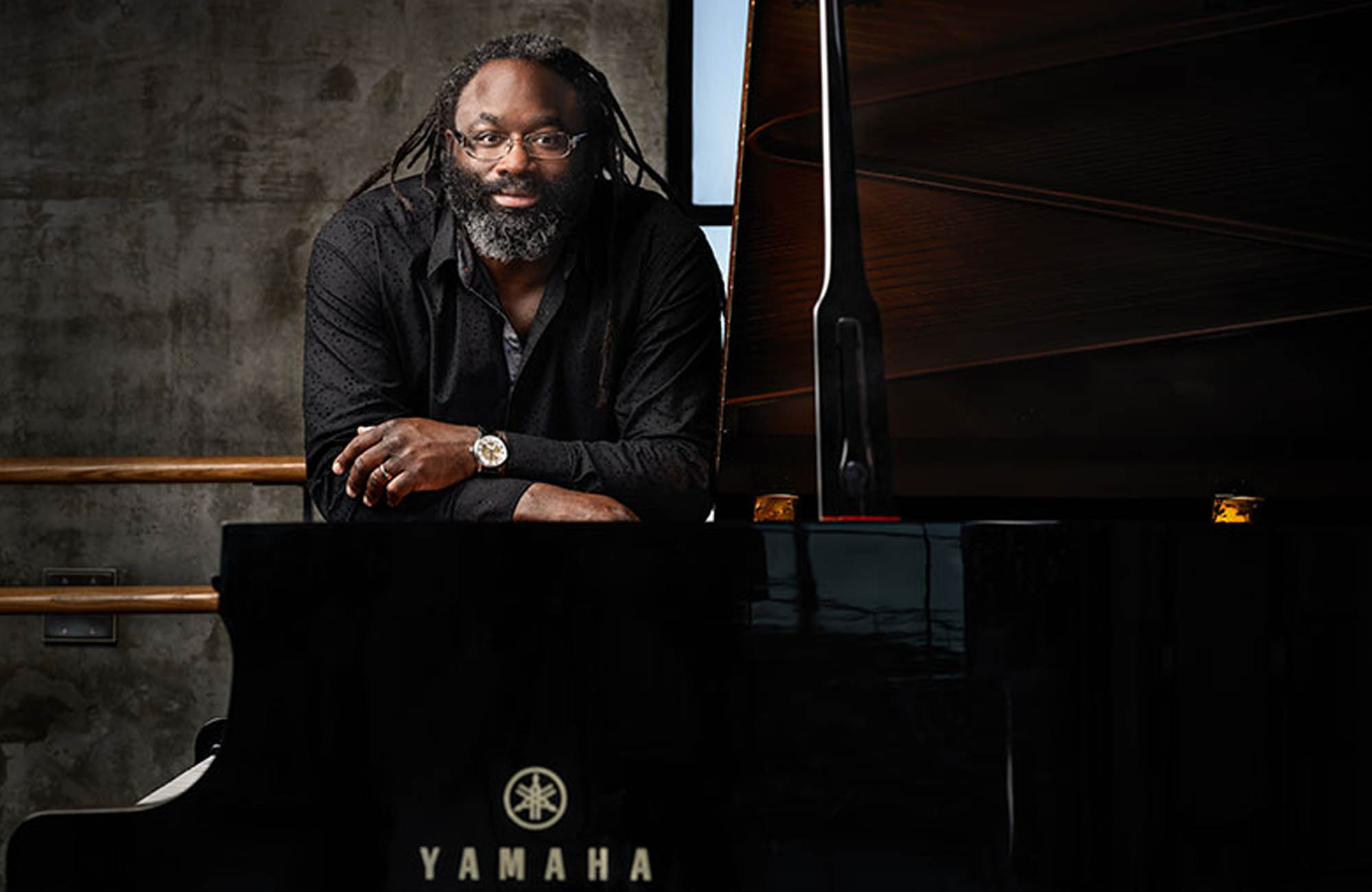
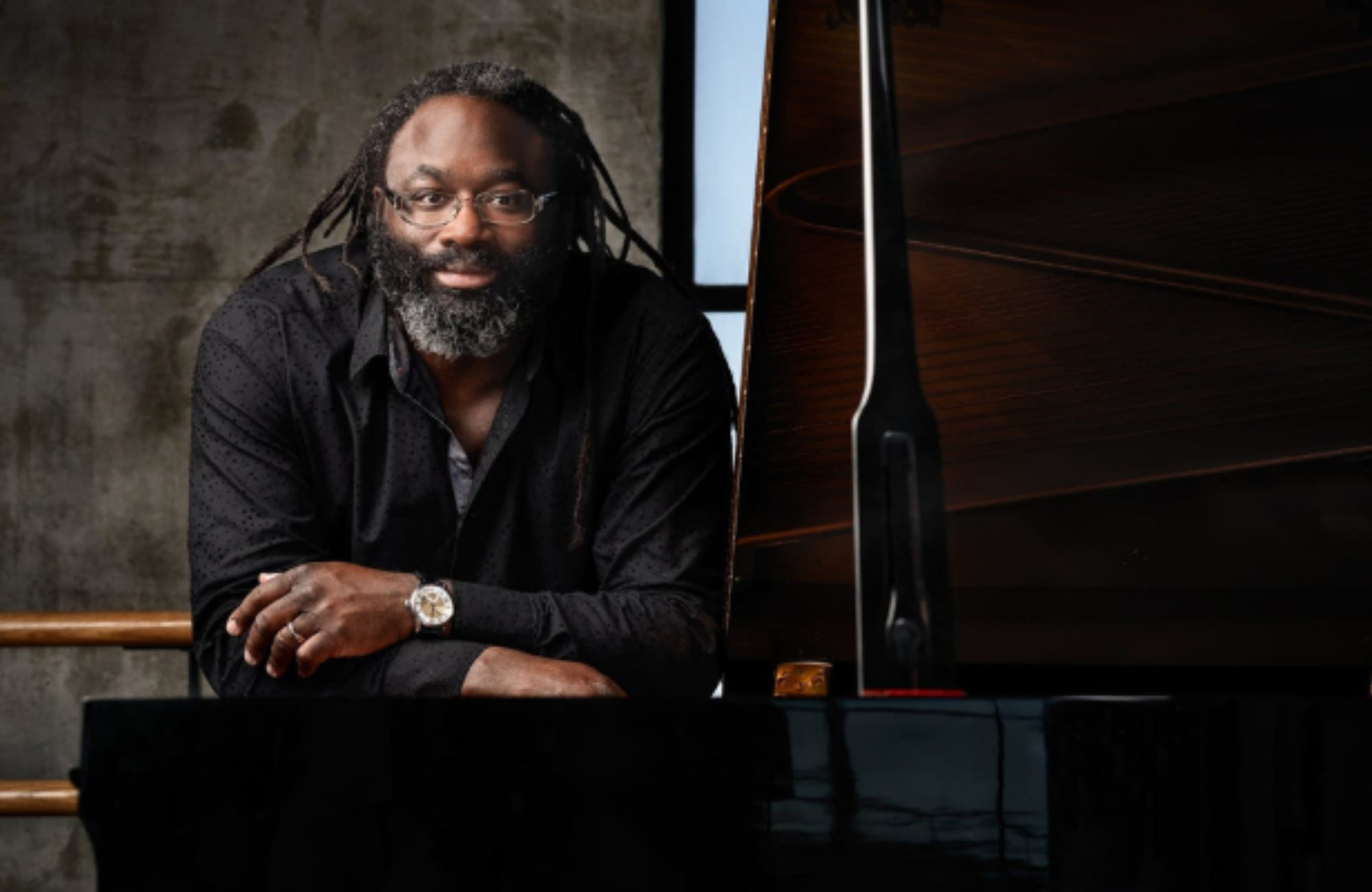
Among his generation of concert artists, pianist Awadagin Pratt is acclaimed for his musical insight and intensely involving performances in recital and with symphony orchestras.
Born in Pittsburgh, Awadagin Pratt began studying piano at the age of six. Three years later, having moved to Normal, Illinois with ...
Among his generation of concert artists, pianist Awadagin Pratt is acclaimed for his musical insight and intensely involving performances in recital and with symphony orchestras.
Born in Pittsburgh, Awadagin Pratt began studying piano at the age of six. Three years later, having moved to Normal, Illinois with his family, he also began studying violin. At the age of 16 he entered the University of Illinois where he studied piano, violin, and conducting. He subsequently enrolled at the Peabody Conservatory of Music where he became the first student in the school’s history to receive diplomas in three performance areas – piano, violin and conducting. In recognition of this achievement and for his work in the field of classical music, Mr. Pratt received the Distinguished Alumni Award from Johns Hopkins as well as an honorary doctorate from Illinois Wesleyan University after delivering the commencement address in 2012.
In 1992 Mr. Pratt won the Naumburg International Piano Competition and two years later was awarded an Avery Fisher Career Grant. Since then, he has played numerous recitals throughout the US including performances at Lincoln Center, the Kennedy Center, Dorothy Chandler Pavilion in Los Angeles, Chicago’s Orchestra Hall and the NJ Performing Arts Center. His many orchestral performances include appearances with the New York Philharmonic, Minnesota Orchestra and the Pittsburgh, Atlanta, Baltimore, St. Louis, National, Detroit and New Jersey symphonies among many others. Summer festival engagements include appearances at Ravinia, Blossom, Wolftrap, Caramoor and Aspen and the Hollywood Bowl. Internationally, Mr. Pratt has toured Japan four times and performed in Germany, Italy, Switzerland, Poland, Israel, Columbia and South Africa.
Recent and upcoming appearances include recital engagements in Baltimore, La Jolla, Los Angeles, Pittsburgh, Ravinia, Lewes, Delaware, Duke University and at Carnegie Hall for the Naumburg Foundation; as well as appearances with the orchestras of Cincinnati, Indianapolis, North Carolina, Utah, Richmond, Grand Rapids, Memphis, Fresno, Winston-Salem, New Mexico, Rockford, IL and Springfield, OH. He also serves on the faculty of the Eastern Music Festival in Greensboro, North Carolina where he coaches chamber music, teaches individual pianists and performs chamber music and concertos with the festival orchestra.
Also an experienced conductor, Mr. Pratt has conducted programs with the Toledo, New Mexico, Vancouver WA, Winston-Salem, Santa Fe and Prince George County symphonies, the Northwest Sinfonietta, the Concertante di Chicago and several orchestras in Japan.
A great favorite on college and university performing arts series and a strong advocate of music education, Awadagin Pratt participates in numerous residency and outreach activities wherever he appears; these activities may include master classes, children’s recitals, play/talk demonstrations and question/answer sessions for students of all ages. He is also frequently invited to participate on international competition juries, such as the Rubinstein International Piano Master Competition in Israel, the Cleveland International Piano Competition, Minnesota e-Competition, the Unisa International Piano Competition in International Competition for Young Pianists in Memory of Vladimir Horowitz in the Ukraine.
In November 2009, Mr. Pratt was one of four artists selected to perform at a classical music event at the White House that included student workshops hosted by the First Lady, Michelle Obama, and performing in concert for guests including President Obama. He has performed two other times at the White House, both at the invitation of President and Mrs. Clinton.
Mr. Pratt’s recordings for Angel/EMI include A Long Way From Normal, an all Beethoven Sonata CD, Live From South Africa, Transformations and an all Bach disc with the St. Lawrence String Quartet. His most recent recordings are the Brahms Sonatas for Cello and Piano with Zuill Bailey for Telarc and a recording of the music of Judith Lang Zaimont with the Harlem Quartet for Navona Records.
Mr. Pratt is currently a Professor of Piano at the College-Conservatory of Music at the University of Cincinnati. He also served as the Artistic Director of the World Piano Competition in Cincinnati and is currently the Artistic Director of the Art of the Piano Festival at CCM.