

PLEASE NOTE:
Due to an unforeseen circumstance, this concert will now be taking place at the Landmark Theatre. If you have already purchased tickets, they will still be honored and you will be able to sit in similar seats at the Landmark.
The Insiders’ Experience before the concert has unfortunately been canceled. If you have purchased tickets to the Insiders’ Experience, please stop by the Landmark Theatre Box Office before the concert, where we will be providing two complementary drink tickets ($14 value) to all Insiders’ Experience ticket holders.
The Syracuse Orchestra performs Debussy’s Pagodes. Principal Trombone Ben Dettelback performs a video-game inspired trombone concerto followed by Brahms Symphony No. 2, which includes the famous melody “Brahms Lullaby”.
PROGRAM
DEBUSSY: Pagodes
TAN DUN: Concerto for Trombone: Three Muses in Video Game
BRAHMS: Symphony No. 2 in D major, Opus 73
Thank you to our generous sponsors!
Thank you to our Series sponsors!
Masterworks Series Sponsor:

Exclusive Auto Sponsor:

Masterworks Series Media Sponsor:

PROGRAM NOTES
At our last Masterworks concert, we performed the Passacaglia: Secret of Wind and Birds by Tan Dun (b. 1957). If you were fortunate enough to be there, you’ll have some idea what to expect in tonight’s follow-up, his Concerto for Trombone: Three Muses in Video Game (2021). Like the Passacaglia, the concerto is gripping in its use of rhythm and color (the percussion section is especially rich, including many instruments you won’t have heard before); it shares that earlier work’s ingenuity in straddling the lines between Asian and Western ...
At our last Masterworks concert, we performed the Passacaglia: Secret of Wind and Birds by Tan Dun (b. 1957). If you were fortunate enough to be there, you’ll have some idea what to expect in tonight’s follow-up, his Concerto for Trombone: Three Muses in Video Game (2021). Like the Passacaglia, the concerto is gripping in its use of rhythm and color (the percussion section is especially rich, including many instruments you won’t have heard before); it shares that earlier work’s ingenuity in straddling the lines between Asian and Western culture; and it shares, too, its striking fusion of past and present—including its engagement with contemporary digital culture.
Of particular note is the way the Trombone Concerto incorporates the sound of ancient Chinese instruments. The Passacaglia uses ancient Chinese instruments themselves to mimic bird sounds. In the Concerto, Tan Dun moves in a different direction. Inspired by Buddhist cave paintings at the Mogao Caves near Dunhuang, he uses modern instruments to mimic the sounds of old instruments that no longer exist in their original form, instruments that he’s chosen to serve as his “muses”: the bili (described by the composer as a “double-reed instrument with a warm, muffled sound, akin to the oboe”); the sheng (“a Chinese mouth organ,” also used in the Passacaglia); and, in the middle movement, the xiqin (a string instrument related to the erhu, which will—to further unite our season—be the solo instrument at our next Masterworks program).
And the digital dimension? In the Passacaglia, the performance itself was partially digital: the bird calls were recorded and then played back on cell phones during the performance. In the Concerto, in contrast, the digital realm is not used, but evoked. The work was composed during the Covid pandemic, when “online and digital art forms … flourished.” This digital blossoming included video games and their music—music that has found its way more and more often on classical concerts (including some by the Syracuse Orchestra). Yet surprisingly, there’s no actual video-game music here. Rather, Tan has celebrated that tradition by writing analog music for imaginary video games.
The resulting work, says our soloist, principal trombonist Ben Dettelback, “has something for everyone,” regardless of their musical tastes and interests. Thus, as we’d expect from the man who composed the Academy-Award-winning score to Crouching Tiger, Hidden Dragon, it’s got an immediate audience appeal and a strong narrative drive. “It’s very cinematic—movie music in the best way,” Ben continues; it’s not music that demands deep analysis. At the same time, though, it rewards deep analysis, and listeners seeking something beneath the “surface-level experience, something that’s interesting to really dig your teeth into,” will find a lot here, too.
At the same time, it’s a virtuoso showpiece that reveals the underappreciated versatility of the instrument. Many listeners, when they think of the trombone, jump immediately to thoughts of glissandos. And, says Ben, modern composers often overuse that technique in part “just because the trombone can”—limiting our sense of its expressive range and bolstering the instrument’s reputation for “silliness.” In particular, he explains, glissandos have “a tendency to sound either cheesy or jazzy.” Tan Dun doesn’t avoid glissandos, but he uses them with unusual sensitivity in a way that bypasses both of those options. “They’re not just like ‘Seventy-Six Trombones.’ Instead, they’re used for really specific purposes.” Among other things, he uses glissandos in this piece as one technique in his larger goal of representing ancient instruments with which the trombone might seem to have little in common.
And then, too, says Ben, “There’s the classic quote: the trombone is the closest to the human voice.” (Ben recognizes that that’s said aboout nearly every instrument—but still feels that the trombone deserves pride of place). This concerto takes advantage of that lyrical quality as well. In fact, its main challenge to the performer is not, as you might expect, “a ton of super-technical, challenging runs.” Rather, the main challenge is a matter of endurance: sustaining the line, much of which “stays in the upper register”—which, as Ben points out, is where the sound best “cuts through the orchestra” but which demands the most from the player. Ben’s favorite part? It comes toward the end: “There’s a B melody in the third movement. It’s also one of the most difficult parts, because at that point in the piece, you’re really tired, and then you have to play this really high, beautiful melody. But that’s the tune that gets stuck in your head at the end. When you walk away from the piece, that’s the one that you hear.”
The concert opener, Pagodes by Claude Debussy (1862–1918), was chosen by conductor Stilian Kirov to set the stage: like the concerto, it is not only “inspired by” Asian culture but more specifically uses Western instruments evoking sounds of Asian instruments. Pagodes was originally composed as the first piece in the triptych Estampes (Prints) (1903)—and it was inspired by a Javanese gamelan (a percussion orchestra) that Debussy heard at the Paris Exposition in 1889. Not that it reflects the gamelan “in an ethnographic way.” Rather, Stilian says, “it’s more of an impressionistic memory of what he heard.” At the same time, Pagodes serves as a good opener because its spirit is so different from that of the Concerto: “It’s not your flashy opening. Rather, it’s very meditative.” Originally written for piano, it was later transcribed for orchestra by Debussy’s close friend, composer André Léon Caplet (1878–1925)—who not only adapted several of Debussy’s other piano pieces, too, but also helped the composer orchestrate The Martyrdom of Saint Sebastian and La boîte à joujoux.
Besides serving as an introduction to the Tan Dun, Pagodes provides a link to the second half of the concert, the Symphony No. 2 by Johannes Brahms (1833–1897). As Stilian reminds us, “it is sometimes known as the Pastoral”—so a certain “meditative spirit” flanks the concert.
The Second is radically different from the other Brahms symphonies. It was written quickly and confidently in the summer of 1877, during a stay in Pörtschach, a small Austrian village by a lake (his First, in contrast, took more than a decade to write); and it’s by far the sunniest of the four, without the anguish and struggle that mark its siblings. Yes, the second movement has its “moments of thunder and conflict,” as Stilian puts it; and the “easygoing walk by the lake” suggested in the outer sections of the third movement are separated by “some running moments.” Then, too, the finale “is very driven.” Most important, Brahms himself—half-jokingly, but only half-jokingly—described the symphony in terms of his melancholy, claiming that “the score must appear with a black border.”
Still, as Stilian says, “It has a very genuine, happy feel to it,” starting from the beginning of the first movement (“which resembles, a little bit, a waltz—and which has a theme that’s close to his famous lullaby, Opus 49”) and continuing through the finale. And while that finale is assuredly driven, it’s radically unlike the painful struggles of the First and Fourth; rather, as Stilian puts it, it’s “driven in a way that is also lyrical.”
It’s probably the most listener-friendly of the Brahms symphonies, too—although just as the Tan Dun concerto has plenty of intellectual interest beneath the surface, so does the Brahms Second, which like all of his music, has complex formal and thematic connections. (As but one example, the three-note motif heard at the outset in the lower strings reappears throughout the piece in different guises). And while it’s the most relaxed of the symphonies, that “driven” finale ends with what may be the most exciting orchestral passage Brahms ever wrote. Given the program on which it appears tonight, the orchestration of that conclusion is especially notable, for it’s led by what musicologist and composer Donald Tovey called “the blast of the trombones,” who finally dominate the final page playing—of course—in their high register.
Peter J. Rabinowitz
Have any comments or questions? Please write to me at prabinowitz@SyracuseOrchestra.org
FEATURED ARTISTS

“…the playing of the IPO under Stilian Kirov was consistently impressive—polished, strongly projected, and bristling with virtuosic energy. As Kirov begins his third season as music director, it is clear that the young maestro is taking his southwest suburban orchestra to a new and exciting level.”
– ...
“…the playing of the IPO under Stilian Kirov was consistently impressive—polished, strongly projected, and bristling with virtuosic energy. As Kirov begins his third season as music director, it is clear that the young maestro is taking his southwest suburban orchestra to a new and exciting level.”
– Lawrence A. Johnson | Chicago Classical Review
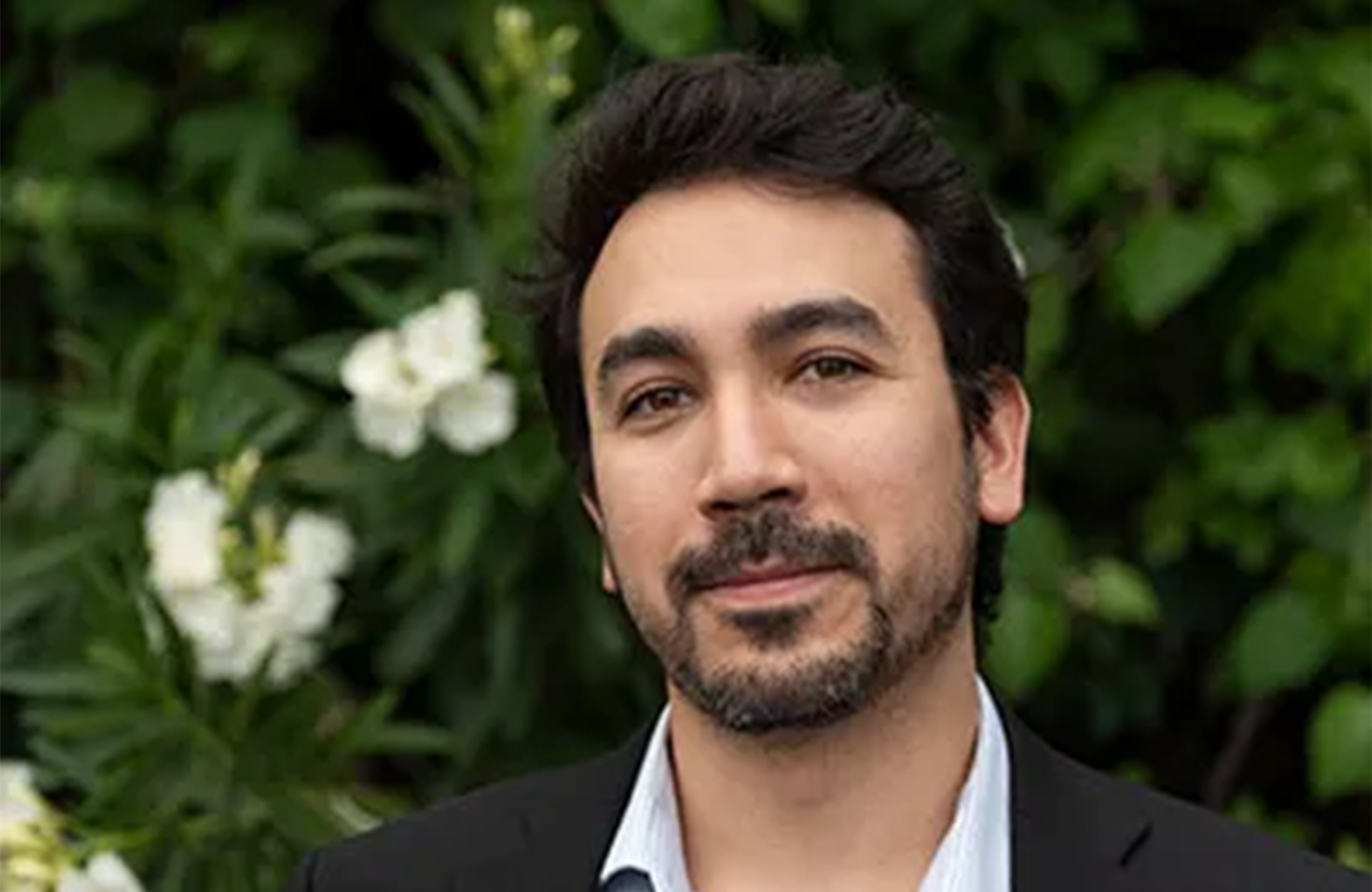
First Prize Winner of the “Debut Berlin” Concert Competition, prizewinner at Denmark’s 2015 Malko Competition as well as the 2010 Mitropoulos Competition, Stilian Kirov made his debut at the Berlin Philharmonie in 2017. He is currently Music Director of the Illinois Philharmonic and the Bakersfield Symphony. A former Music Director of Symphony in C in New Jersey (2015-2020), he is also a recipient of numerous Solti Foundation U.S. Career Assistance Awards (2016-2019).
Highlights of Mr. Kirov’s guest performances include appearances worldwide with the Israel Camerata, Xi’An Symphony, Minas Gerais Philharmonic Orchestra, Sofia Philharmonic, Leopolis Chamber Orchestra/Ukraine, Orchestra of Colors/Athens, Orchestre Colonne/Paris, Sofia Festival Orchestra, State Hermitage Orchestra/St. Petersburg, Thüringen Philharmonic Orchestra, the Zagreb Philharmonic, the Musical Olympus International Festival in St. Petersburg, and the Victoria Symphony/British Columbia, among others.
In the United States, Mr. Kirov has collaborated with the symphonies of Seattle, Memphis, Chautauqua, Omaha, West Virginia as well as the Amarillo Symphony, National Repertory Orchestra/Breckenridge, and the Tucson Symphony and the Pacific Northwest Ballet.
Stilian Kirov assisted distinguished conductors such as the late Bernard Haitink with the Chicago Symphony Orchestra as well as Stéphane Denève, the late Rafael Frühbeck de Burgos, Christoph von Dohnányi, and the late Andrew Davis, all with the Boston Symphony Orchestra.
Mr. Kirov is a graduate of The Juilliard School’s orchestral conducting program, where he was a student of James DePreist. He has also studied with the late Kurt Masur, Michael Tilson Thomas, the late Gianluigi Gelmetti, George Manahan, Robert Spano and Asher Fisch, among others.
Also a gifted pianist, Stilian Kirov was Gold Medalist of the 2001 Claude Kahn International Piano Competition in Paris.

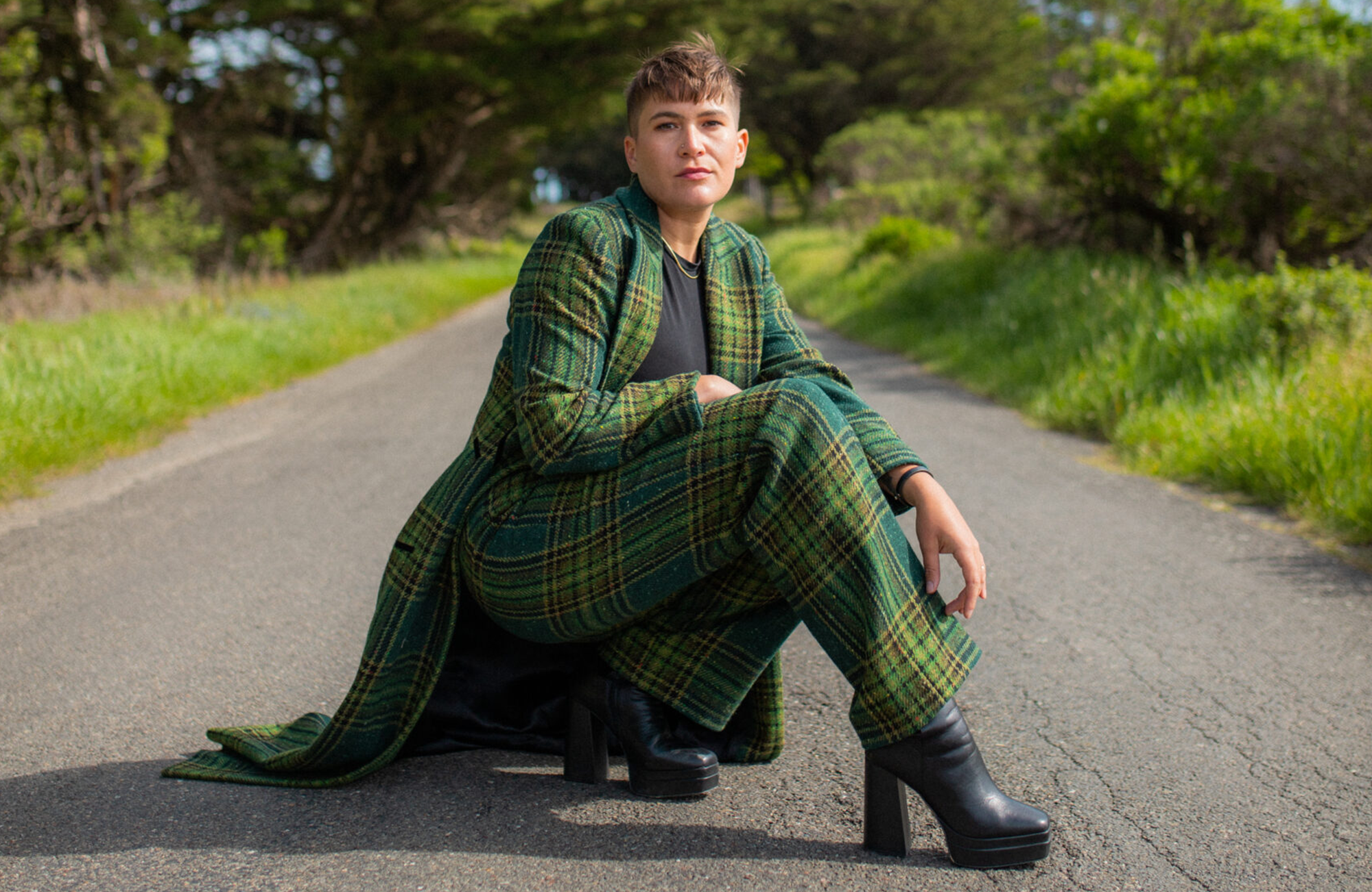
Ben Dettelback is currently Principal Trombone of The Syracuse Orchestra and Instructor of Trombone at the Syracuse University Setnor School of Music. Ben also served as Principal Trombone of the Cayuga Chamber Orchestra (Ithaca, NY) from 2018-2024 and has performed with groups such as the Buffalo Philharmonic, Rochester Philharmonic/...
Ben Dettelback is currently Principal Trombone of The Syracuse Orchestra and Instructor of Trombone at the Syracuse University Setnor School of Music. Ben also served as Principal Trombone of the Cayuga Chamber Orchestra (Ithaca, NY) from 2018-2024 and has performed with groups such as the Buffalo Philharmonic, Rochester Philharmonic/Oratorio Society, Skaneateles Festival, West Point Band, Princeton Symphony, and American Institute of Musical Study in Graz, Austria.
Ben appeared as soloist with The Syracuse Orchestra and Maestro Lawrence Loh performing the final movement of L. Grondahl’s Trombone Concerto during the 2022-23 Season. He was also named a finalist in the 2018 International Trombone Associations Alto Trombone Competition. Ben can be heard alongside Brad Kerns, David Seder, and Clint Woltering on the 2024 trombone quartet album titled “Goldberg Variations, BMW 988” as well as the 2020 Naxos American Classics recording “Bernstein Songfest” with the National Orchestral Institute and James Judd.
In addition to his teaching duties at Setnor, Ben is the founder and director of the Setnor Slides Trombone Ensemble and has presented masterclasses at Ithaca College, Binghamton University, and Colgate University. Ben also served on the orchestral faculty of the 2023 Varna International Music Academy.
Ben received a Bachelor of Music and Performer’s Certificate from the Eastman School of Music followed by a Master of Music from Yale University where he studied with Larry Zalkind and Scott Hartman respectively. Ben is currently working towards a Doctor of Musical Arts back at Eastman.
When not playing trombone, Ben can probably be found hanging out with his cat, Kimchi.