
Julian Schwarz is featured in Jennifer Higdon’s Cello Concerto, commissioned by Robert and Vicki Lieberman. We finish with the operatic music of Strauss’ Des Rosenklavier Suite. Gerard Schwarz conducts this season finale celebration concert.
PROGRAM
DIAMOND: Music for Shakespeare’s Romeo and Juliet
JENNIFER HIGDON: Concerto for Cello
STRAUSS: Rosenkavalier Suite
Thank you to our generous sponsors!
Thank you to our Series sponsors!
Masterworks Series Sponsor:
Exclusive Auto Sponsor:

Masterworks Series Media Sponsor:

Thank you to our concert sponsor!

PROGRAM NOTES
“How come I don’t know this?”
Tonight’s conductor Gerard (Jerry) Schwarz is one of the world’s foremost advocates for American symphonic music; he’s been especially important for bringing attention to what we might call the lost generation of mid-20th-century composers. This is the group of broadly accessible, tonal composers who got shoved aside during the rise of the post-war, academically centered avant-garde—a group that includes Walter Piston, William Schuman, Paul Creston, Howard Hanson, Alan Hovhaness, and Roy Harris. Their erasure from our concert halls is close to incomprehensible—especially since, Jerry ...
“How come I don’t know this?”
Tonight’s conductor Gerard (Jerry) Schwarz is one of the world’s foremost advocates for American symphonic music; he’s been especially important for bringing attention to what we might call the lost generation of mid-20th-century composers. This is the group of broadly accessible, tonal composers who got shoved aside during the rise of the post-war, academically centered avant-garde—a group that includes Walter Piston, William Schuman, Paul Creston, Howard Hanson, Alan Hovhaness, and Roy Harris. Their erasure from our concert halls is close to incomprehensible—especially since, Jerry says, “The bizarre thing is that when you do the great music of these great composers, people just love it. And they ask, ‘How come I don’t know this?’”
David Diamond (1915–2005) is another member of that nearly forgotten group; and chances are, you’ll have that same astonished reaction when you hear Music for Romeo and Juliet—even though it may not present Romeo and Juliet exactly the way you’re expecting. Although it’s in five movements, it’s not designed to be used as incidental music (that is, it’s not intended to accompany a production of the play). Nor is it similar in spirit to any of the three most popular concert works based on the play: Tchaikovsky’s tone poem (which, fittingly, was performed at the first Casual this year), the various suites and excerpts drawn from Prokofiev’s ballet, and the Symphonic Dances from Bernstein’s West Side Story. Diamond’s work, bypassing the play’s sword fights and civic violence, is more low-key, centering on young kids falling in love rather than on large-scale social upheaval. And while it ends with a meditation on the deaths of the lovers, it doesn’t have the searing tragedy of the Prokofiev. Rather, it’s nearly as intimate as the ending of Fauré’s Pelléas and Mélisande, which you may remember from our performance last year.
There’s a good reason you don’t know tonight’s major offering, the Concerto for Cello and Orchestra by Jennifer Higdon (b. 1962): It was commissioned specifically for tonight’s soloist Julian Schwarz (Jerry’s son) by two of the Syracuse Orchestra’s most steadfast supporters, Robert and Vicki Lieberman, and it was premiered just a few weeks ago in Rochester. The composer wrote the following program note before the first performance:
It is one thing to write for instruments that don’t have a lot of concerto repertoire (as I did with my concerto for mandolin, or my bluegrass trio, or for orchestral low brass players); but when writing for an instrument like the cello, which has a vast amount of spectacular repertoire, it is good to recognize that a composer stands on the shoulders of an esteemed tradition of works. It is also important to highlight the talents of the featured soloist, Julian Schwarz. When getting to know Julian’s playing, I was struck by the lyrical gift that he brings to the cello; I knew immediately that melody would be at the heart of this work.
The first movement (“Poet”) is based on a poem that I once set to music that includes the line, “…if I told you how I read your dream with a cello”. From the moment I read that line, the image of a cellist creating a poem with their instrument has stayed with me; it was the perfect inspirational spark to begin this work.
To provide contrast, the second movement is a dance between the soloist and the orchestra. Instead of just accompanying the cellist, orchestra members play primary musical themes in a back-and-forth dialog between themselves and the soloist (thus the movement title: “Dances”).
The third movement, “Fervent”, is the heart of this work, unfolding through slow music that allows Julian and his cello to “sing”.The final movement, “Lines”, is a combination of footrace and joyous celebration, honoring the virtuosic skill that our soloist brings to his playing.
In the early stages of composing, the first movement’s title of “Poet” inspired the idea that all the movement titles should be related in a way that if those titles were lined up sequentially, I’d have a little poem: Poet Dances Fervent Lines. It’s an apt description of this piece, and of the magnificent history of this noble instrument, as well as a tribute to the gifted cellist, Julian Schwarz.
The “Cello Concerto” was graciously commissioned by Robert and Vicki Lieberman.
Since then, in a conversation for these notes, Jennifer has generously expanded on the origins and character of this piece—both of which are grounded in Julian’s playing. “When I’m writing a concerto for someone,” she says, “I’m always looking at the things they do well. I think the first thing of Julian’s that I heard was a performance of the Haydn Cello Concerto, and I was struck by the elegance of his playing, his phrasing, and his tone. It was obvious he could play fast notes and all, but the tone was really… it was gorgeous, with a beautiful singing quality, which you don’t always get.”
That aspect of his playing led her to the poetry she mentions in her program note—perhaps unexpectedly, since, as she says, “I’m very bad at remembering poems. I’ve never had one line stay in my head, even from all the poems I had to memorize as a kid going through school. But that line—‘…if I told you how I read your dream with a cello’—stuck with me.” The words come from a poem by a colleague at the Curtis Institute of Music, Jeanne Minahan. Jennifer had used the poem in The Singing Rooms, an earlier work for solo violin, chorus, and orchestra—but it had never seemed quite right in that context. “Then, listening to Julian’s playing, it just struck me like a thunderbolt. That line popped in there, and I thought, ‘Maybe this is the moment, maybe this is the proper setting for it. Maybe I should go back and do a version of this for the cello, because it has haunted me so long, and it’s unusual for any line or piece of poem to stay with me to such a point.” The Concerto is not a recasting of the original choral work, but, says Jennifer, “It shares a lot of the same properties. Its chord progressions, its DNA, really overlap.”
There’s another of Julian’s qualities that influenced the character of the Concerto. Whenever Jennifer would mention that she was writing a concerto for Julian, people would mention his affinity for chamber music. “Those comments made an idea spring up in my head, and I incorporated a chamber element. He gets to play chamber music with all the principal string desks, but there are also a lot of solos with him and the oboe, the flute, the clarinet, the bassoon.”
After these two discoveries of music you may not have known, we jump back to more familiar music: Even if you think you don’t know the Suite from Der Rosenkavalier (1910) by Richard Strauss (1864–1949), there’s a good chance you’ll recognize at least some of it, especially the waltzes. Unlike the majority of operas (and, for that matter, unlike the other two works on the program), Der Rosenkavalier was not inspired by a previous novel, play, or poem. The libretto was written specifically for this work by Hugo von Hofmannsthal, Strauss’s favorite collaborator.
It’s got an ingenious double plot. On one level, it’s the story of the dashing 17-year-old noble Octavian (a “trouser role”: that is, a male character played by a female singer), who is chosen as the emissary to deliver a marriage proposal to the wealthy Sophie on behalf of the oafish and self-centered debaucher Baron Ochs. You can guess what happens, since the basic frame has been a staple of classic comedy for centuries: Octavian and Sophie fall in love; there are elaborate ruses—involving a fair amount of slapstick and disguises (in this case, supported by double cross-dressing, where a female singer playing a young man dresses up as a younger woman)—intended to push the Baron aside; there’s teary misunderstanding and reconciliation as the young lovers triumph.
It would all be straightforward, except that this standard plot runs in counterpoint to another. When the work begins, Octavian is already involved in an affair with a more mature woman, Ochs’s cousin the Marschallin (Field Marshal’s wife)—what Bayard Sartoris, in Faulkner’s The Unvanquished calls “the eternal and symbolical thirty to a young man.” The Marschallin is actually the opera’s main character, even though she disappears at the end of Act One to reappear only toward the end of Act Three, where she relinquishes her lover. And her coming to terms with passing time and aging (even as a thirty-something!) gives the opera a depth that’s missing from the Octavian-Sophie story.
Hofmannsthal’s libretto encourages a vast range of music, and Rosenkavalier is one of the richest operas in the repertoire. At its center swirl competing types of love music (Octavian’s wild exuberance as we overhear him in bed with the Marschallin at the beginning; the somewhat purer, shyer music of Octavian and the naïve Sophie near the end), coarse comedy (much of it centered on Ochs’s attempt to seduce Octavian, who is disguised as a chambermaid), and, at the climax, an exquisite expression of personal transcendence. Rosenkavalier is Strauss’s (and Hofmannsthal’s) homage to the Mozart/Da Ponte opera Marriage of Figaro (which includes the same double cross-dressing)—and its high point is an early 20th-century take on the moment when the Countess’s forgives her unfaithful husband at the end of that earlier opera. But Rosenkavalier multiplies that gesture by giving a soaring trio for women’s voices in Act Three—a trio that rises to perhaps the most beautiful operatic music ever written, a glorious emotional outpouring as the Marschallin, Octavian, and Sophie all come to terms with their radically altered situation. We’ll be hearing it tonight without voices. Even so, there’s a good chance it will leave you, too, radically altered.
But there are other elements in the libretto that encourage the further expansion of Rosenkavalier’s wide-ranging musical character. The story is set in a faux mid-18th-century Vienna, and this gave Strauss the chance to lace the score with waltzes. They are both parodic and comically anachronistic (the waltz only took Vienna by storm later on), but they ingeniously evoke a “Viennese” spirit.
Then, too, Hofmannsthal invented a “tradition” that is so outrageous that it almost seems as if it has to be true—one that gave Strauss a remarkable musical opportunity. In the world of the opera, an upper-crust marriage proposal is delivered by a third party carrying a silver rose (hence the title, the Cavalier of the Rose). Strauss was perhaps the world’s expert at writing descriptive music—and there are stories that he claimed he could, through music, distinguish a spoon from a fork. Apocryphal? Perhaps. But if he couldn’t distinguish silverware, he could certainly evoke a silver rose, as you’ll first hear about four and a half minutes into the Suite tonight: a series of chords—played by celesta, harps, flutes, and high violins—that send sparkles of sound around the room in the way that fine silver might reflect light. Once heard, it will never be forgotten.
Strauss himself never drew an orchestral suite from the music of the opera, although he did patch together a couple of waltz sequences for concert use. But toward the end of his life, perhaps for financial reasons, he sanctioned an anonymous arrangement, perhaps by conductor Artur Rodzinski, perhaps by conductor Clemens Krauss, perhaps by someone else. But, says Jerry, Strauss “wasn’t a fan” of that effort—and neither is Jerry. “I’m not fulfilled by the original version. It doesn’t seem to me to have enough variety, and I don’t think it’s pieced together very well. I also think it’s too short, and it doesn’t have enough depth.” It’s therefore no surprise that Jerry created his own alternative.
If you know the earlier Suite, don’t fear—the highlights you love are still there. “You can wallow in the waltz, you can wallow in the great trio.” But there’s more besides, including a lot of hyperactive music from Act Three where the Baron is trapped and driven from the scene in humiliation. And Jerry has provided his own punchy ending which will leave you smiling—and perhaps even laughing.
Peter J. Rabinowitz
Have any comments or questions? Please write to me at prabinowitz@SyracuseOrchestra.org
FEATURED ARTISTS
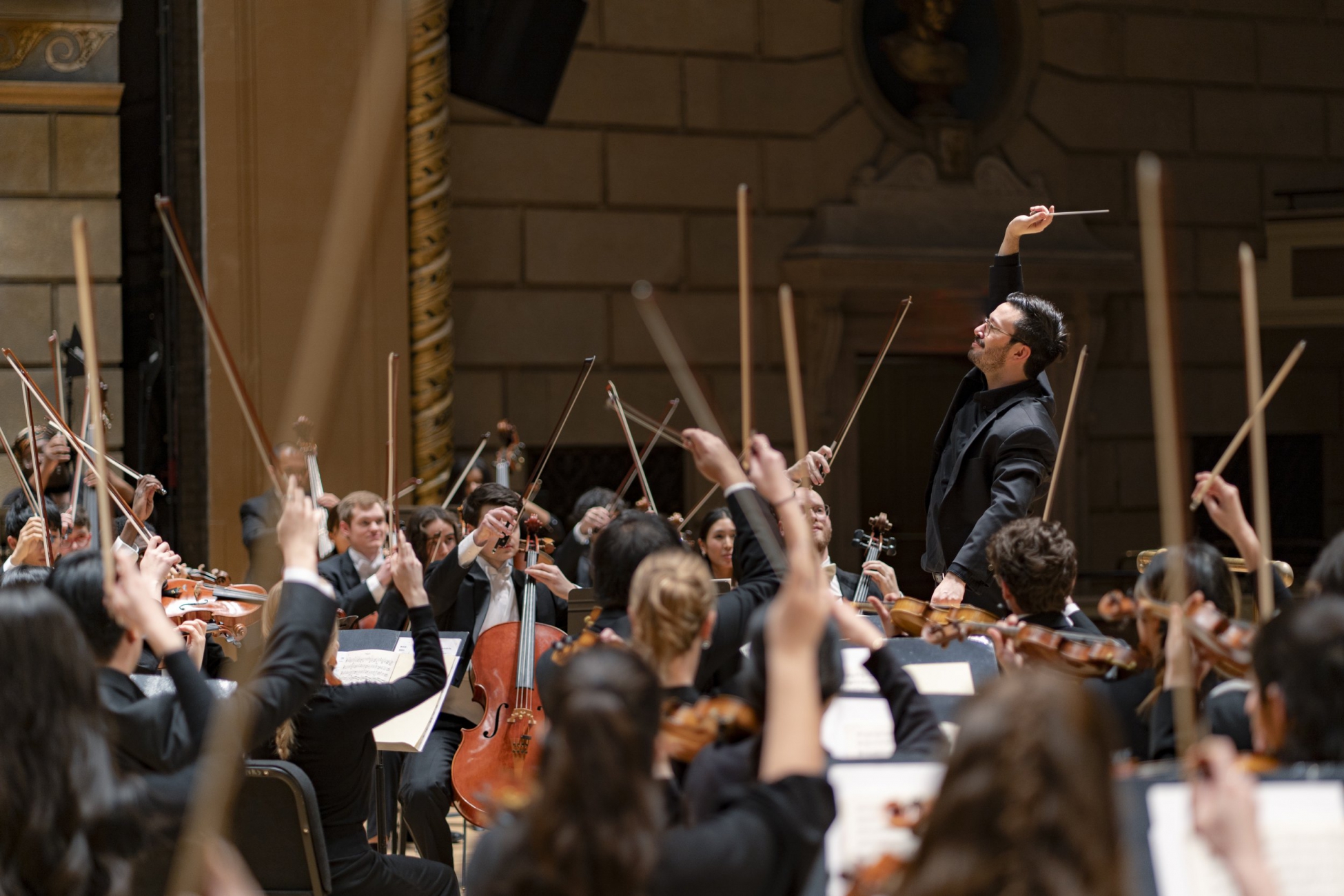
Internationally recognized for his moving performances, innovative programming and extensive catalogue of recordings, American conductor Gerard Schwarz serves as Music Director of the All-Star Orchestra, Eastern Music Festival, Palm Beach Symphony, and Mozart Orchestra of New York and is Conductor Laureate of the Seattle Symphony and Conductor Emeritus of ...
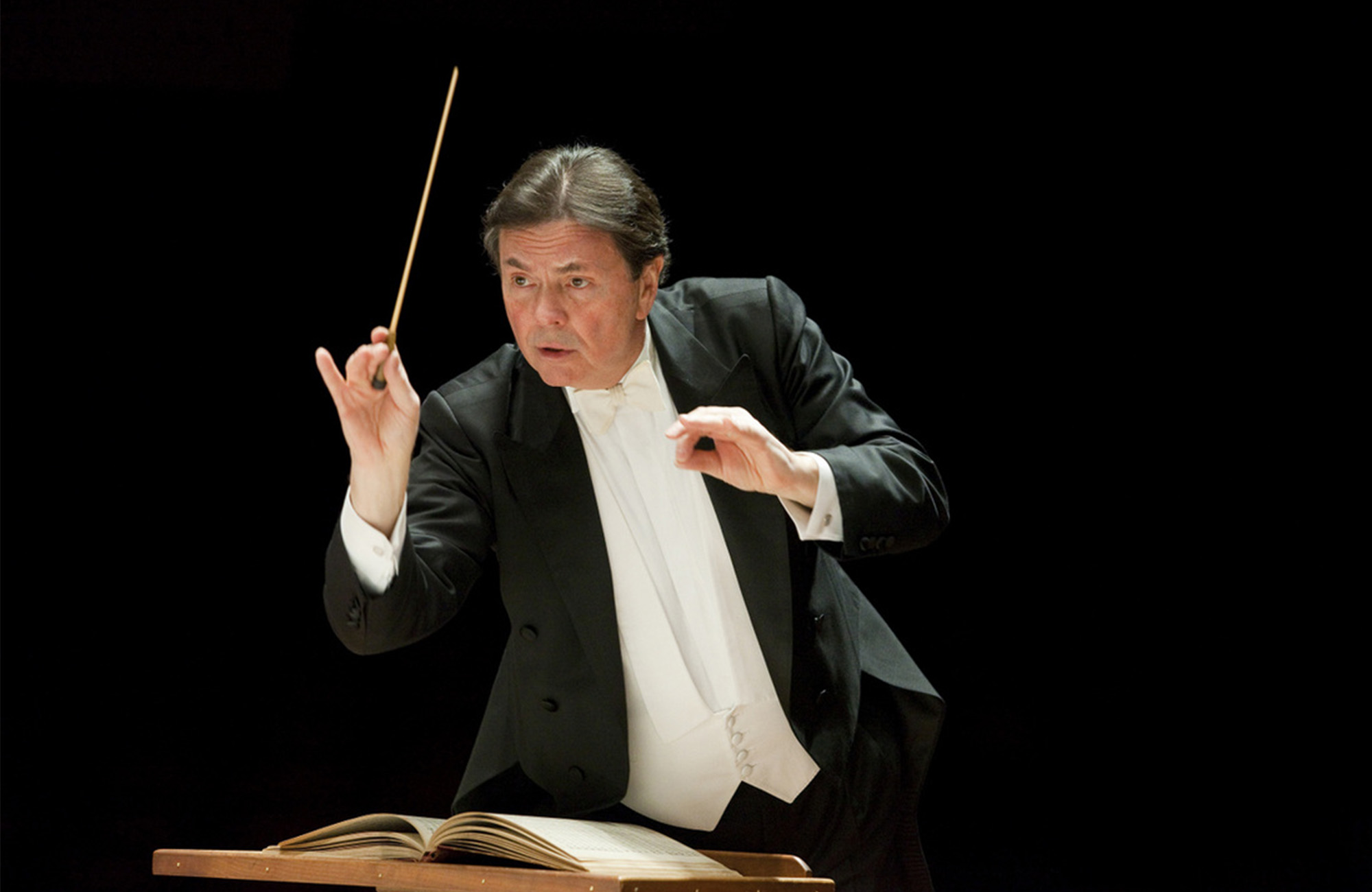
Internationally recognized for his moving performances, innovative programming and extensive catalogue of recordings, American conductor Gerard Schwarz serves as Music Director of the All-Star Orchestra, Eastern Music Festival, Palm Beach Symphony, and Mozart Orchestra of New York and is Conductor Laureate of the Seattle Symphony and Conductor Emeritus of the Mostly Mozart Festival. He holds the position of Distinguished Professor of Music; Conducting and Orchestral Studies of the Frost School of Music at the University of Miami and Music Director of the Frost Symphony Orchestra. Schwarz is a renowned interpreter of 19th century German, Austrian and Russian repertoire, in addition to his noted work with contemporary American composers.
The All-Star Orchestra is an ensemble of top musicians from America’s leading orchestras featured in eighteen programs that have aired throughout the United States on public television, worldwide by online streaming and is the basis for their Khan Academy education platform that has already reached over 6 million students. Gerard Schwarz has also collaborated with the United States Marine Band adding three more programs. All the programs are released by Naxos on DVD and have been awarded nine Emmy Awards and the Deems Taylor Television Broadcast Award from ASCAP.
The Eastern Music Festival in North Carolina is among the country’s most important summer educational institutions bringing together world-renowned artists and exceptionally gifted young musicians from across the United States and beyond. The summer of 2020 was Schwarz’s 13th year at its artistic helm leading an innovative virtual Festival during our challenging times that garnered outstanding press acclaim. With more than 300 world premieres to his credit, Schwarz has always felt strongly about commissioning and performing new music. As Music Director of the Eastern Music Festival he initiated the Bonnie McElveen-Hunter Commissioning Project that has thus far commissioned works by John Corigliano, Richard Danielpour, André Previn, HyeKyung Lee, and Lowell Liebermann. In all, Ms. McElveen-Hunter has committed to ten new works from American composers.
A prolific recording artist, Schwarz’s total discography numbers over 350 on labels such as Naxos, Delos, EMI, Koch, Artek, New World, Nonesuch, Reference Recording, RLPO Live, Columbia/Sony and RCA. In November 2017, The Gerard Schwarz Collection, a 30-CD box set of previously unreleased and limited release works spanning his entire recording career was released by Naxos. His vast repertoire includes major 20th century ballets by composers Stravinsky, Strauss, Bartók, Ravel and Prokofiev, as well as multi-disc cycles of works by Schumann, Strauss, Wagner and Stravinsky. Schwarz’s dedication to the promotion of American music is also represented with his pioneering cycles of 26 American symphonists such as William Schuman, David Diamond, Walter Piston, Paul Creston, Peter Mennin, Alan Hovhaness and Howard Hanson. The Howard Hanson cycle, first released on Delos, was a mainstay on Billboard’s classical music best-selling list for 41 weeks, earned Grammy nominations and was named 1989 Record of the Year by Stereo Review. The new Russian series on Naxos has been acclaimed as “a high point in the extensive Schwarz/Seattle discography” (Classics Today), “very fine” (The Guardian) and “a powerhouse in Russian Romantic repertoire” (MusicWeb International). He released Rimsky-Korsakov’s first and third Symphonies with the Berlin Radio Symphony Orchestra in 2016. In addition to his numerous recordings with the Seattle Symphony, he has also recorded with the Czech Philharmonic, English Chamber Orchestra, Juilliard Orchestra, London Symphony Orchestra, Los Angeles Chamber Symphony, New York Chamber Symphony, Orchestre National de France, Philadelphia Orchestra, Royal Liverpool Philharmonic, Tokyo Philharmonic and Eastern Music Festival.
A gifted composer and arranger, Schwarz has expanded his compositional activities in recent years. His Trio for Violin, Horn and Piano, recently released on Good Child Recordings, was called a work of “sophistication and intelligence” (Seattle Post- Intelligencer). Earlier works include In Memoriam and Rudolf and Jeanette (dedicated to the memory of his grandparents who perished in the Holocaust) – both recorded by Naxos; Human Spirit, a composition for choir and orchestra and his duos for violin and cello which were called “redolent of the gentle humanism central to much of the music Schwarz loves to conduct” by The Seattle Times. His arrangements of suites from Strauss’ Der Rosenkavalier, Debussy’s Pelléas et Mélisande and Humperdinck’s Hansel and Gretel are programmed in concerts worldwide. A Journey, a large scale orchestral tone poem, received its world premiere at the Eastern Music Festival in July 2012. Schwarz’s work for concert band Above and Beyond was premiered by The United States Marine Band in 2013 and is now available on Naxos, recorded by the Marine Band for broadcast on PBS in November 2018. His newest work for that ensemble, a new version of Rudolf and Jeannette was premiered in February 2016. His orchestral work, A Poem, was given its first performance by the Hartford Symphony. In 2018 his Triptych for violin and cello was premiered at Bargemusic and his work for euphonium and band, based on In Memoriam, was premiered in Korea, as was his Rhapsody for Cello and Orchestra. Adagio, based on Webern’s Langsamer Satz was premiered at the Eastern Music Festival in July 2019.
Schwarz is also known for his operatic performances in addition to his concert work, having appeared with the Juilliard Opera, Kirov Opera, Mostly Mozart Festival, San Francisco Opera, Seattle Opera – where he has led 21 productions – and Washington National Opera conducting the operas of Wagner, Janáček, Strauss, Mozart, Bizet, Weber, Debussy, Bartók, Stravinsky, Beethoven, Hagen and Gluck.
Born in America to Viennese parents, Schwarz began studying piano at the age of five and soon focused on the trumpet. A graduate of both New York City’s High School of Performing Arts and The Juilliard School, he joined the New York Philharmonic in 1972 as co-principal trumpet, a position he held until 1977. Schwarz’s numerous previous positions include Music Director of New York’s Mostly Mozart Festival (1982-2001), where he presided over sold-out houses, developed the orchestra’s international touring, maintained a nine-year residency in Tokyo, considerably expanded its Mozart repertoire and lead numerous televised Live from Lincoln Center appearances. His tenure as Music Director of the Royal Liverpool Philharmonic Orchestra (2001-2006) initiated the long-standing partnership between the orchestra and Classic FM, expanded recordings on the RLPO Live label, initiated a new partnership with Avie records, created the enormously popular Sunday matinee Musically Speaking concert series, led highly acclaimed tours to Spain and Prague and brought the orchestra to National Television in BBC Proms broadcasts. As Music Director of the Los Angeles Chamber Orchestra (1978-1985) and New York Chamber Symphony (1977-2001) he expanded concert series and audiences, made award-winning recordings and championed new works. In addition, he served as Artistic Advisor to the Tokyo Philharmonic.
Gerard Schwarz completed his final season as Music Director of the Seattle Symphony in 2011 after an acclaimed 26 years. During his leadership, Schwarz was instrumental in the building of Benaroya Hall, spearheading efforts that resulted in the acoustically superb new home for the Seattle Symphony. The many legacies of his extraordinary leadership include a critically acclaimed discography of more than 140 recordings; numerous television programs and concert broadcasts resulting in two Emmy Awards; major strides in music education programs including new series and the successful Soundbridge Seattle Symphony Music Discovery Center; regular programming of innovatively themed festival weeks; in addition to dramatically increased audience attendance and classical subscription weeks. Schwarz’s final season in Seattle was emblematic of the conductor’s passionate dedication and support for contemporary music, with a total of 22 world premieres. Eighteen of these premieres were a part of the Gund/Simonyi Farewell Commissions, an unprecedented commissioning initiative celebrating his farewell season as music director.
In his nearly five decades as a respected classical musician and conductor, Schwarz has received hundreds of honors and accolades. Over the years, he has received nine Emmy Awards, 14 GRAMMY nominations, eight ASCAP Awards and numerous Stereo Review and Ovation Awards. He holds the Ditson Conductor’s Award from Columbia University, was the first American named Conductor of the Year by Musical America and has received numerous honorary doctorates, including from his alma mater, The Juilliard School. In 2002, ASCAP honored Schwarz with its Concert Music Award and in 2003 the National Academy of Recording Arts & Sciences ( now The Recording Academy ) gave Schwarz its first “IMPACT” lifetime achievement award. Active in music advocacy on a national and state level, he served on the National Council of the Arts and is Honorary Chairman of the Board of Young Musicians Excelling, an organization in Washington State which supports music education in the Pacific Northwest. The City of Seattle recognized his outstanding achievements by naming the street alongside the Benaroya Hall “Gerard Schwarz Place” and the State of Washington gave him the honorary title of “General” for his extraordinary contributions as an artist and citizen.
Gerard Schwarz’s much anticipated memoir, Gerard Schwarz: Behind the Baton, was published by Hal Leonard Performing Arts Publishing Group in March 2017. He has been married to his wife Jody for 37 years, has four children and lives in Florida.
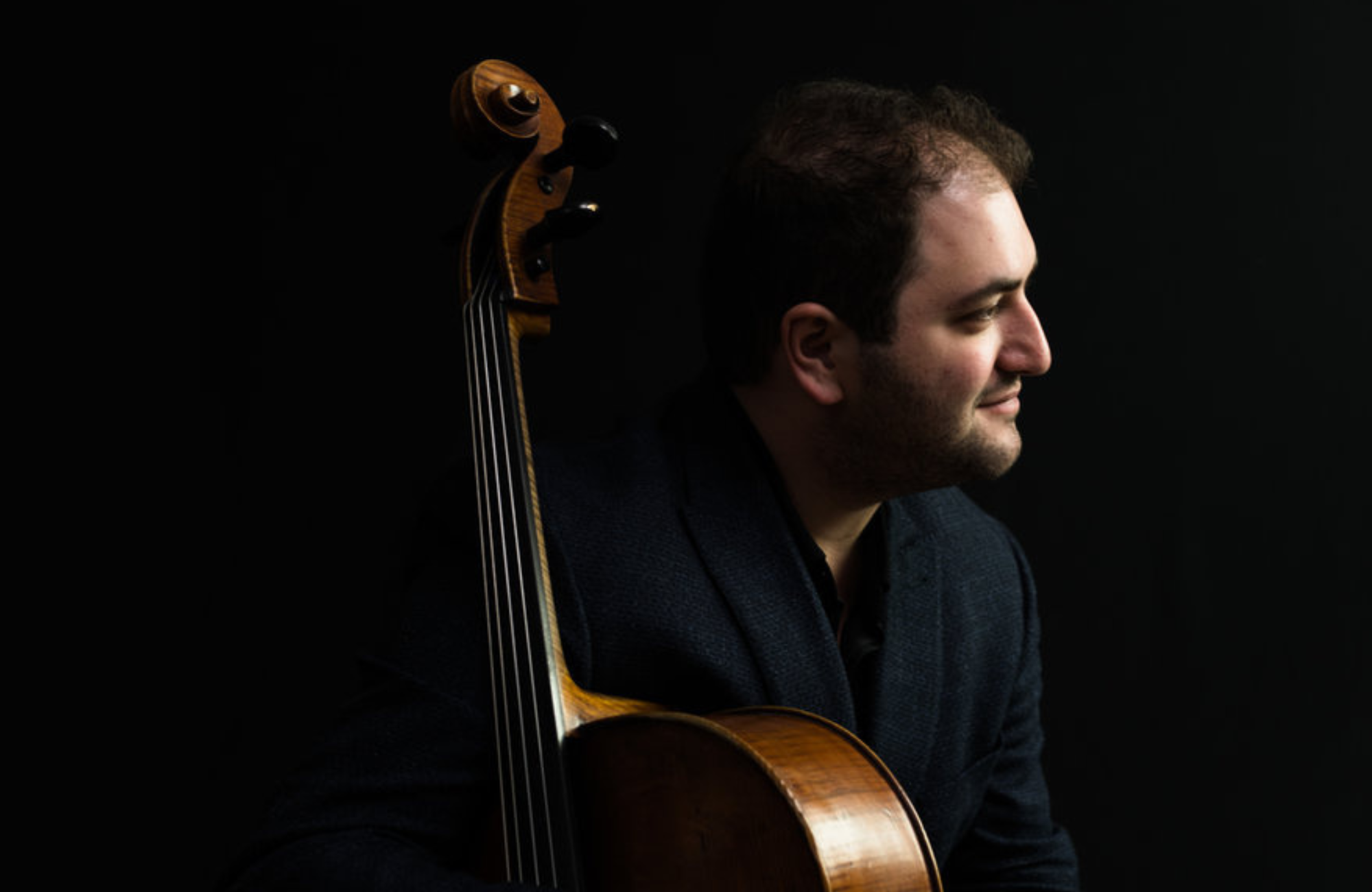
Julian Schwarz has been heralded from a young age as a cellist destined to rank among the greatest of the 21st century, Julian’s powerful tone, effortless virtuosity, and extraordinarily large color palette are hallmarks of his style.
After making his concerto debut at the age of 11 ...
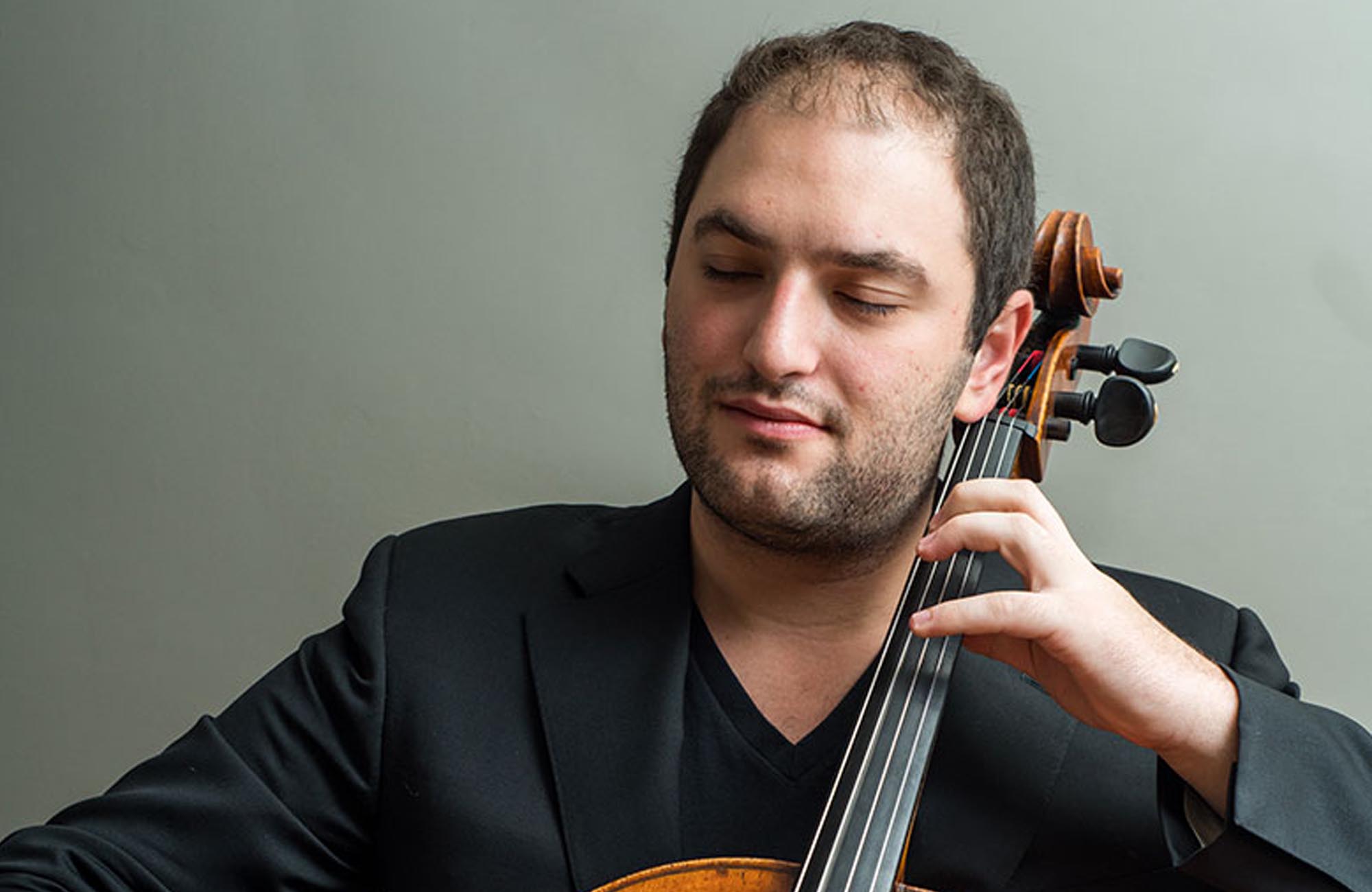
Julian Schwarz has been heralded from a young age as a cellist destined to rank among the greatest of the 21st century, Julian’s powerful tone, effortless virtuosity, and extraordinarily large color palette are hallmarks of his style.
After making his concerto debut at the age of 11 with the Seattle Symphony, he made his US touring debut with the Moscow Radio Symphony Orchestra in 2010. Since being awarded first prize at the inaugural Schoenfeld International String Competition in Hong Kong, he has led an active career as soloist, performing with the symphony orchestras of Annapolis, Arizona, Boise, Buffalo, Charlotte, Columbus, Delaware, Des Moines, Hartford, Jacksonville, Louisville, Memphis, Modesto, Omaha, Puerto Rico, Richmond, Rochester, San Antonio, San Jose, Sarasota, Syracuse, Toledo, Tucson, Virginia, West Virginia, Wichita, and Winston-Salem, among many others. Internationally, he made his Australian debut with the Queensland Symphony, his Mexican debuts with the Boca del Rio Philharmonic in Veracruz and the Mexico City Philharmonic with frequent collaborator Jorge Mester.
As a chamber musician, Mr. Schwarz performs extensively in recital with pianist Marika Bournaki. In 2016 Schwarz & Bournaki were awarded first prize at the inaugural Boulder International Chamber Music Competition’s “The Art of Duo”, and subsequently embarked on an extensive 10-recital tour of China in March 2017. Mr. Schwarz is a founding member of the New York based touring ensemble “Frisson” and was recently appointed the newest core member of the Olmos Ensemble in San Antonio, TX. He is a member of the Palladium Chamber Players (St Petersburg FL), the Alaria Ensemble (New York NY), and has given over 100 performances at Brooklyn’s Bargemusic. He has appeared at the Cape Cod Chamber Music Festival, Orcas Island Chamber Music Festival, Seattle Chamber Music Festival, Josef Gingold Chamber Music Festival, Verbier Festival, and the Salzburg Mozarteum. In addition, he runs programming for the Tuesday evening chamber music series at the Eastern Music Festival in Greensboro, NC.
Mr. Schwarz is deeply committed to the future of American music, and will present the world premiere of Jennifer Higdon’s first Cello Concertro with a large consortium of orchestras spring 2026. His championing the cello music of Arthur Foote will result in the first commercial recording of Foote’s Cello Concerto (1894) with the Buffalo Philharmonic, to be released on the Delos label. Past commissioning projects include concertos by Lowell Liebermann (recorded with the Annapolis Symphony for release in 2025), Richard Danielpour, and Samuel Jones (recorded with the All Star Orchestra for public television in 2012, subsequently released as a DVD on Naxos). Other premieres include recital works by Paul Frucht, Scott Ordway, Jonathan Cziner, Gavin Fraser, Alex Weiser, Ofer Ben-Amots, Michael Ippolito, chamber music by Adolphus Hailstork, Henri Lazarof, Jonathan Newman, Bright Sheng, and the US Premiere of Dobrinka Tabakova’s Cello Concerto. Of special note is Mr. Schwarz’s ongoing commitment to the music of Jewish experience, including projects with the YIVO Institute for Jewish Research (music of Joachim Stutschewsky and his circle), the Defiant Requiem Foundation (music of Holocaust composers and their influence) Central Synagogue (yearly feature on Jewish Broadcasting), the Milken Archive of American Jewish Music—for which he has recorded the complete cello/piano works of Ernest Bloch, and a new association with South Florida Public Broadcasting to raise awareness of the history of Jewish music.
A devoted teacher, Mr. Schwarz serves as Associate Professor of Cello and String Area Coordinator at Shenandoah Conservatory of Shenandoah University (Winchester, VA), and on the artist faculty of NYU’s Steinhardt School of Music. In the summer, he teaches and performs at the Eastern Music Festival and the Josef Gingold Festival. In 2023, he was one of the first cellists to record pedagogical tutorials for the online teaching platform Tonebase, including comprehensive examinations of the Elgar Concerto, Piatti Caprices, tone production, and vocal elements in cello playing. As a writer, he has contributed frequently to Strings Magazine’s Artist Blog, has written learner’s guides for The Violin Channel, and has edited a series of Ernest Bloch editions with written prefaces for Carl Fischer Publishing. Past faculty appointments include artist-in-residence at the Lunenburg Academy of Music Performance (Nova Scotia, Canada) and faculty teaching assistant to Joel Krosnick at The Juilliard School.
Born in Seattle, WA in 1991 to a multigenerational musical family, Mr. Schwarz studied at the Academy of Music Northwest and the Lakeside School. He continued to the Colburn School in Los Angeles under Ronald Leonard, and then moved to New York City to study with mentor Joel Krosnick at The Juilliard School (BM 14, MM 16). Other influential teachers include the late David Tonkonogui, the late Toby Saks, the late Lynn Harrell, Neal Cary, and chamber music mentors Andre Roy, Arnold Steinhardt, Jonathan Feldman, Toby Appel and Paul Coletti. Julian plays a Neapolitan cello made by Gennaro Gagliano in 1743 and American bows by Paul Martin Siefried. A Pirastro and Melos artist, he endorses and plays the “Perpetual” medium and edition sets of cello strings and Melos light rosin.
Julianschwarz.com
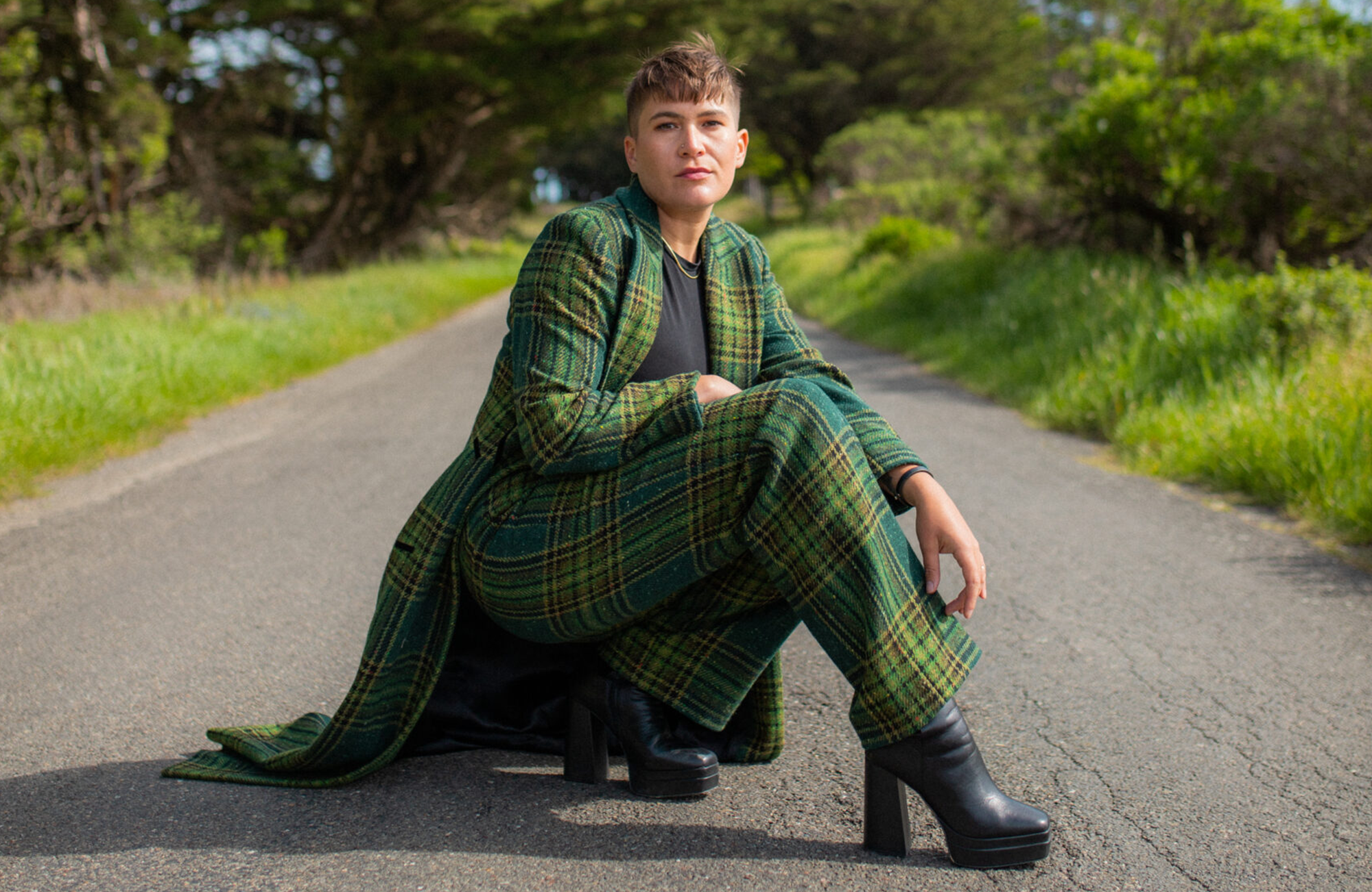
Jennifer Higdon is one of America’s most acclaimed figures in contemporary classical music, receiving the 2010 Pulitzer Prize in Music for her Violin Concerto, a 2010 Grammy for her Percussion Concerto, a 2018 Grammy for her Viola Concerto and, most recently, a 2020 Grammy for her Harp Concerto. Higdon’s first opera, ...
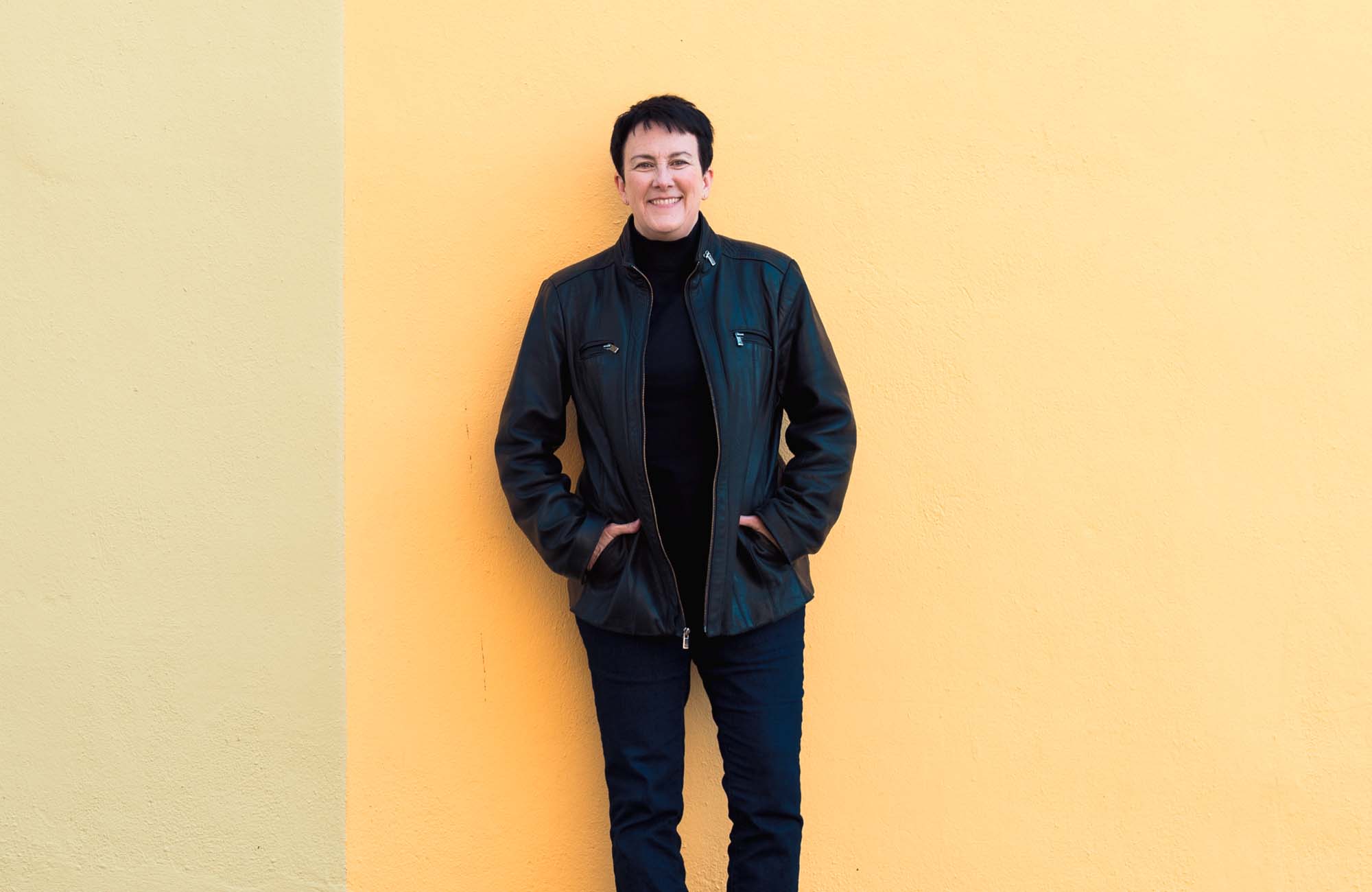
Jennifer Higdon is one of America’s most acclaimed figures in contemporary classical music, receiving the 2010 Pulitzer Prize in Music for her Violin Concerto, a 2010 Grammy for her Percussion Concerto, a 2018 Grammy for her Viola Concerto and, most recently, a 2020 Grammy for her Harp Concerto. Higdon’s first opera, Cold Mountain, won the International Opera Award for Best World Premiere and the opera recording was nominated for 2 Grammy awards. In 2018, Higdon received the prestigious Nemmers Prize from Northwestern University, awarded to contemporary classical composers of exceptional achievement who have significantly influenced the field of composition. Most recently, she was invited to become a member of the American Academy of Arts and Letters. Higdon enjoys several hundred performances a year of her works and her works have been recorded on more than 70 CDs.