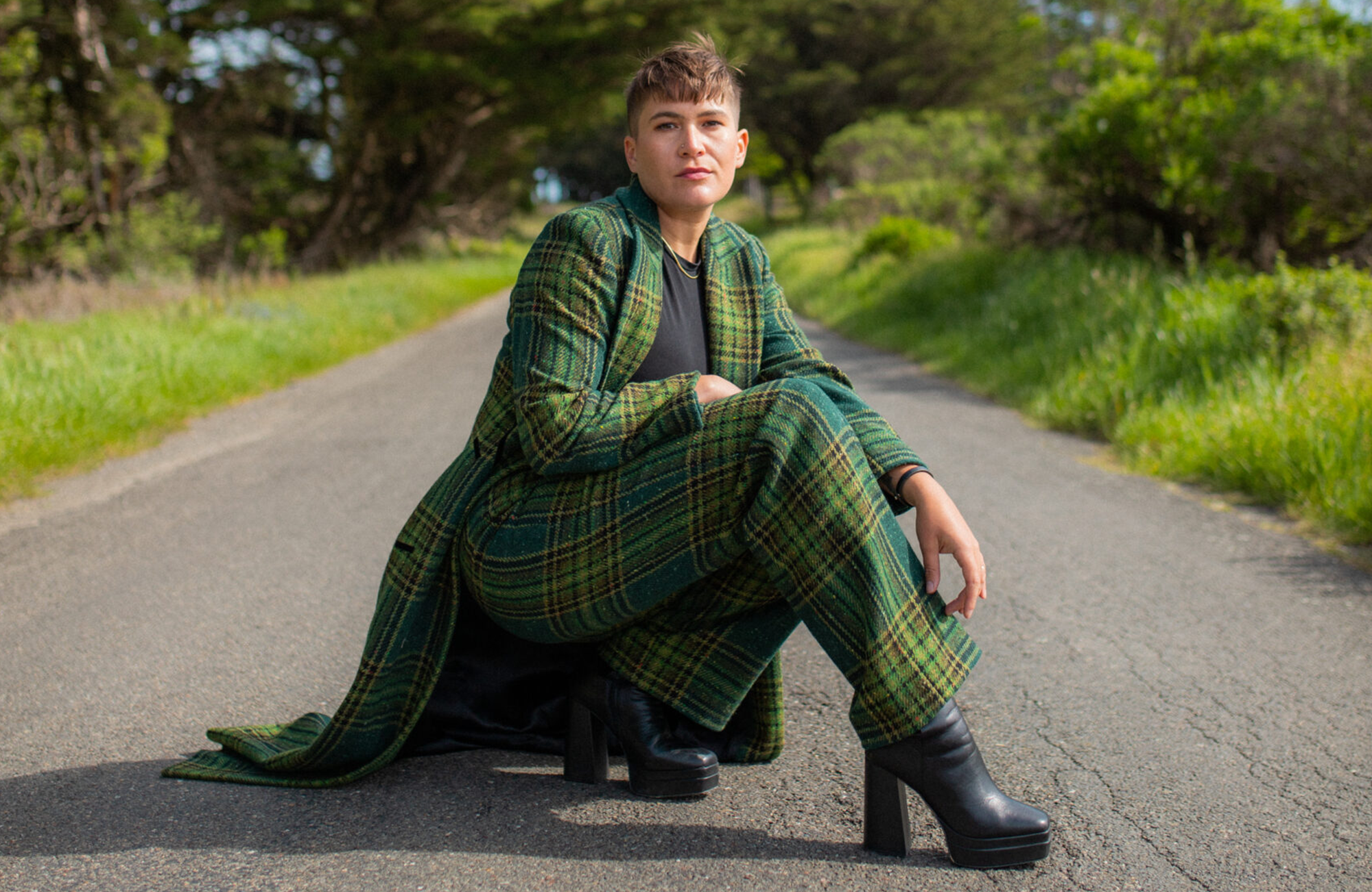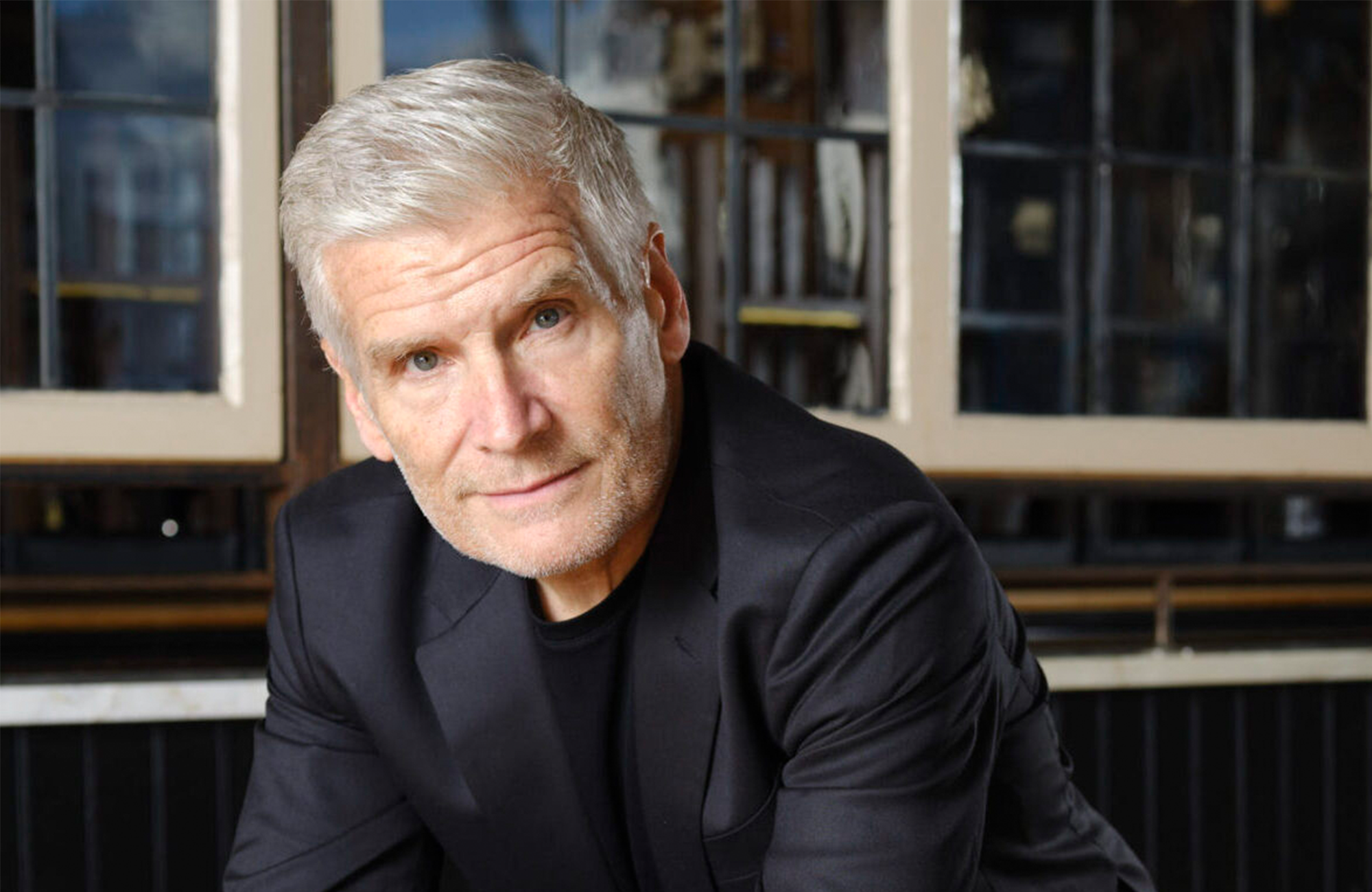

This program contains musical influences from early 20th-century Paris. Darius Milhaud’s Le boeuf sur le toit captures the playful, jazz-inflected energy of the French avant-garde, while Maurice Ravel’s Piano Concerto in G Major pairs jazz influenced elegance and rhythmic sparkle. Though Russian by birth, Igor Stravinsky helped make Paris the center of musical modernism in the early 20th century, and the 1919 suite from The Firebird closes the program with shimmering color and triumphant sweep.
PROGRAM
MILHAUD: Le boeuf sur le toit, op.58 
RAVEL: Piano Concerto in G Major
STRAVINSKY: The Firebird (1919)
THANK YOU TO OUR SERIES SPONSORS!

Title Sponsor

Exclusive Automobile Sponsor

Official Parking Sponsor

Official Audiology Sponsor

Media Sponsor
THANK YOU TO OUR CONCERT SPONSOR!
DAVID ABRAMS
PROGRAM NOTES
Tonight’s concert is a landmark in the orchestra’s history: the first concert conducted by Austin Chanu as our new Music Director. As you’ll see, there are a couple of remarkable coincidences behind the program. It was put together by the orchestra’s Artistic Operations Committee well before we knew who our new conductor would be—yet because of the deep connections between Austin and the music, it seems as if it has been constructed with him in mind. A sign of fate?
There’s a second figure who stands at the center of our ...
Tonight’s concert is a landmark in the orchestra’s history: the first concert conducted by Austin Chanu as our new Music Director. As you’ll see, there are a couple of remarkable coincidences behind the program. It was put together by the orchestra’s Artistic Operations Committee well before we knew who our new conductor would be—yet because of the deep connections between Austin and the music, it seems as if it has been constructed with him in mind. A sign of fate?
There’s a second figure who stands at the center of our program: the great impresario Serge Diaghilev (1872–1929). Born in Russia, Diaghilev moved to Paris where he founded the avant-garde Ballets Russes, a company of such artistic audacity that it transformed the very nature of ballet and, in turn, music and the visual arts. During his active years, he championed all three composers we’re hearing and significantly boosted their careers.
Let’s begin with our closing number, since both Austin and Diaghilev are tied particularly strongly to Igor Stravinsky (1882–1971). Austin was not especially fond of classical music while a teenager—until his band teacher encouraged him to attend a concert at which Michael Tilson Thomas conducted Stravinsky’s Rite of Spring. He was immediately hooked—by Stravinsky and by classical music more generally. The 1910 fairy-tale ballet The Firebird remains one of his favorite works.
As for Diaghilev: he commissioned The Firebird, which turned out to be the composer’s breakout score, although, oddly, Stravinsky’s participation in the ballet was almost accidental. Planning for the production was already well underway—with a scenario, a choreographer, and a composer already chosen—when the original composer, Nikolai Tcherepnin, dropped out. Diaghilev scrambled, but couldn’t find a big name to take his place; so he took a gamble on Stravinsky, a barely emerging talent. His gamble paid off: the ballet was a huge success, and Stravinsky’s international career took flight with a work that, for well over a century, has remained one of his most beloved.
The full ballet lasts about 45 minutes, and employs a very large orchestra. Stravinsky went on to make three shorter suites, two of which call for smaller forces more practical for concert use. The 1919 version is by far the most popular, in part because even with its compression, it still captures, as Austin points out, the “arc” of the ballet by “telling the complete story.” It’s the one we’ll be hearing tonight.
And what’s that story? If you know Tchaikovsky’s Swan Lake, The Firebird will seem familiar. Prince Ivan stumbles upon an enchanted garden, where he catches a magical Firebird—only to release her when she pleads for her freedom. Thirteen princesses appear—they have been put under a spell by the evil sorcerer Kashchei—and Ivan falls in love with one of them. Kashchei nearly captures Ivan, but the prince calls on the Firebird to help. She hypnotizes the sorcerer’s monstrous henchmen and exhausts them by forcing them to join an “Infernal Dance.” (In Mozart’s fairy-tale opera The Magic Flute, Papageno’s bells similarly save him by infecting his enemies with an urge to dance.) Kashchei is destroyed, his prisoners are freed, and Ivan is united with his princess.
Besides its narrative power, the ballet caught on because of its melodic richness and, even more, its extraordinary color. Stravinsky had studied with Nikolai Rimsky-Korsakov, one of the great nineteenth-century orchestrators—and the pupil lived up to his mentor’s standards. Stravinsky was especially proud of one effect in the beginning: the luminous flash of the Firebird’s magic wings (technically, created by harmonic glissandos on the strings). But in fact, the whole score is magically orchestrated.
The work is also connected to Rimsky-Korsakov through what Austin calls its “exoticism” (think, for instance, of Rimsky-Korsakov’s Scheherazade). “How Stravinsky utilized it is really interesting,” he says, “because it very much depends on the character. When you hear anything that’s connected to the Firebird or Kashchei, there’s always a heavy chromaticism, with very syncopated or more rhythmic figures. But when the music has to do with human figures like the prince or the princess, it’s a lot more folk-like.”
In fact, in the course of the ballet, Stravinsky quotes two actual folk songs. The Princesses’ “Round Dance” (Khorovod) employs a song that Rimsky-Korsakov had used in an orchestral work, the Sinfonietta on Russian Folk Tunes (this choice might well have been an homage to his teacher); the closing is based on “The Larch Tree” (often called “The Pine Tree”), which Stravinsky’s cherished predecessor Tchaikovsky had included in a set of folk-song settings for four hands. In Russia, these folk tunes might not have stood out. But in France, they contributed to Diaghilev’s project of feeding his audience’s taste for the exotic.
Two years after the premiere of The Firebird, the spectacular ballet Daphnis et Chloé, with music by Maurice Ravel (1875–1937), appeared at the Ballet Russes. It did not create the splash that Firebird did (although as an independent orchestral work—especially in the form of the suites Ravel drew from it—it became one of Ravel’s most popular pieces); and Ravel and Diaghilev later had a falling out so severe that it nearly led to a duel. But Ravel, like Stravinsky, went on to write many other ballets; and like Stravinsky, he turned away from the lavishness of his work for the Ballets Russes, writing works of such cool precision that Stravinsky dubbed him the “Swiss watchmaker.” Few composers were as consistently masterful as Ravel: there are no letdowns in his mature output. As Austin points out, “Everything he wrote is amazing.”
This precision reaches its peak in his 1930–31 Piano Concerto in G, one of his final compositions. Although it was not written for the dance, its balletic qualities stand out—and it was later choreographed by Jerome Robbins. And while it was written toward the beginning of Ravel’s long, debilitating final illness—a neurological disease that eventually destroyed his ability to speak and write—it’s generally a light and cheerful work, inspired by Mozart and Saint-Saëns. Indeed, it begins with the crack of a whip, and both of the outer movements have a strong circus character.
This concerto is often considered in tandem with Gershwin’s music—not only because it has a jazzy feel, but more specifically because the two composers admired each other greatly. (A few years earlier, when Gershwin had asked Ravel to take him on as a pupil, Ravel famously—although perhaps apocryphally—turned him down with the quip, “Why would you want to be a second-rate Ravel when you can be a first-rate Gershwin?”) But according to tonight’s soloist Scott Cuellar, what needs to be remembered about both Rhapsody in Blue and the Ravel G Major is that the jazziness can be misleading. When he was working on the Gershwin a few years back, he had a conversation with a friend who “cut to the quick and just said, ‘Well, you know, it’s not jazz.’ Of course I knew that, but to have it put that way so succinctly… ‘Don’t even go in that direction, don’t do anything differently from what you would do in the first place. Just lean into what is written.’
“I remember thinking about that in context of the Ravel. There are these flavors that crossed over the Atlantic, and Ravel had been to New York and heard jazz. And of course around the turn of the century there was a pipeline between France and the US, and there was a symbiosis in terms of harmony—and in terms of the development of jazz and the development of French harmony.” But whatever the influences and connections, it’s not jazz: “That helps me to think of it in a slightly more formal way—to tighten the screws.”
What are Scott’s favorite moments? He points immediately to the glorious music with the English horn: “I live for the English horn solo in the second movement. It’s just such a special moment. I love the English horn as an instrument, and the piano accompaniment is crystalline, but heartfelt, too.” He also mentions something more subtle, something you might not notice if it weren’t pointed out. “In the coda of the first movement, Ravel really leans into the low A, the lowest note on the piano, using it like a bass drum.” It’s so low you can barely distinguish the pitch. The result is “almost a murmuring, but the bass note itself is so inexorable. It’s really an effect that I love.”
Darius Milhaud (1892-1974) was yet another composer championed by Diaghilev. In 1924, Diaghilev mounted Milhaud’s ballet Le Train bleu, a production that brought in Jean Cocteau, Coco Chanel, and Pablo Picasso, among others. (Those were the days!) But according to pianist Arthur Rubinstein, the impresario had earlier turned down the opportunity to take up tonight’s offering, Le Boeuf sur le toit (1919–1920), partly due to copyright issues. The ballet got its premiere at the Théâtre des Champs-Élysées instead.
The work’s title (in English, “The Ox on the Roof”) is derived from the title of a Brazilian tango quoted in the piece. And the music has (at least) a double inspiration: the artistry of Charlie Chaplin and the music Milhaud heard while he was in the diplomatic service in Brazil. In fact, this wacky piece is not only Brazilian in flavor—it’s Brazilian in substance. In its brief course, it quotes Brazilian songs by 14 composers (you can well understand the copyright issues that were raised):
Fernando Lobo (otherwise known as “Marcelo Tupinambá”), Ernesto Nazareth, F. Soriano Robert, João de Souza Lima (“Xon-Xon”), José Monteiro (“Zé Boiadero”), Francisca Gonzaga, Álvaro Sandim, Catulo de Paixão Cearense, Juca Castro, Oswaldo Cardoso de Menezes, Alexandre Levy, Carlos Pagliuchi, Eduardo Souto, and Alberto Nepomuceno
Some of these artists, like Nazareth, Nepomuceno, and Gonzaga (a pioneering woman composer), are familiar; others have fallen into obscurity. The same is true of the particular tunes. Some are familiar. Austin is of Brazilian ancestry and has spent a lot of time in the country (the second major coincidence adding to the appropriateness of tonight’s repertoire); and he notes that he frequently used to hear Marcelo Tupinambá’s Sao Paulo Futuro: “It was a common street tune and one of the first recorded maxixes [a type of urban Brazilian popular dance] with lyrics in Brazil.” Other songs Milhaud quoted have more or less disappeared.
We’ve listed all the names here not only, as Austin says, to “acknowledge” the sources of the music but also to give some sense of the extent of Milhaud’s musical borrowing. The piece is in an elaborate rondo form, with a complicated key scheme—but while the structure and the adaptations (which sometimes distort the tunes dramatically) are Milhaud’s, the only “original” music he wrote is the recurring refrain that separates each pair of Brazilian tunes.
But is it really “Brazilian”? Austin points out that “this was a period in France—Paris especially—where exoticism and Orientalism were trending. Ravel, Debussy, Satie and, as we’ve seen, even Stravinsky—all of them were leaning into that exoticism.” The series of World’s Fairs in Paris helped feed this tendency: “There were gamelan ensembles, and composers of the time were using East Asian scales and harmonies…” But as soon as something is heard as “exotic,” it’s no longer really authentic. To put it in different terms, it’s Brazilian in the same way that the Ravel Concerto is “jazz”—that is, Brazilian music filtered through a French sensibility for French aesthetic purposes.
Or not quite the same way, for Milhaud’s French sensibility was very different from Ravel’s. Ravel’s jazz is suave—Milhaud’s sensibility at the time was rough and raucous, with a lot of “wrong-note” dissonance and bitonality, with instruments going their own way against the rest of the ensemble. The resulting collage is far from true Brazilian music. “He doesn’t always reflect the nuances in the rhythms that accompany the melodies. There are tangos, polkas, even sambas, but the accompaniment, including the harmonic accompaniment, doesn’t quite change enough to bring out those different styles.” Even the tempos, which are trapped by the reappearances of Milhaud’s own refrain, are somehow off.
But then again, this piece isn’t aiming to be Brazilian. It’s a Dada-esque French farce (the absurd scenario that Cocteau devised to go with it specifically pushed against the music)—no more an exercise in ethnomusicology than Chaplin’s film Gold Rush is a documentary about the Klondike. And as an escapist example of a more outlandish corner of French culture at the time, it makes a bracing opening to the season.
Peter J. Rabinowitz
Have any comments or questions? Please write to me at prabinowitz@SyracuseOrchestra.org
FEATURED ARTISTS
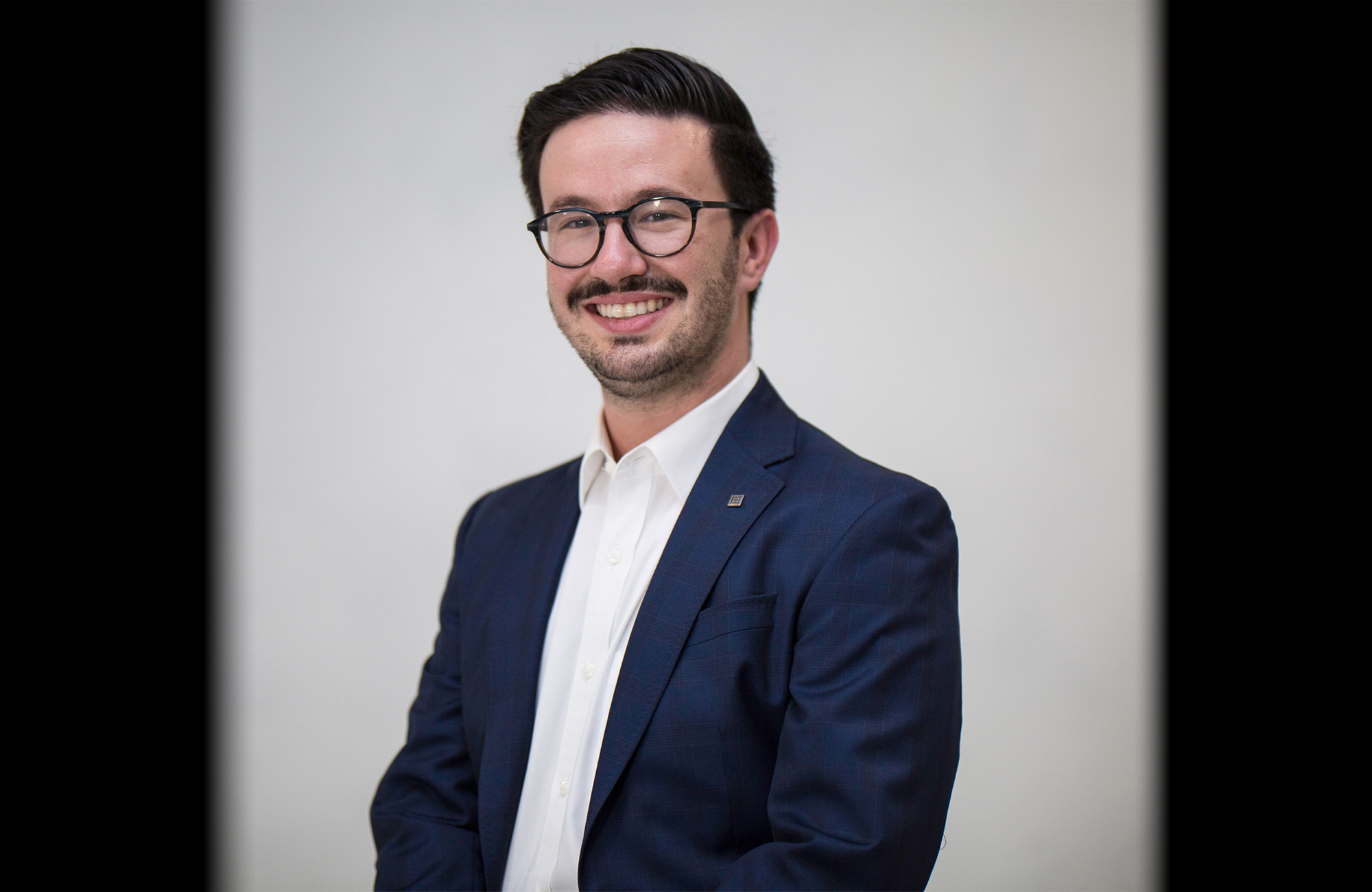
Hailed as “one of the great talents in the USA at the moment” by Yannick Nézet-Séguin, Brazilian-American conductor Austin Chanu is the newly appointed Music Director of The Syracuse Orchestra. He has also earned recognition as a four time recipient of the Career Assistance Award from the ...
Hailed as “one of the great talents in the USA at the moment” by Yannick Nézet-Séguin, Brazilian-American conductor Austin Chanu is the newly appointed Music Director of The Syracuse Orchestra. He has also earned recognition as a four time recipient of the Career Assistance Award from the Solti Foundation U.S., and as the third prize and orchestra prize winner in the Korean National Symphony Orchestra International Conducting Competition.
In the 25-26 season, Austin made debuts with The Syracuse Orchestra, the Qatar Philharmonic Orchestra, and the Johns Creek Symphony Orchestra. He has also been named a finalist in The Mahler Competition 2026 and will compete in June conducting the Bamberger Symphoniker. In recent seasons, he has appeared as a guest conductor with The Philadelphia Orchestra, Baltimore Symphony Orchestra, Filarmonica Banatul Timișoara, St. Louis Symphony Orchestra, Rochester Philharmonic Orchestra, and Omaha Symphony.
Previously, Austin was the Assistant Conductor of The Philadelphia Orchestra, where he assisted Music Director Yannick Nézet-Séguin. During this time, he co-lead a project to restore, rebuild, and elevate the underperformed works of American composer William Grant Still. He helped create and conducted the world premiere of a newly restored edition of Still’s Wood Notes.
Austin made his subscription debut with The Philadelphia Orchestra conducting Igor Stravinsky’s The Rite of Spring. Critics commended his interpretation saying, “the orchestra never sounded better as Chanu led with primal energy and shamanistic insight into the music… the orchestra matched Chanu’s confident leadership in a performance of searing energy and heart-thumping passion” (Broad Street Review).
Austin has a passion for contemporary music, stemming from his own background as a composer. He served as a teaching artist and conductor for the LA Philharmonic Association’s Associate Composer Program, as well as a Conducting Fellow at the Cabrillo Festival of Contemporary Music, where he studied with conductor Cristian Măcelaru. He was commissioned by the Eastman School of Music to compose an orchestral work for the school’s centennial celebration and conducted its world premiere in the Fall of 2021.
Austin was also formerly the Music Director for the Los Angeles Music and Art School, where he conducted and developed the artistic direction for the youth orchestra, choirs, and jazz band. Austin found it rewarding to draw on his Latino heritage to foster representation for the predominantly Latinx students and families in the program through repertoire selection.
In addition to his orchestral background, Austin has extensive experience in jazz and musical theatre styles. While living in Los Angeles, he was a high-call woodwind performer for musical pit orchestras and jazz ensembles.
Austin received a B.M. in Music Composition from the USC Thornton School of Music, graduating Magna cum Laude. He also graduated from the Eastman School of Music with an M.M. and DMA in Orchestral Conducting.
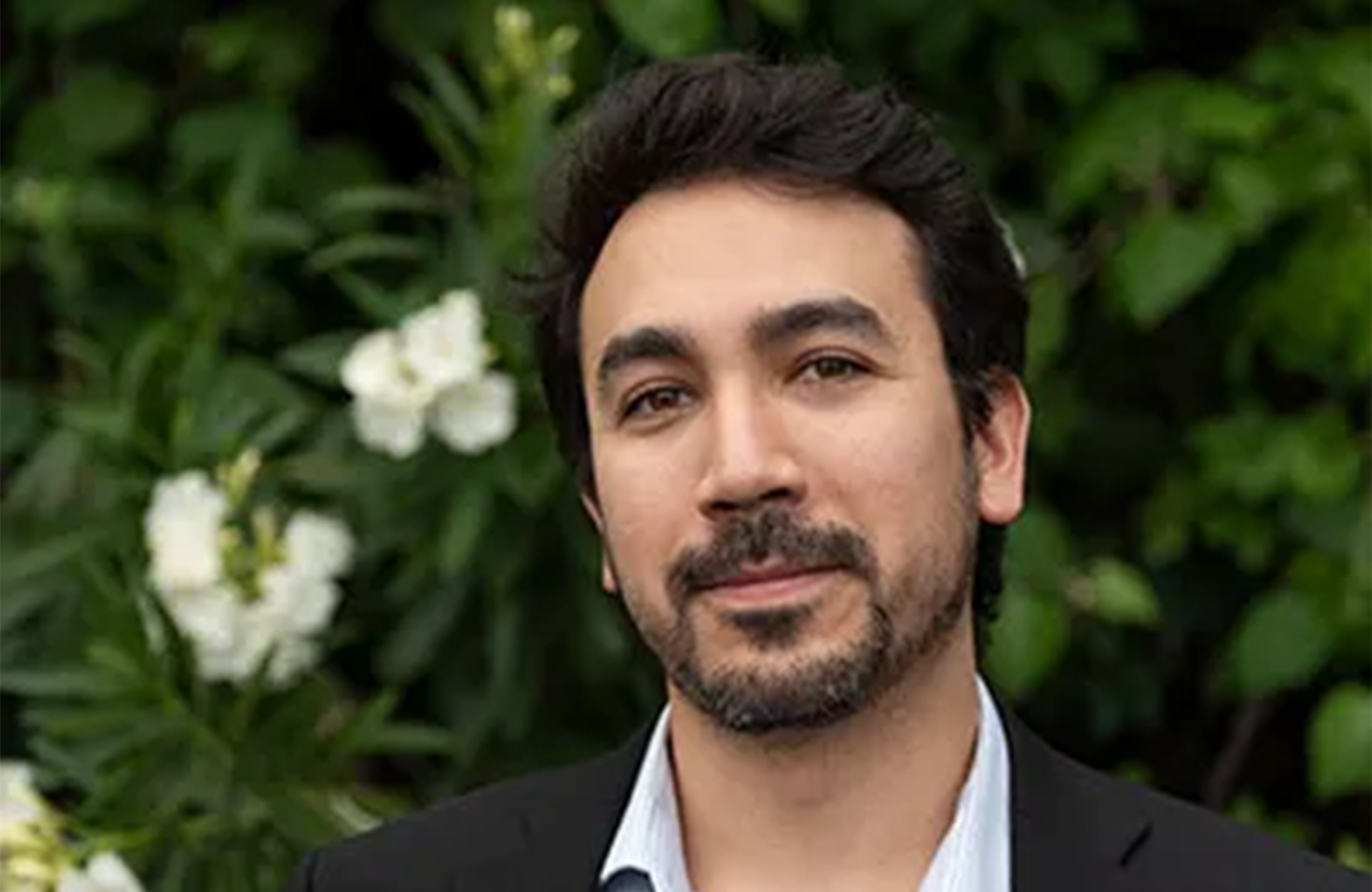
Pianist Scott Cuellar is an assistant professor of applied music and performance (piano) in the Setnor School of Music at Syracuse University, where he teaches applied piano as well as other keyboard-related courses.
In reviewing Cuellar’s debut recital at Carnegie Hall’s Weill Recital Hall, David ...
Pianist Scott Cuellar is an assistant professor of applied music and performance (piano) in the Setnor School of Music at Syracuse University, where he teaches applied piano as well as other keyboard-related courses.
In reviewing Cuellar’s debut recital at Carnegie Hall’s Weill Recital Hall, David LaMarche of the New York Concert Review described Cuellar’s performance as “virtuosic in scope and expression, like a great man of the theater,” and praised his “ability to illuminate both the external structure and the emotional core of the work he plays.” He has been described by Cleveland Classical as possessing “nerves of steel, a formidable technique and an architect’s understanding of structure.” The San Antonio Express-News praised his “luxuriant exploration” of Liszt’s First Piano Concerto, adding that his “technique was clean, his melodies and cadenzas were expressive, but most noticeable was his keyboard fluidity.”
Cuellar has given solo recitals at major venues around the world, including Carnegie Hall’s Weill Recital Hall, Vienna’s Konzerthaus, the Newport Music Festival, the Polytheatre Chongqing and the Shenyang Conservatory of Music in the People’s Republic of China, and has been a guest recitalist at Northwestern University’s Bienen School of Music, the Gijón International Piano Festival in Asturias, Spain, the Conservatorio Nacional de Música in Lima, Peru, Boston Conservatory and at the University of Washington. He has presented masterclasses at Renmin University in Beijing, Lee University, Grand Valley State University and has lectured at The Juilliard School. He has appeared as a soloist with the San Antonio Symphony, the Louisiana Philharmonic, the Rochester Symphony Orchestra, the Shepherd School Symphony Orchestra, the Oberlin Orchestra, the Lima Symphony Orchestra and several others.
Cuellar is featured on composer Gity Razaz’s debut album “The Strange Highway” (2022) with violinist Francesca DePasquale, released on BIS Records. He has performed with many of the world’s great artists, including Cho-Liang Lin, Jennifer Koh, Chee-Yun, Mark Nuccio, Desmond Hoebig, the Miró Quartet and Timothy Jones. He is a founding member of the Rodin Trio, along with assistant concertmaster of the Cincinnati Symphony Philip Marten and current Karajan Fellow Joshua Halpern. He has performed at the La Jolla Music Society’s Summerfest, the Orcas Island Chamber Music Festival and the Cactus Pear Chamber Music Festival. He has been heard on WQXR in New York, the Canadian Broadcasting Corporation, Seattle’s King FM, Houston Public Media and others.
Cuellar won the gold medal at the 2016 San Antonio International Piano Competition, where he also received prizes for the best performance of both a Romantic work (Robert Schumann’s “Humoreske”) and a Russian work (Sergei Prokofiev’s “Piano Sonata No. 4”). He was the gold medalist in the solo division of the 2013 Virginia Waring International Piano Competition, where he was also awarded the silver medal in the concerto division, and was the winner of the Krenek Prize for the best performance of a sonata by Ernst Krenek. Additionally, he was the bronze medalist at the 2016 New Orleans International Piano Competition.
Cuellar holds a doctor of musical arts from Rice University’s Shepherd School of Music, where he studied with Jon Kimura Parker. He earned a master of music from The Juilliard School, where he studied with Julian Martin, and he received a bachelor of music from the Oberlin Conservatory of Music, where he studied with Alvin Chow. During his time at Oberlin, he won three of the largest prizes offered to pianists: the Oberlin Concerto Competition, the Arthur Dann Competition and the John Elvin Prize for Juniors. He was previously an assistant professor at the Oberlin Conservatory of Music, where he taught chamber music, secondary piano and class piano.