
A Sunday afternoon with nothing to do but listen
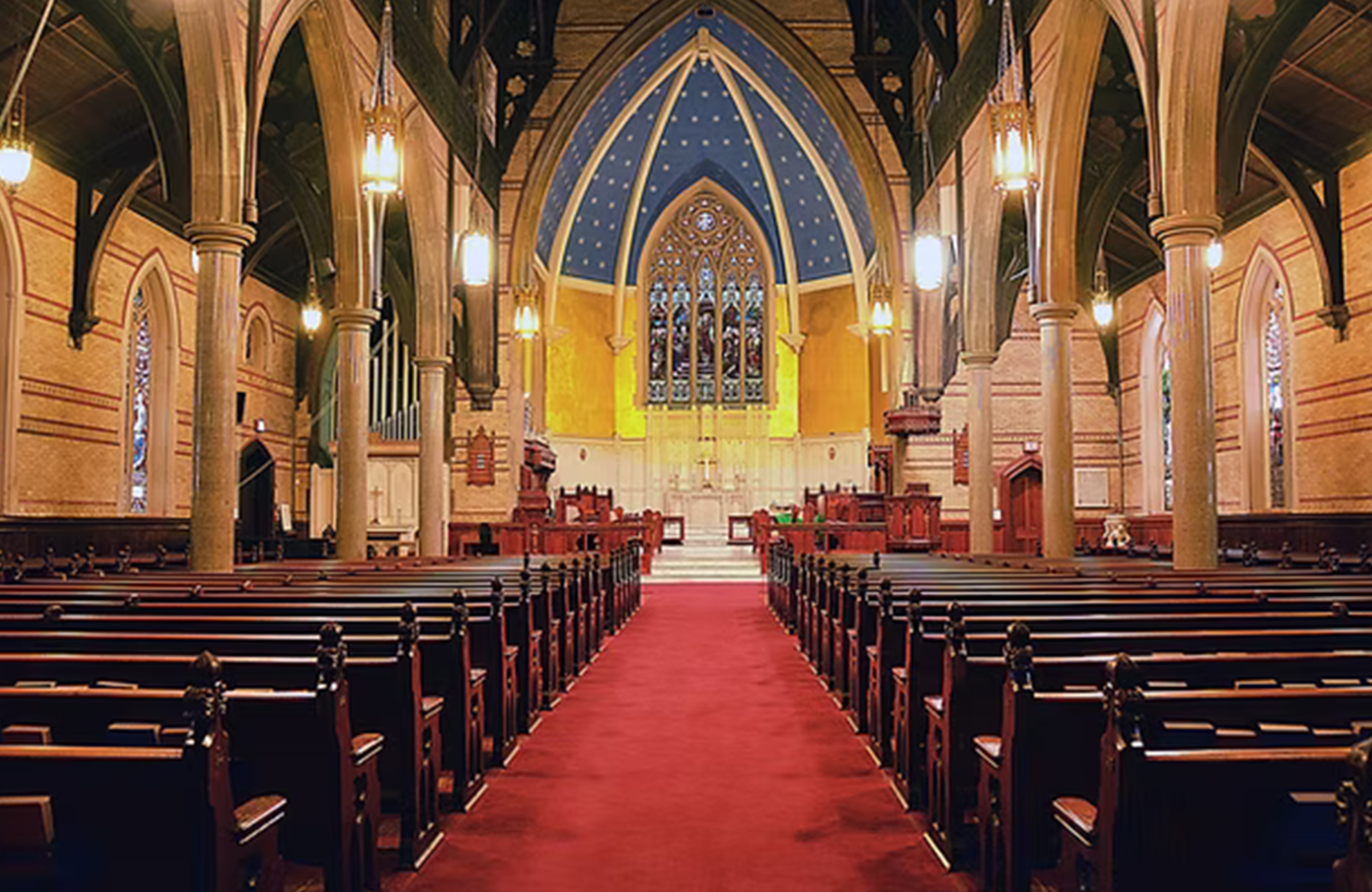
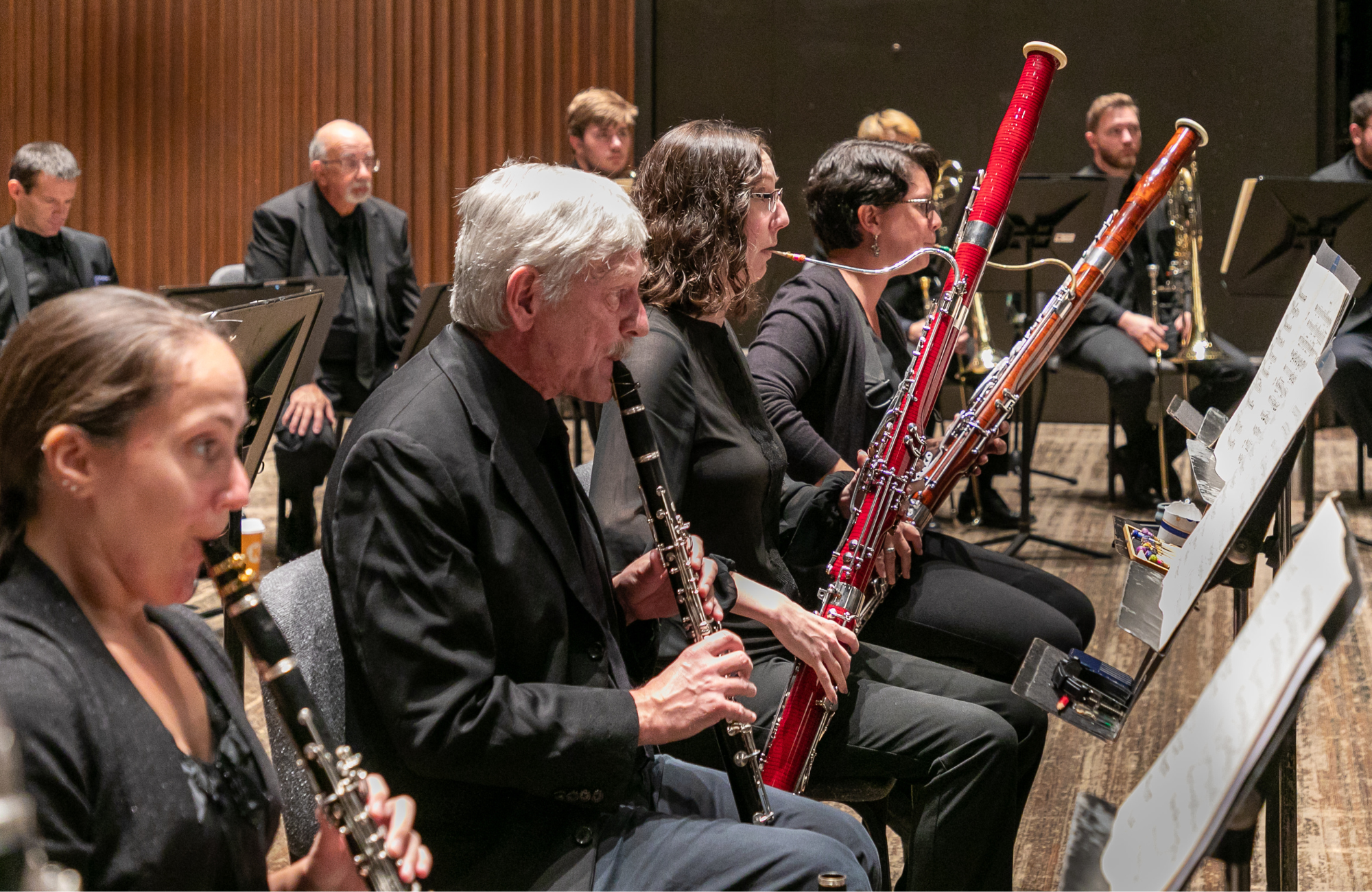
The orchestra’s wind section gets the stage to itself for this one. Flutes, oboes, clarinets, bassoons, and horns, up close at St. Paul’s.
Both pieces come from the late 1800s. Music was getting bigger and more serious then. These two went the other way. They’re clear, light, and full of tunes.
Charles Gounod’s Petite Symphonie means “little symphony.” Gounod was best known for his operas, and you can hear it. In the second movement, he gives the flute a solo that sings like an aria. He wrote it for his friend Paul Taffanel, one of the great flutists of his day.
Antonín Dvořák’s Serenade in D Minor is built on Czech village dances. One of them keeps shifting its beat on purpose, so it never sits still. Dvořák wrote the whole piece in about two weeks. Brahms saw the score and called it refreshing.
Conductor Colin Roshak started out as a clarinetist. He calls the Dvořák “something of an antidote to an advancing technological age.” His next line: “And in 2026, that feels quite relevant.”
Bring someone and make an afternoon of it.
THE DETAILS
Sunday, October 11, 2026, at 3 p.m.
St. Paul’s Syracuse, downtown, 310 Montgomery Street
Doors open at 2 p.m.
About 1 hour, no intermission
Tickets start at $44 Adult, $34 Senior, $10 Student, & Kids FREE
Free parking in the St. Paul’s lot, just west of the church off East Fayette Street. There’s an accessible entrance right from the lot.
What to wear? Whatever you want. Nobody is checking.
Come find out.
PROGRAM
GOUNOD: Petite Symphonie (Little Symphony for Wind Instruments) 
DVOŘÁK: Serenade in D Minor, Op. 44, B. 77
THANK YOU TO OUR SERIES SPONSORS!
Casual Series Title Sponsor

Exclusive Automobile Sponsor
PROGRAM NOTES
Some works are very much “of their time.” The Ravel Piano Concerto, for instance, which will be featured on our opening Masterworks concert next week (October 17), was written between 1929 and 1931, and it has a Jazz Age flavor that exemplifies that era perfectly; Beethoven’s 1804 Third Symphony, the “Eroica,” which we’ll be playing in January, dramatically announces the arrival of the Romantic period. In contrast, the two works being offered this afternoon, written only seven years apart in the late nineteeth century, withdraw from the spirit of their contemporary musical world.
This was a contentious time. The ...
Some works are very much “of their time.” The Ravel Piano Concerto, for instance, which will be featured on our opening Masterworks concert next week (October 17), was written between 1929 and 1931, and it has a Jazz Age flavor that exemplifies that era perfectly; Beethoven’s 1804 Third Symphony, the “Eroica,” which we’ll be playing in January, dramatically announces the arrival of the Romantic period. In contrast, the two works being offered this afternoon, written only seven years apart in the late nineteeth century, withdraw from the spirit of their contemporary musical world.
This was a contentious time. The Wagnerian revolution was in full swing, and forward-thinking composers were championing revolutionary scores featuring larger orchestras, more complex harmonic explorations, and more fluid formal structures that abandoned classical norms. In addition, as today’s conductor Colin Roshak observes, there was a strong pull toward a kind of “hyper-seriousness.” But both the Petite Symphonie (1885) by Charles Gounod (1818-1893) and the Serenade for Winds (1878) by Antonín Dvořák (1841-1904) look back, slightly nostalgically, to earlier times. These are compact works, clear in outline and enchanting in disposition-in Colin’s words, “pure and unencumbered.”
Yet for all their outward charm and lack of interest in breaking new ground, they are far from neutral: they stand out boldly, in at least two ways. First, they’re both generically unusual. Colin describes them as “chamber works with symphonic aspirations”-and as a result, they fit comfortably neither on chamber music concerts nor on orchestra concerts, and they consequently show up less often than they should. Then, too, as Colin points out, they’re both “unique slices of their composers’ outputs” -neither Gounod nor Dvořák wrote any other works for wind ensemble.
Gounod was once counted among the world’s most prominent composers-but his stature has waned. True, even while his reputation faded as the nineteenth century wore on, his opera Faust remained a staple of the repertoire: it was chosen to open the old Metropolitan Opera House in New York in 1883, and dominated the Met’s repertoire in its early seasons. (In fact, Faust remains the eighth most frequently performed opera in the company’s history-even ahead of anything by Mozart or Wagner.) Still, despite his astonishing productivity (17 stage works, 21 masses, numerous oratorios, and over 150 once-influential songs), only a tiny portion of his output is still performed regularly. Besides Faust, and a few songs that remain popular, you’re unlikely to run into much besides his operatic version of Romeo and Juliet, The Funeral March of a Marionette (remembered as the theme song for Alfred Hitchcock Presents), and the Petite Symphonie we’re hearing today.
The Petite Symphonie was written at the invitation of his multi-talented friend, the conductor, composer, and teacher Paul Taffanel, who was among the greatest and most influential flutists of his time, and who is widely considered the father of the modern French school of flute-playing. In 1879, he created the Société de Musique de la Chambre pour Instruments à Vent (The Society of Chamber Music for Wind Instruments). It was an organization that championed music for winds, which tended to be neglected at the time, but which was having a rebirth in part because of the development of new and better instruments in the wake of inventor Theobald Boehm’s improvements to the flute. That’s the period, says Colin, who’s a clarinetist as well as a conductor, that “the modern clarinet was really becoming what it is today.”
Taffanel’s group both championed new works and revived old repertoire (including Mozart’s wind music). And in fulfilling the request, Gounod managed to merge both of these interests. His work was clearly new and took full advantage of the latest advances in the construction of wind instruments. At the same time, it looked back to the standards. The form is textbook classical. In addition, Gounod started with a basic ensemble that served Mozart well in so many of his works-a wind octet for pairs of oboes, clarinets, horns, and bassoons.
There is a slight twist here, though: Gounod not only added a flute (an instrument Mozart claimed he couldn’t bear) in honor of Taffanel himself, but also gave the instrument a gorgeous solo in the second movement. It’s here that we best hear the vocal side of Gounod’s art: this movement is often compared to an operatic aria, and I suspect you’ll agree as you listen.
Mozart also lurks in the background of Dvořák’s Wind Serenade. It was probably (but not certainly) inspired by a Vienna Philharmonic performance of excerpts from the Mozart Serenade K. 361 (the so-called Gran Partita, featured on a Casual in 2025); and, written in just a couple of weeks, it shows an almost Mozartian ease that you don’t sense in Dvořák’s more highly wrought symphonies. The basic sonority is Mozartian as well, starting (as the Gounod does) with the familiar Mozart octet, but calling for a third horn, as well as a contrabassoon, a cello, and a double bass for added weight. (Mozart, too, had used a double bass in his Gran Partita).
But whatever its classical Viennese influence, the Serenade for Winds is also leavened with Dvořák’s typical reliance on Czech folk music. There are no quoted tunes, but the popular flavor is evident. Take the second movement: it is anachronistically labeled “Minuetto.” But the outer sections are closer to a sousedská (a Czech folk dance) than to a minuet; and, more strikingly, the trio at the center takes up gestures from the furiant, another Czech dance, one notable for its wild metrical shifts. No wonder that Dvořák’s admirer and supporter Brahms described the score as “refreshing.” As Colin suggests, these elements give the work a rustic flavor that, as the nineteenth century progressed, provided “something of an antidote to an advancing technological age.” He adds: “And in 2026, that feels quite relevant.”
Peter J. Rabinowitz
Have any comments or questions? Please write to me at prabinowitz@SyracuseOrchestra.org
FEATURED ARTISTS

Colin Roshak is an arts administrator, conductor, and entrepreneur based in New York City. He is the Artistic Planning and Special Projects Manager with the Chamber Music Society of Lincoln Center, where he produces concerts and digital assets for the world’s premier chamber music organization. Colin is a ...
Colin Roshak is an arts administrator, conductor, and entrepreneur based in New York City. He is the Artistic Planning and Special Projects Manager with the Chamber Music Society of Lincoln Center, where he produces concerts and digital assets for the world’s premier chamber music organization. Colin is a graduate of Oberlin Conservatory, Bard College, and is currently pursuing an Executive M.B.A. at Cornell University in the hopes it will prepare him to be a more effective leader. Originally a clarinetist, Colin has conducted ensembles of all shapes and sizes, from Sitka to New York City, and he is honored to be featured alongside the musicians of The Syracuse Orchestra. Colin is called to action by his conviction that the arts are an essential component of a rich, fulfilling life, and should be available to all — both as consumers and practitioners. He hopes to imbue his work with the values of joy, questioning, responsibility, and citizenship.