
NOTE: Tickets to the dinner at Touché before the concert are sold out.
Dance, fall in love, hold your breath, and walk out into the light.
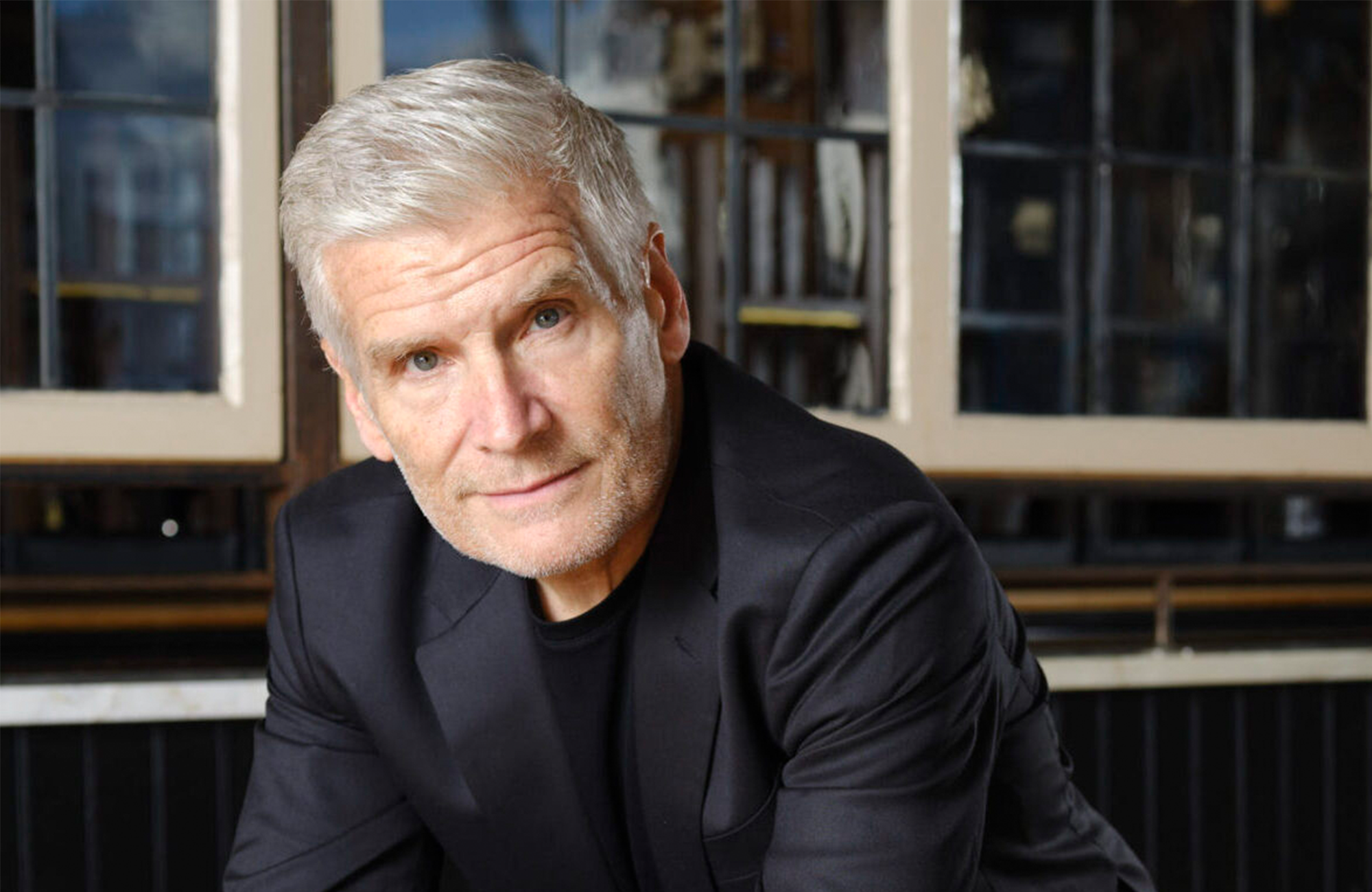
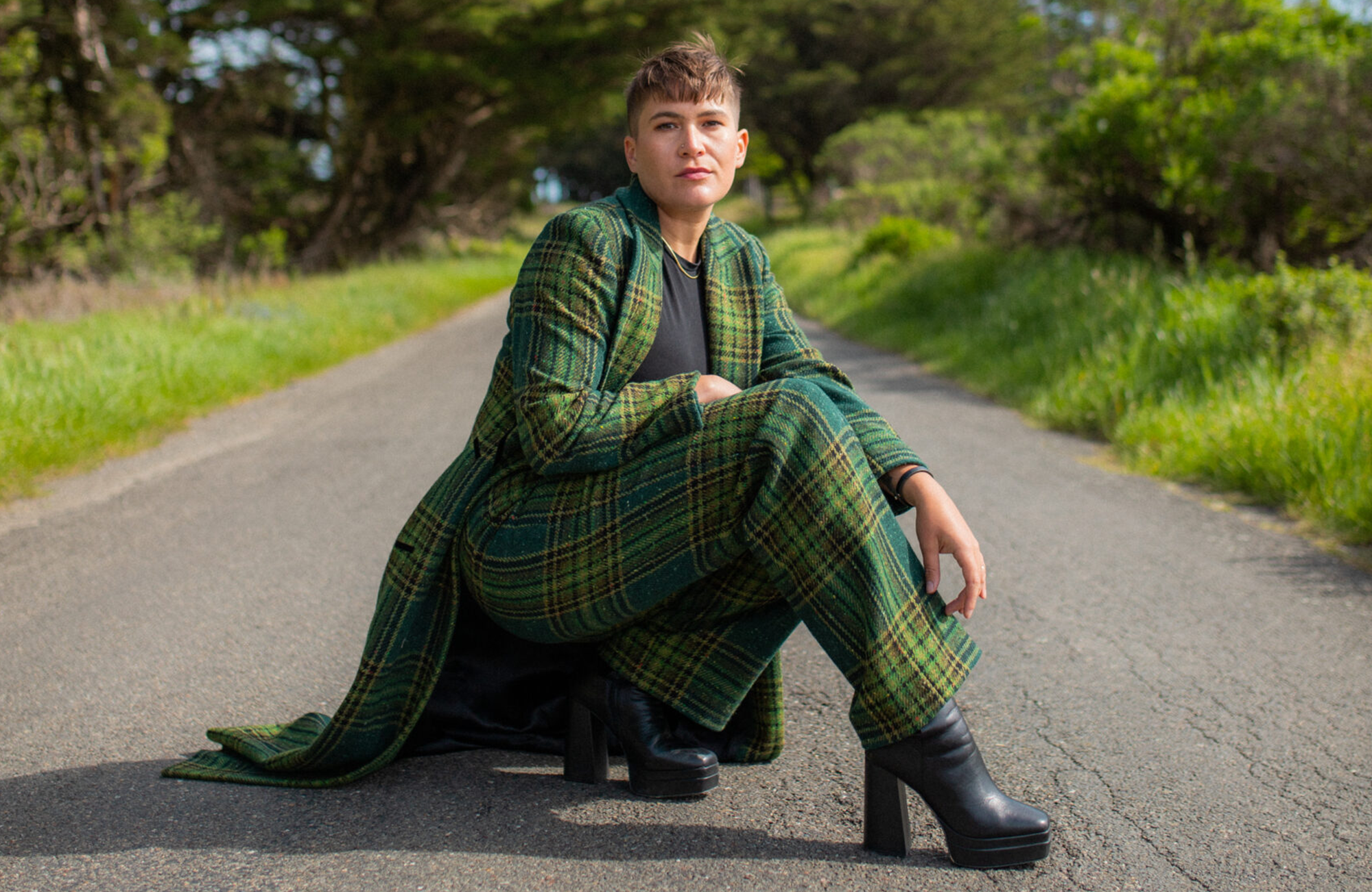
Austin Chanu conducts a night of American music, with mezzo-soprano Nikola Printz.
Some concerts give you one feeling. This one takes you through just about all of them, and sends you home lighter than you came.
It starts at a party. A woman crashes a fancy state dinner, hangs paper lanterns around the room, and starts dancing by herself. Then the man in the giant portrait on the wall steps down to join her, and the two of them foxtrot like they’re young again. It’s Chairman Mao and his wife, imagined by an American composer, and the music swoons like an old Hollywood movie.
Then it gets personal. Nikola Printz sings Good Morning, Beauty, four songs about long-term love: the wonder of waking up next to your person, the ruts every couple hits, and the humor that gets you through. Printz knows these songs well. They’ve sung the full cycle with orchestras on the West Coast.
After intermission, the room goes still. Samuel Barber’s Adagio for Strings is the music people turn to when they need to grieve or remember together. You’ve probably heard it in a film or at a memorial without knowing its name. Hearing it live, in a room full of people holding their breath at the same time, is something else.
Then Aaron Copland’s Appalachian Spring opens the windows. It’s bright, open music about a young couple starting a life together, and near the end you’ll hear an old tune called Simple Gifts. You’ll probably know it the second it starts.
Bring someone you love. Bring the friend who could use a good night out. Get dinner downtown, come early for the pre-concert talk if you want the backstory, and give yourself two hours that cover the whole range of what a person can feel.
Make it a whole night out. Start at 5 at Touché, on West Fayette Street, with a four-course dinner built around Saturday’s program, one course for each piece of music. Austin Chanu stops by during dinner to talk about the concert, and you’re done by 7 with plenty of time to get to your seat. $150 a person covers dinner, gratuity, and a Section A seat for the concert. To book it, click Get tickets and choose the Touché dinner package.
Keep going
The PEC Inc. Masterworks Series has four more nights this season: Heroic Aspirations in January, Mozart’s Jupiter Symphony in March, Brahms Requiem in April, and Shostakovich Symphony 5 in May. Build a FlexPack with the concerts you want, up to 10, and pay subscriber pricing for all of them.
BUILD A FLEXPACK
GOOD TO KNOW
How long is it? About two hours, including a 20-minute intermission.
What should I wear? There’s no dress code. Dress up if you feel like it, or come as you are.
When should I get there? Doors open at 6:00 PM. The pre-concert talk starts at 6:30, and the concert starts at 7:30. There’s a full bar and a snack bar in the lobby.
When do I clap? Some pieces have short pauses between sections. Most people hold applause until the whole piece is finished. When Austin turns around to face the audience, that’s your cue.
Where do I park? The Oncenter garage on E. Adams Street and the Oncenter lot on Harrison Street are right next to the theater. More parking options here.
Running late? No problem. You’ll be seated at the next break in the music.
PROGRAM
The Chairman Dances: Foxtrot for Orchestra (Adams): John Adams wrote this while working on his opera Nixon in China. Madame Mao crashes a presidential banquet, Mao steps down from his portrait, and the two of them dance back in time to when they were young. 
Good Morning, Beauty (Heggie), with Nikola Printz, mezzo-soprano: Four songs by Jake Heggie, with words by Taylor Mac. Romantic and funny, about what love looks like after the honeymoon. About 20 minutes.
Adagio for Strings (Barber): Slow, written for the strings alone, and built on long lines that keep rising. One of the most recognized pieces of American music ever written.
Appalachian Spring: Suite(Copland): Written for dancer and choreographer Martha Graham. Open, bright, and hopeful, with variations on the Shaker tune Simple Gifts near the end.
Listen before you go with our curated Youtube playlist!
Click here to watch the full playlist on Youtube.
THANK YOU TO OUR PEC MASTERWORKS SERIES SPONSORS!

Masterworks Series Title Sponsor

Exclusive Automobile Sponsor
Official Parking Sponsor

Official Audiology Sponsor

Masterworks Media Sponsor
THANK YOU TO OUR CONCERT SPONSOR!

FOUNDATION SUPPORT FOR OUR VETERANS FROM:

PROGRAM NOTES
Tonight’s concert offers four works by United States composers written over the last 90 years: two pillars of the repertoire; one more recent piece that has been gaining popularity; and one new piece, premiered just over a year ago, that is destined to join them.
Let’s begin with the most familiar score. When you think of US music, one of the first works that comes to mind is likely to be Appalachian Spring, composed by Aaron Copland (1900–1990) for choreographer Martha Graham in 1944. Copland is often associated with a folksy, nostalgic ...
Tonight’s concert offers four works by United States composers written over the last 90 years: two pillars of the repertoire; one more recent piece that has been gaining popularity; and one new piece, premiered just over a year ago, that is destined to join them.
Let’s begin with the most familiar score. When you think of US music, one of the first works that comes to mind is likely to be Appalachian Spring, composed by Aaron Copland (1900–1990) for choreographer Martha Graham in 1944. Copland is often associated with a folksy, nostalgic style—one that has come to serve as an emblem of Americana. And this work certainly has that open-air flavor. The ballet takes place in a Shaker community in Western Pennsylvania at the beginning of the nineteenth century, and the score sets out the action as follows:
The bride-to-be and the young farmer husband enact the emotions, joyful and apprehensive, which their new domestic partnership invites. An older neighbor suggests, now and then, the rocky confidence of experience. A revivalist and his followers remind the new householders of the strange and terrible aspects of human fate. At the end the couple are left quiet and strong in their new house.
The most famous section of the ballet is the set of variations on the Shaker hymn “Simple Gifts” toward the end—crowned by a coda that’s conductor Austin Chanu’s favorite passage. “When we’ve gone through everything—from the characters and their opinions, to the couple dealing with their daily life and rituals, and the Shaker hymn—the music suddenly fades away, and it transitions into the coda. Here, Copland writes over the string parts, ‘like a prayer.’ We hear three different iterations of this hymnal-like prayer, where it sounds as if the strings are humming like a church choir. In my view, that’s the bride and the groom taking in everything that they have dealt with, over the course of the ballet, and trying to decide what resonates with them or what doesn’t.” Then, the flute offers one final statement: “Everything that has happened leads to this moment, this inner reflection of the bride and groom.”
It’s easy to think of Copland as a kind of cultural reporter, an astute observer who reflected the musical culture he grew up in. But for all its apparent authenticity, Appalachian Spring is not grounded in the recollections or the family history of an insider. Rather, it stems from the imagination of an outsider—a gay, Jewish, Brooklyn-raised left-wing child of Lithuanian immigrants. More astonishing, although the score may sound like a quilt made up of half-remembered folk tunes, its nostalgia is largely invented. Aside from “Simple Gifts,” the music is pure Copland. In other words, Copland didn’t absorb the national sound—to a large extent, he invented it. He even invented some American history: “I did not realize,” he later confessed, “that there have never been Shaker settlements in rural Pennsylvania!”
But there’s more: Copland was anything but so straightforward as a composer. Besides the radiant music he wrote in this folk-like vernacular style, he composed in more modernist idioms, too, producing music that’s abstract, obstinate, and entirely lacking in any nationalist character. Similarly, Graham was not a realist—the ballet was originally inspired by her physical motions, not by images of pioneer life. And even as the ballet developed into something more representational, there are still traces of the harder Copland style.
Where do we find those traces? “The most dissonant music,” Austin points out, “the music that strays most from the folk music and the open chords we get in the beginning, is the solo dance of the bride, when she’s thinking about the pros and cons of motherhood and where her life is going. He throws a lot of dissonance in that melody that you don’t get in the rest of the piece.” This gives the music real psychological depth: “Her dealing with her wants, with the advice that she’s getting from other people in the town and from the revivalists—her dealing with those thoughts really comes through in that dance.”
Martha Graham’s ballet troupe was a traveling company, so Appalachian Spring was originally written for a small ensemble of 13 players. Copland later revised and shortened it for full orchestra. This suite, premiered in 1945, went on to become the composer’s most popular piece. That’s the version that will be closing tonight’s concert.
The Adagio for Strings by Samuel Barber (1910–1981) exists in several versions, too. It began as the second movement of his 1936 String Quartet; it went on to greater fame after he recast it for string orchestra two years later. But it didn’t stop there: just as the string writing near the end of Appalachian Spring is choral in spirit, so there’s something choral in Barber’s string writing here, too—something sufficiently strong that Barber himself was moved to adapt it for chorus, using the text of the Agnus Dei from the Mass.
Still, it’s the string-orchestra version that has become Barber’s most frequently performed piece. It made a splash from its first performance. In part, that’s because it was the first piece by an American composer that Arturo Toscanini performed on an NBC broadcast. But it also stunned its audience with its shattering musical effect. At the premiere, New York Times critic Olin Downes rightly praised its directness and simplicity—but he missed something deeper that has become more important as the music has aged.
What precisely is the nature of that “something deeper”? It’s hard to describe it. But whether you know the work well or are hearing it for the first time, you’ll certainly be caught up by it—especially when we reach the dissonant climax about two-thirds of the way through the piece. It’s a striking moment—doubly so when it’s followed, in Austin’s description, by “a huge silence before the strings come back in with that incredibly hushed harmony. I always see that as a mourning, or a wailing, or a screaming—and then that silence is as if you’re catching your breath, needing a second to come back down to reality, to recompose yourself before the ending.” You may find yourself tearing up—and you’ll certainly understand why it has become an emblem of national remembrance: why it was played as a tribute when Roosevelt died and when John F. Kennedy was shot. It is, for Americans, what “Nimrod” (from Elgar’s Enigma Variations) is for the English.
The vocal character of the Adagio is no surprise. Barber was, from the beginning, consumed with composing for voice—and through his songs and operas, he went on to become one of the most respected 20th century US composers of classical vocal music. His Knoxville: Summer of 1915, a setting for soprano and orchestra of words by James Agee, has been associated with this orchestra since its inaugural concert in 2011 after the collapse of the Syracuse Symphony—and it’s been featured on two concerts since then, including a concert of favorites nominated by the players in 2020. Barber has been influential as well as important, and Jake Heggie (b. 1961) may be one of the foremost current representatives of this tradition, famous both for his songs and his operas (most notably Dead Man Walking, Moby Dick). There’s certainly a kinship between Knoxville and Good Morning, Beauty (with a text by Taylor Mac and premiered in July 2024): Both are 20-minute scores for singer and orchestra, set to poetic texts that deal compellingly with memory.
More important, both are written in an immediately accessible style. Tonight’s soloist, Nikola Printz (who gave the first complete performance of Good Morning, Beauty by a single singer), says that Heggie’s score is “so easy to listen to. He is a classical composer, of course, but in the same way, I think, Adam Guettel or Rufus Wainwright are classical composers”—pointing in particular to “memorable melodies and very poignant lyrics. Good Morning, Beauty is such a colorful piece, and I just want people to have a good time listening to it. Each song is so distinctly different that everyone in the audience might have a different favorite part, which I think is really delightful.” Nikola points in particular to hearing audience members humming the refrain of the last song during intermission after a performance. “That’s a sign it’s an effective piece.”
Good Morning, Beauty began as a single song; it was later expanded to a four-part cycle. But it’s a cycle with a special character. Many song cycles—like Richard Strauss’s Four Last Songs (another Syracuse Orchestra favorite)—are made up of pieces that are loosely connected. The expanded version of Good Morning, Beauty, however, has—as Austin points out—“a strong narrative,” almost as if it were a short solo opera.
Like Appalachian Spring, Good Morning, Beauty centers on the trials and tribulations of a couple in love. But it has some unusual twists that give it a special flavor. “When we sing about love in classical music,” says Nikola, “it’s always big and grand and serious and life-altering, but no one really addresses these little things that everyone in long-term relationships experiences.” This cycle, in contrast, does address what Nikola describes as the “minutiae” of life as you move from young love through the period where aging and habit take over (the comic third movement, “In a Rut,” chronicles the period of “the sagging butt”). There’s another sharp turn in the fourth song, where the apparent universality of the text is cut short, and where, says Austin, “it comes full circle,” reminding us that “being a queer couple comes with challenges that a straight couple does not deal with.”
Nikola expands on this: “The last movement is for me, definitely a call to arms. Or maybe not a ‘call to arms’—that’s a little aggressive. It’s a plea for hope, a plea for people to feel hope and feel confidence. The one line that sticks with me so much is ‘I feel, / Despite the faith in all but atoms, / The stratums of our love / Are not what floats above / But what is real.’ The first time I sang it, I was getting verklempt, you know? It really hits you that queer people are being so viciously attacked”—even in this country, “the land of the free and the home of the brave, where we supposedly have rights to live our life with dignity and freedom. It’s revolutionary to insist on your personhood, and insist on your identity, and insist on living your life the way you want to live it, as long as it’s not hurting other people. The last movement is, I think, telling queer people, and all people, not to give up hope, and to stay the course of love, and to be honest, and to be kind to one another.”
The concert opens with The Chairman Dances (1985), a brief fox-trot (!) by John Adams (b. 1947)—generally viewed as the current dean of US composers. Although it’s closely tied to his ground-breaking Nixon in China, it’s not an extract or suite from the opera; rather, it’s what Adams described as a “warmup.” Adams is often described as a minimalist, but his music is a lot more romantic, less insistent, than the music of Philip Glass or Steve Reich. “I always think of John Adams’s music as a kaleidoscope,” says Austin. “As you look through a kaleidoscope, all the different shapes and colors spin, creating different intricate patterns. Similarly, Adams creates intricate patterns with different musical melodies and instruments.” There’s a certain rock element, too—no surprise if you know “I Was Looking at the Ceiling and Then I Saw the Sky,” the rock opera Adams wrote with a libretto by June Jordan.
The score includes a scenario for The Chairman Dances, written by the opera’s director Peter Sellars and librettist Alice Goodman:
Chiang Ch’ing, aka The White-Boned Demon, aka Madame Mao, has gatecrashed the Presidential Banquet. She is first seen standing where she is most in the way of the waiters. After a few minutes, she brings out a box of paper lanterns and hangs them around the hall, then strips down to a cheongsam, skin-tight from neck to ankle and slit up to the hip. She signals the orchestra to play and begins dancing by herself. Mao is becoming excited. He steps down from his portrait on the wall and they begin to foxtrot together. They are back in Yenan, on the Long March, dancing to the gramophone…
If you remember Márquez’s Danzón No. 2, which the orchestra has played several times, you’ll have some idea of the way The Chairman Dances evokes, through a slightly distorted out-of-date dance, the recollections of an aging couple. In its nostalgia, its exploration of marriage, and its imaginative use of American musical vernacular, it’s the perfect introduction to the concert.
Peter J. Rabinowitz
Have any comments or questions? Please write to me at prabinowitz@SyracuseOrchestra.org
FEATURED ARTISTS
Hailed as “one of the great talents in the USA at the moment” by Yannick Nézet-Séguin, Brazilian-American conductor Austin Chanu is the newly appointed Music Director of The Syracuse Orchestra. He has also earned recognition as a four time recipient of the Career Assistance Award from the ...
Hailed as “one of the great talents in the USA at the moment” by Yannick Nézet-Séguin, Brazilian-American conductor Austin Chanu is the newly appointed Music Director of The Syracuse Orchestra. He has also earned recognition as a four time recipient of the Career Assistance Award from the Solti Foundation U.S., and as the third prize and orchestra prize winner in the Korean National Symphony Orchestra International Conducting Competition.
In the 25-26 season, Austin made debuts with The Syracuse Orchestra, the Qatar Philharmonic Orchestra, and the Johns Creek Symphony Orchestra. He has also been named a finalist in The Mahler Competition 2026 and will compete in June conducting the Bamberger Symphoniker. In recent seasons, he has appeared as a guest conductor with The Philadelphia Orchestra, Baltimore Symphony Orchestra, Filarmonica Banatul Timișoara, St. Louis Symphony Orchestra, Rochester Philharmonic Orchestra, and Omaha Symphony.
Previously, Austin was the Assistant Conductor of The Philadelphia Orchestra, where he assisted Music Director Yannick Nézet-Séguin. During this time, he co-lead a project to restore, rebuild, and elevate the underperformed works of American composer William Grant Still. He helped create and conducted the world premiere of a newly restored edition of Still’s Wood Notes.
Austin made his subscription debut with The Philadelphia Orchestra conducting Igor Stravinsky’s The Rite of Spring. Critics commended his interpretation saying, “the orchestra never sounded better as Chanu led with primal energy and shamanistic insight into the music… the orchestra matched Chanu’s confident leadership in a performance of searing energy and heart-thumping passion” (Broad Street Review).
Austin has a passion for contemporary music, stemming from his own background as a composer. He served as a teaching artist and conductor for the LA Philharmonic Association’s Associate Composer Program, as well as a Conducting Fellow at the Cabrillo Festival of Contemporary Music, where he studied with conductor Cristian Măcelaru. He was commissioned by the Eastman School of Music to compose an orchestral work for the school’s centennial celebration and conducted its world premiere in the Fall of 2021.
Austin was also formerly the Music Director for the Los Angeles Music and Art School, where he conducted and developed the artistic direction for the youth orchestra, choirs, and jazz band. Austin found it rewarding to draw on his Latino heritage to foster representation for the predominantly Latinx students and families in the program through repertoire selection.
In addition to his orchestral background, Austin has extensive experience in jazz and musical theatre styles. While living in Los Angeles, he was a high-call woodwind performer for musical pit orchestras and jazz ensembles.
Austin received a B.M. in Music Composition from the USC Thornton School of Music, graduating Magna cum Laude. He also graduated from the Eastman School of Music with an M.M. and DMA in Orchestral Conducting.

Nikola Printz, a versatile artist making waves in Opera, Concert, and Recital, is noted for performances that are “heartrending, musically resplendent…and thrillingly fierce” (San Francisco Chronicle) and praised for possessing a “richly colored and flexible voice, complemented by a powerfully expressive physicality” (San Francisco Classical ...
Nikola Printz, a versatile artist making waves in Opera, Concert, and Recital, is noted for performances that are “heartrending, musically resplendent…and thrillingly fierce” (San Francisco Chronicle) and praised for possessing a “richly colored and flexible voice, complemented by a powerfully expressive physicality” (San Francisco Classical Voice). Noted American journalist Joshua Kosman reflects with “marvel at the career trajectory of Nikola Printz, who has recently made an artistic sprint from apprentice to star in what feels like the blink of an eye.”
Nikola Printz makes their London debut in autumn 2025, performing under the baton of Marin Alsop in a concert presentation of Laura Karpman’s opera Balls at the Royal Festival Hall with The Philharmonia. Printz portrays tennis legend Billie Jean King in the groundbreaking work, which dramatizes the historic 1973 “Battle of the Sexes” match. Karpman – an Oscar-nominated composer known for her acclaimed scores for American Fiction, The Marvels, and Kung Fu Panda 2 – is a leading advocate for equality in the film industry. She wrote the role of Billie Jean King specifically for Printz, who originated the part in the world premiere staged production by Opera Parallèle.
Highlights of the 2025–26 season include performances of Berlioz’s Les nuits d’été with the Vallejo Symphony, as well as Jake Heggie’s Dead Man Walking, singing the role of Jade Boucher and covering the lead role of Sister Helen Prejean in Leonard Foglia’s compelling production, conducted by Patrick Summers. The artist also covers the role of Kundry in a brand-new San Francisco Opera production of Parsifal, directed by Matthew Ozawa and led by Music Director Eun Sun Kim. Additional appearances of the season include a debut at Opéra de Lille in a production of Philip Glass’ Les Enfants terribles and a titular role debut as Handel’s Alcina with the Bay Area’s Festival Opera.
At San Francisco Opera – which Nikola Printz considers their “home company” – performance highlights include the titular role in Carmen Encounter, as well as featured roles during their two-year Adler Fellowship in Kaija Saariaho’s Innocence, Gabriela Lena Frank’s El Último Sueño de Frida y Diego, and Mason Bates’ The (R)evolution of Steve Jobs. Additional engagements include the role of Carmen with Festival Opera in the Bay Area, a UK debut at the Grange Festival, Peter Lieberson’s haunting Neruda Songs with Edwin Outwater conducting the Symphony of the San Francisco Conservatory of Music, and a tour with the Vermont Symphony Orchestra in Summer of Love—a vibrant program spanning global genres and featuring works by Tchaikovsky, Bernstein, and John Williams, alongside classic pop songs made famous by Nat King Cole and Screamin’ Jay Hawkins.
In recent seasons Nikola Printz has brought to life a diverse range of operatic characters including Dido (Dido and Æneas), Elle (La voix humaine), Rosina (Il barbiere di Siviglia), Dorabella (Così fan tutte), Cherubino (Le nozze di Figaro), and the title role of Orfeo ed Euridice. No stranger to the Symphony stage, the artist has appeared with the San Francisco Symphony in performances of Falla’s El Sombrero de Tres Picos and Mahler’s iconic Das Lied Von der Erde with the San Francisco Ballet and Vallejo Symphony.
A cosmopolitan curator and magnetic recitalist, Nikola Printz is the recipient of a 2025 Richard Tucker Career Grant from the Richard Tucker Music Foundation and the 2021 Schwabacher Debut Recital Award. They have impressed both audiences and critics alike, earning acclaim for their 2022 Schwabacher Debut Recital under the auspices of San Francisco Opera. Printz also was celebrated for their “March Madness” program—an exhilarating descent into identity, reinvention, and musical rebellion—featuring songs made famous by The Pixies, Elliott Smith, Kurt Weill, Nina Simone, and Nina Hagen, performed at the Chan National Queer Arts Center.
Nikola Printz is an accomplished aerialist, distinguished for designing, choreographing, and performing acrobatic opera productions in grand concert halls and smoky cabaret clubs across North America and internationally. Beyond their operatic and acrobatic work, they enjoy composing music, playing piano and guitar, cycling, practicing film photography, engaging in activism, and exploring the subversion of gender norms through art and performance.