
This is a concert of Greek love stories — from the dramatic rescue of Andromeda by Perseus on his winged horse Pegasus to the story of Daphnis and Chloe, who against all odds, including pirates, winter blizzards and kidnapping, still are able to sustain their love. Sandwiched in between is Bernstein’s take on Plato’s philosophy of love itself, written for violin and orchestra. Come for the love, stay for the music. This is a rarely heard combination of works that, while challenging for the performers, will sound effortlessly amazing to your ears.
PROGRAM
HOLMES : Androméde 
BERNSTEIN: Serenade after Plato’s “Symposium”
RAVEL: Daphnis et Chloé: Suite No. 1 & 2
PROGRAM NOTES
“Eager and inept”: that’s how the dust-jacket for Paul Turner’s translation describes the “young love” at the center of Longus’s 2nd-century Greek romance Daphnis and Chloe. Whatever else you can say about the ballet version that Maurice Ravel (1875–1937) composed in 1912, it’s certainly not “inept.” On the contrary, the “choreographic symphony” lays claim to being the most flawlessly orchestrated work in the repertoire. It’s also one of the most passionate. Ravel had a strong neo-classical streak, and he could easily have written an archly stylized score that mirrored the antiquity of the text. Instead, he ...
“Eager and inept”: that’s how the dust-jacket for Paul Turner’s translation describes the “young love” at the center of Longus’s 2nd-century Greek romance Daphnis and Chloe. Whatever else you can say about the ballet version that Maurice Ravel (1875–1937) composed in 1912, it’s certainly not “inept.” On the contrary, the “choreographic symphony” lays claim to being the most flawlessly orchestrated work in the repertoire. It’s also one of the most passionate. Ravel had a strong neo-classical streak, and he could easily have written an archly stylized score that mirrored the antiquity of the text. Instead, he chose to mirror its drama and sensuality. Still, for all its outward polish, its inner workings are intricate—although the intricacy is a means to audience intoxication, not an end in itself. In fact, says Larry Loh, his main challenge as a conductor is to make sure that the audience is never aware of the work’s complexity—for instance, its unpredictable meters. The lightness of the dance has to prevail.
Longus’s romance, an early example of a genre that continued through the melodramatic movie serials of the 1930s on to The Princess Bride, is the story of the love between a shepherd and shepherdess (both foundlings). They’re consistently threatened by violent suitors, invading pirates, winter blizzards, and abductions; but they remain constant until their passion is consummated on the final page, a consummation brilliantly reflected in Ravel’s score.
Ravel drew two suites from his ballet. The Second is a repertoire staple, but tonight we’re also including the rarer First Suite, as well as the optional choral parts, often omitted but a key spice for the music. The First Suite begins a third of the way into the ballet, with Daphnis’s despair over Chloe’s disappearance—a well-warranted despair, since she has been captured by pirates whose violent music soon takes over. We then skip over Chloe’s dramatic rescue by Pan; the Second suite begins with daybreak, followed by the reunion of the lovers and a general dance of joy. That daybreak music, by the way, with its glimmers of light and its awakening birds, may well be the most beautiful music in the repertoire (although a competitor is Strauss’s Four Last Songs, which we’ll be featuring on our last Masterworks concert this season).
The concert is filled out with two other works inspired by Greek literature centering on love. It opens with a treasure even rarer than the first Daphnis Suite: the 1883 tone poem Andromède by French composer Augusta Holmès (1847–1903). Holmès, like so many women composers, has been forgotten. But she was one of Franck’s protégées, was much admired by Saint-Saëns, and was praised by Liszt for her “extraordinary talents”; and resisting the social pressure on women to write in smaller forms, she worked on a vast canvas, taking on the then-advanced language of Liszt and Wagner to produce operas, large-scale choral works, and hefty symphonic poems like the one we’re hearing tonight.
Andromeda was the daughter of Cepheus and Cassiopeia of Aetheopia; when her mother boasted that her daughter’s beauty exceeded that of Poseidon’s groupies, the Neireids, Poseidon sent the monster Cetus as revenge. The only way to save kingdom was to sacrifice Andromeda by chaining her to a rock in the harbor. Fortunately, she was rescued by Perseus, riding on the winged horse Pegasus. As is clear from the poem that Holmès wrote to precede the score, the music emphasizes the rescue and its erotic aftermath. The churning of the sea, the battle music and Pegagus’s soaring, the languid beauty of the distant fields (with its “flowers of light and flames of honey”) to which Perseus takes Andromeda: Holmès takes full advantage of the pictorial opportunities of the story, ending up, it almost seems, where the Second Suite of Daphnis begins. But there’s another step, too: Holmès was a strong advocate for political liberation—and her work is also intended as an image of hopeful transport, through “winged poetry and immortal love,” for all humanity.
The centerpiece between these two opulently scored French works is a rather different take on Greek literature, for smaller orchestral forces: the Serenade for violin, strings, harp, and percussion by Leonard Bernstein (1918–1990). Composed in 1954—around same time as Candide, West Side Story, and On the Waterfront—the Serenade takes off from what the composer dubbed Plato’s “charming” dialogue, The Symposium. Plato’s work dramatizes a series of interconnected speeches about the meaning of love; Bernstein translates that conversation into a musical form in which each movement, in in his words, “evolves out of elements in the preceding one.” This gives the composer a chance to describe many different kinds of love, from the gentle “fairy-tale” love of the Aristophanes movement to the lyrical outpouring of Agathon. And Bernstein being Bernstein, the final movement—which begins with Socrates—is interrupted by Alcibiades and some partiers. “If there is a hint of jazz in the celebration, I hope it will not be taken as anachronistic Greek party-music,” says the composer, “but rather the natural expression of a contemporary American composer imbued with the spirit of that timeless dinner party.”
How important are the details of the philosophical program? Probably not very; according to tonight’s soloist, Elina Vähälä, the music “works perfectly, even if you’ve never read the dialogue.” Indeed, she thinks it’s possible that while the Plato was a springboard that inspired Bernstein, once he “started writing, it went its own way.” In any case, what she likes most is “the way every movement has its special, magical atmosphere.” One of Bernstein’s virtues is his ability both to “entertain” and to go “deep and beautiful—and also sarcastic, sometimes!” That’s clearly in evidence in the Serenade. “It’s got a full range from very tender and innocent music to dramatic pathos—and then there’s that tremendous jazz party at the end.”
It’s a workout for the soloist, too—although it rarely sounds that way. Some virtuoso pieces—say, the Liszt Piano Concertos—are written so idiomatically for the instrument that they can sound even more difficult than they are. This piece, like Daphnis, has to seem a lot less difficult than it really is. Thus, Elina, points out the first movement appears carefree—“but it’s not carefree to play! Even so, it must sound as easy as possible.”
In 2018, the Serenade was the most frequently performed concerto around the world, edging out such standards as the Tchaikovsky First Piano Concerto. That was partly, of course, because of the Bernstein centennial—but, as should be clear after tonight’s performance, it was also because of the magic that Elina talks about.
Peter J. Rabinowitz
Have comments or questions? Contact me at prabinowitz@ExperienceSymphoria.org
FEATURED ARTISTS
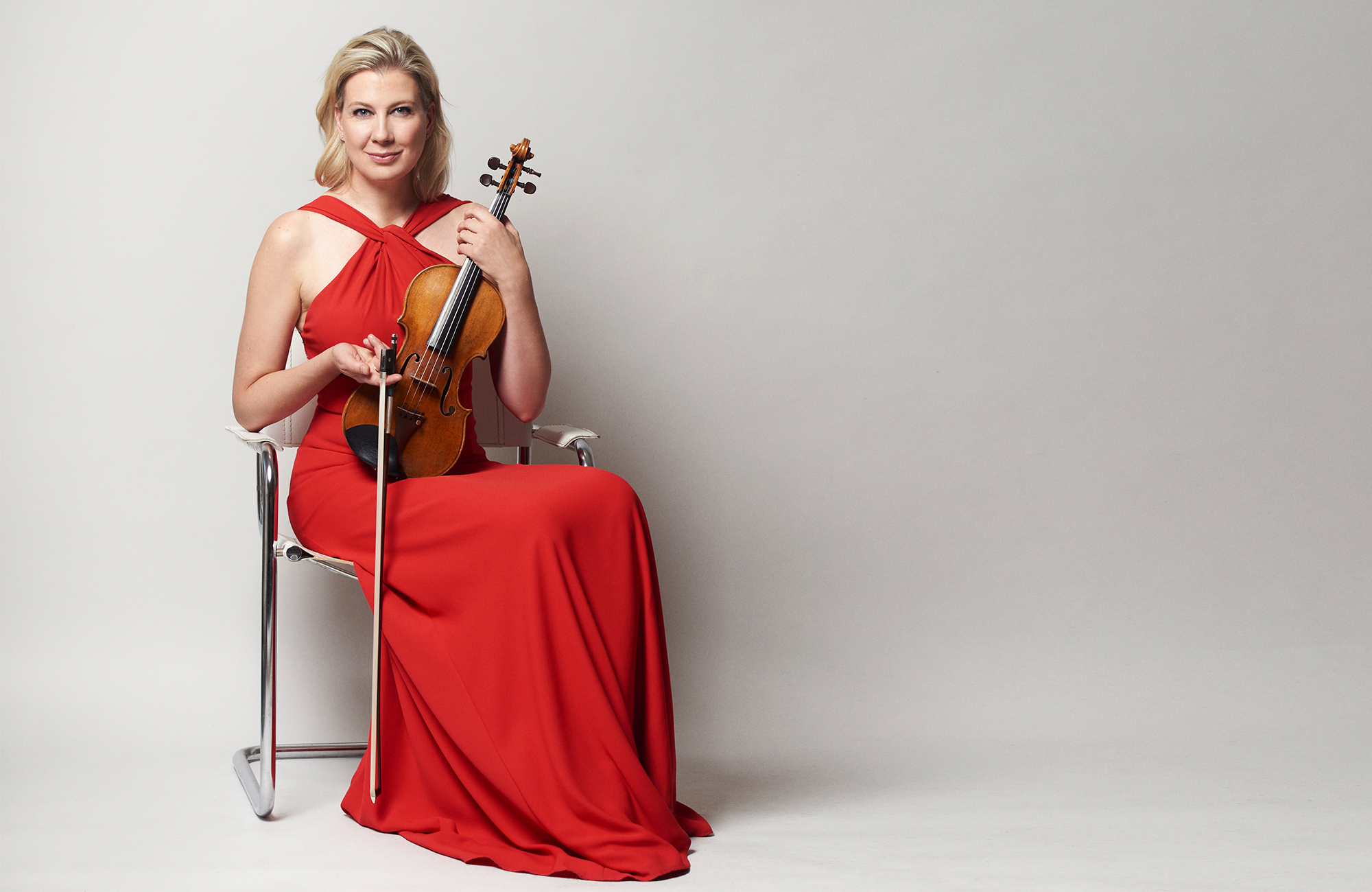
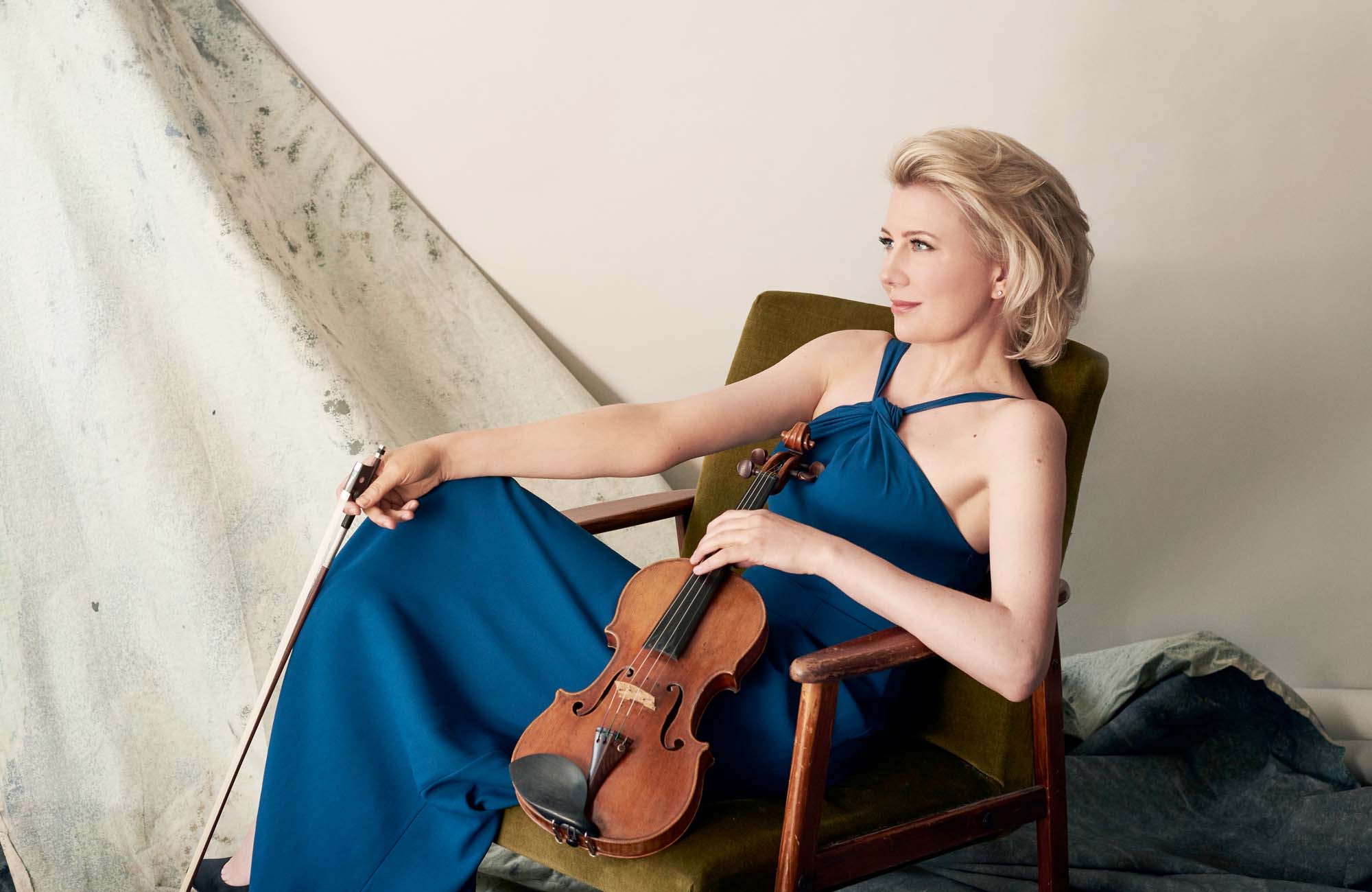
Born in the US and raised in Finland, Elina Vähälä made her orchestral debut with the Lahti Symphony Orchestra at the age of twelve and was later chosen by Osmo Vänskä as the orchestra’s ‘Young Master Soloist’. Since then, her career has continued to develop ...
Born in the US and raised in Finland, Elina Vähälä made her orchestral debut with the Lahti Symphony Orchestra at the age of twelve and was later chosen by Osmo Vänskä as the orchestra’s ‘Young Master Soloist’. Since then, her career has continued to develop on the international stage, winning praise from audiences and musicians alike as ‘a fluent, stylish and gifted musician whose brilliant technique is matched by an abundant spirit, sensitivity and imagination’ (Chicago Tribune).
Elina Vähälä appears regularly with all of the key Finnish orchestras as well being a guest of countless high-profile orchestras across the globe such as Houston Symphony, Vancouver Symphony, Yomiuri Nippon Symphony Orchestra, Beethoven Orchester Bonn, Dortmund Philharmoniker, Istanbul State Symphony, Malmo Symphony Orchestra, Orchestre Philharmonique de Strasbourg, RTVE Spanish Radio Orchestra, and has toured throughout the UK, Finland, Germany, China, Korea and South America. She enjoys a fruitful working partnership with many leading conductors such as Leonard Slatkin, Carlos Kalmar, Jukka-Pekka Saraste, Okko Kamu, Jakub Hrůša, Thierry Fischer, Sakari Oramo, Leif Segerstam, Josep Caballé-Domenech, Alexander Liebreich, and Michał Nesterowicz.
Recent seasons saw Elina Vähälä perform with the Gothenburg Symphony, Norrkoping Symphony, Nordic Chamber Orchestra, Belgrade Philharmonic, Prague Radio Symphony, Janáček Philharmonic Orchestra in Ostrava, the Helsinki Philharmonic, Finnish Radio Symphony Orchestra, Turku Philharmonic, Oulu Symphony Orchestra and Wroclaw Philharmonic. She also appeared at festivals in Tampere, Clandeboye, Seoul and Oulu, where she had been appointed Co-Artistic Director, together with saxophonist Jukka Perko.
Other highlights of past seasons include debuts with the Orchestre National de Lyon, Polish National Radio Symphony, Singapore Symphony, Royal Stockholm Philharmonic, Swedish Radio Orchestra, Qingdao Symphony, RTÉ National Symphony, Gävle Symphony, Shenzhen Symphony, and performances with the Finnish Radio Symphony, Lahti Symphony, Helsinki Philharmonic, Niederrheinische Symphony, Norrlandsoperan Symphony, Detroit Symphony, Buffalo Philharmonic and Colorado Symphony.
Elina Vähälä has given world premieres of Aulis Sallinen’s Chamber Concerto, Curtis Curtis-Smith’s Double Concerto, Jaakko Kuusisto’s Concerto, and Kalevi Aho’s Concerto no 2, all of which were written for her, as well as the Jan Sandström’s Concerto. In addition, Elina Vähälä gave the first Nordic performance of Corigliano’s Violin Concerto ‘The Red Violin’ and continues to be one of the soloists of choice for this work. Befitting her Finnish roots, she is one of very few to perform the Sibelius concerto in its early version.
Her affinity with the music of the 20th and 21st centuries is evident back in recent recordings: a disc devoted to the music Aho, including his Violin Concerto no 2, and a project with the Polish National Radio Symphony and with Alexander Liebreich as part of their focus on Szymanowski.
Educational activities play an important role in her commitment to music. In 2009 Elina Vähälä launched the Violin Academy; funded by the Finnish Cultural Foundation, the academy is a master class based educational project for highly talented young Finnish violinists. Previously professor at the Hochschule für Musik in Karlsruhe, Germany, she has been professor at the Universität für Musik und darstellende Kunst in Vienna since September 2019. Elina Vähälä performs with a Giovanni Battista Guadagnini violin made in 1780.
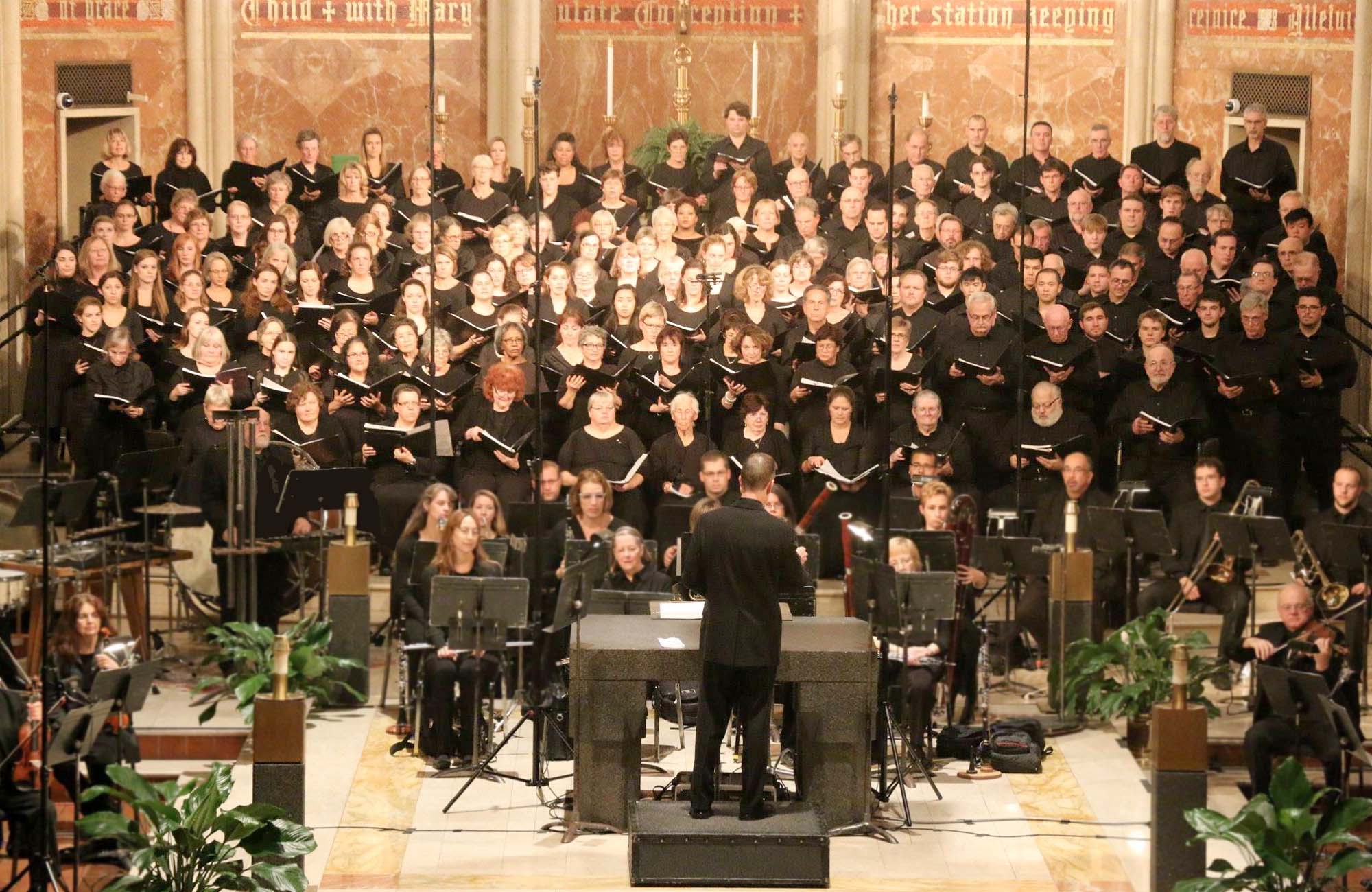
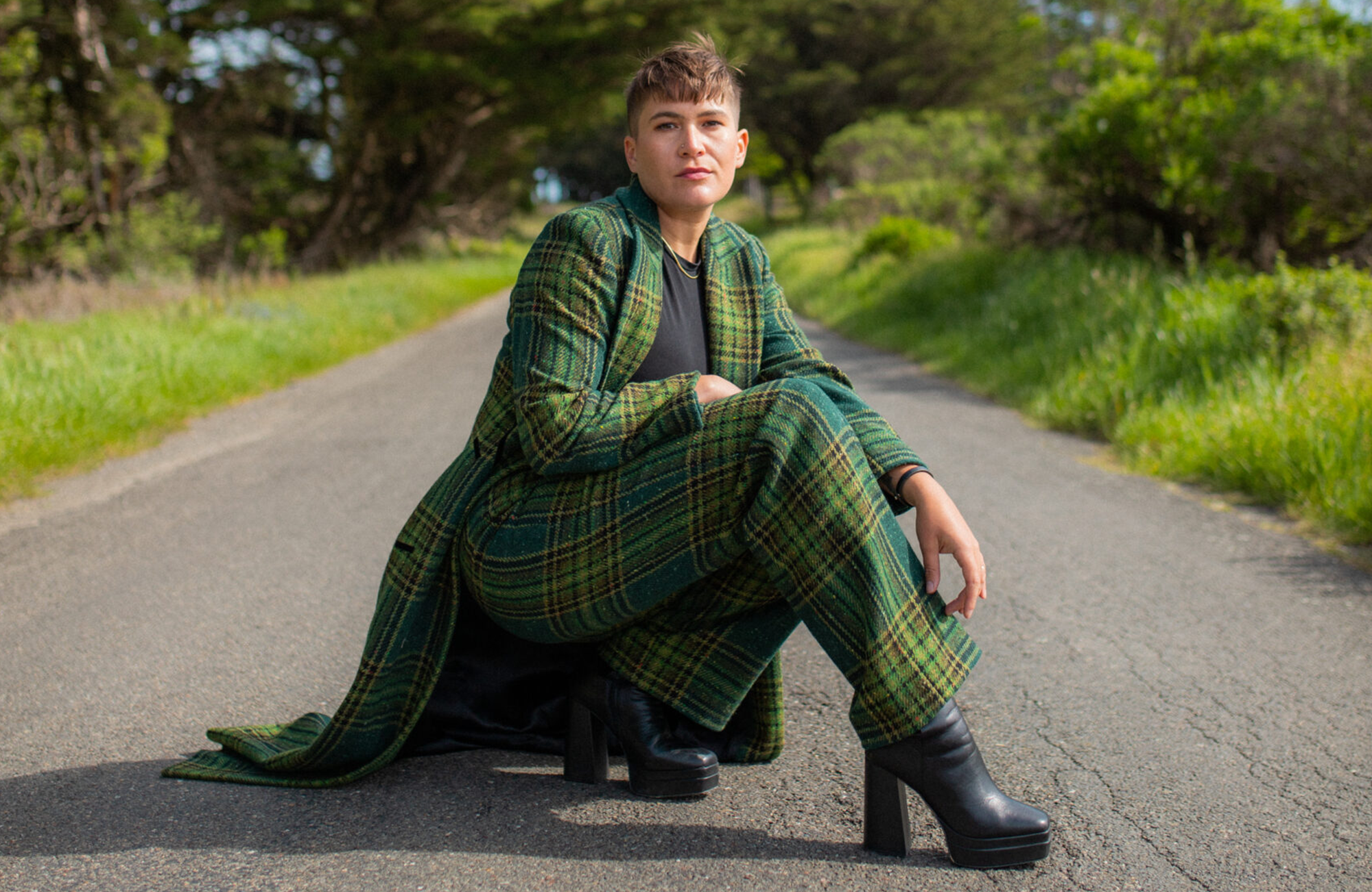
Founded in 1975, the Syracuse University Oratorio Society is a large chorus comprised of Syracuse University students and community members that regularly performs choral-orchestral masterworks with the Syracuse Orchestra. The Oratorio Society is directed by Dr. Wendy Moy.
Founded in 1975, the Syracuse University Oratorio Society is a large chorus comprised of Syracuse University students and community members that regularly performs choral-orchestral masterworks with the Syracuse Orchestra. The Oratorio Society is directed by Dr. Wendy Moy.
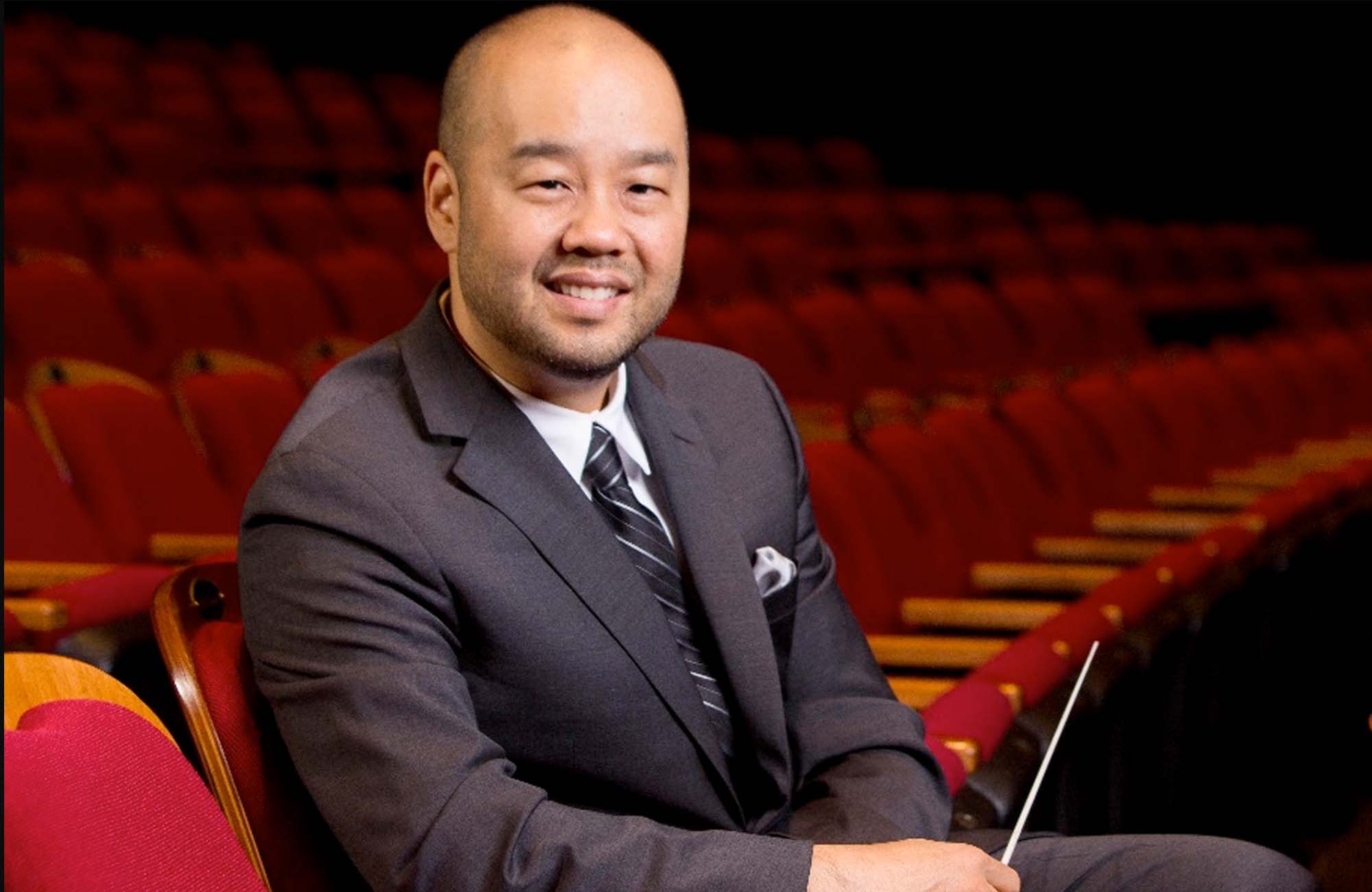
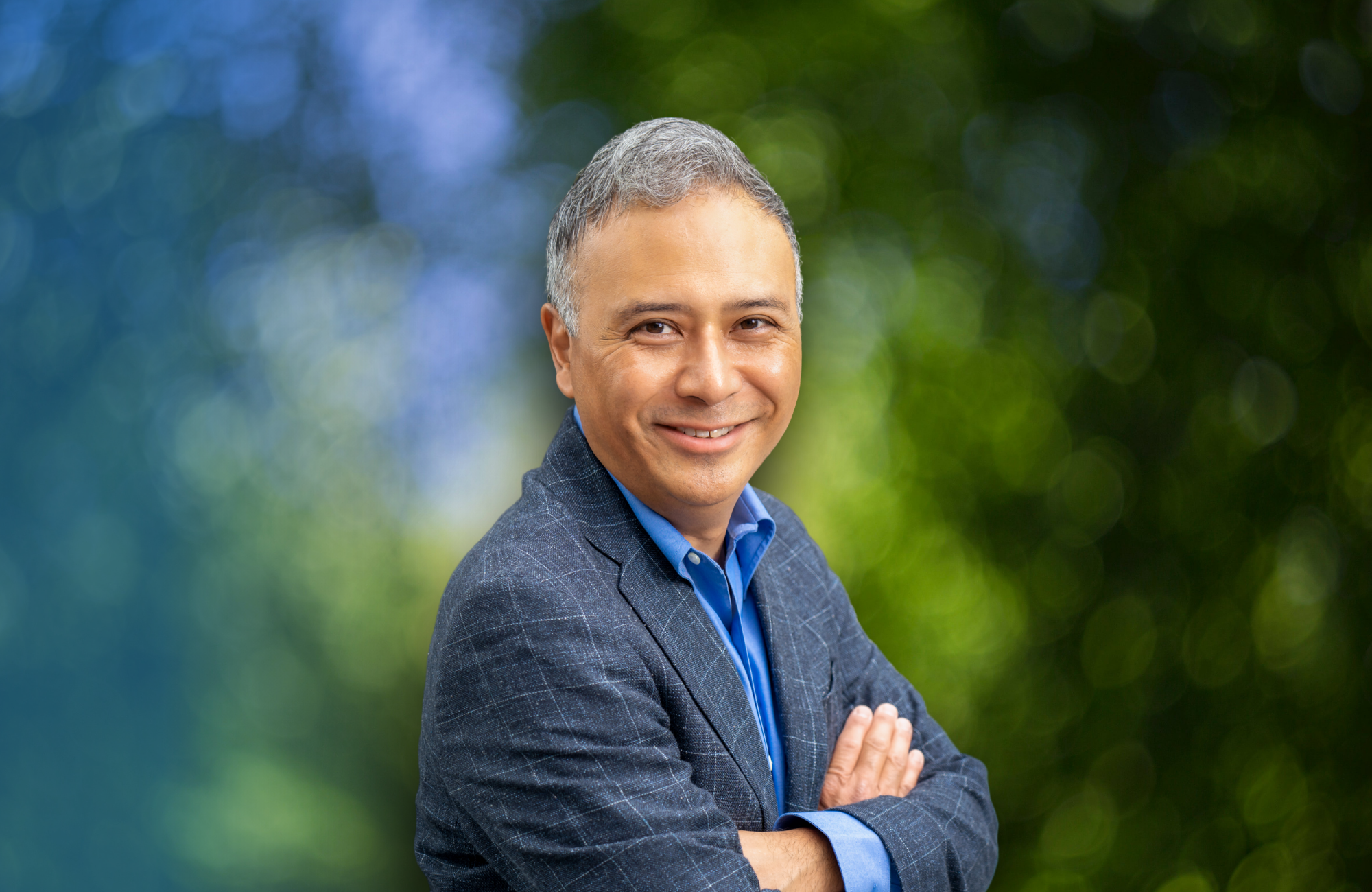
Described as bringing an “artisan storyteller’s sensitivity… shaping passages with clarity and power via beautifully sculpted dynamics… revealing orchestral character not seen or heard before” (Arts Knoxville) Lawrence Loh enjoys a dynamic career as a conductor of orchestras all over the world.
After an extensive two ...
Described as bringing an “artisan storyteller’s sensitivity… shaping passages with clarity and power via beautifully sculpted dynamics… revealing orchestral character not seen or heard before” (Arts Knoxville) Lawrence Loh enjoys a dynamic career as a conductor of orchestras all over the world.
After an extensive two year search, Lawrence Loh was recently named Music Director of the Waco Symphony Orchestra beginning in the Spring of 2024. Since 2015, he has served as Music Director of The Syracuse Orchestra (formerly called Symphoria), the successor to the Syracuse Symphony Orchestra. “The connection between the organization and its audience is one of the qualities that’s come to define Syracuse’s symphony as it wraps up its 10th season, a milestone that might have seemed impossible at the beginning,” (Syracuse.com) The Syracuse Orchestra and Lawrence Loh show that it is possible to create a “new, more sustainable artistic institution from the ground up.”
Appointed Assistant Conductor of the Pittsburgh Symphony in 2005, Mr Loh was quickly promoted to Associate and Resident Conductor within the first three years of working with the PSO. Always a favorite among Pittsburgh audiences, Loh returns frequently to his adopted city to conduct the PSO in a variety of concerts. Mr. Loh previously served as Music Director of the West Virginia Symphony Orchestra, Music Director of the Northeastern Pennsylvania Philharmonic, Artistic Director and Principal Conductor of the Syracuse Opera, Music Director of the Pittsburgh Youth Symphony Orchestra, Associate Conductor of the Dallas Symphony Orchestra, Associate Conductor of the Colorado Symphony Orchestra and Music Director of the Denver Young Artists Orchestra.
Mr. Loh’s recent guest conducting engagements include the San Francisco Symphony, Dallas Symphony, North Carolina Symphony, Baltimore Symphony, Sarasota Orchestra, Florida Orchestra, Pensacola Symphony, Atlanta Symphony, National Symphony, Detroit Symphony, San Diego Symphony, Seattle Symphony, National Symphony (D.C.), Utah Symphony, Rochester Philharmonic, Indianapolis Symphony, Calgary Philharmonic, Buffalo Philharmonic, Albany Symphony and the Cathedral Choral Society at the Washington National Cathedral. His summer appearances include the festivals of Grant Park, Boston University Tanglewood Institute, Tanglewood with the Boston Pops, Chautauqua, Sun Valley, Shippensburg, Bravo Vail Valley, the Kinhaven Music School and the Performing Arts Institute (PA).
As a self-described “Star Wars geek” and film music enthusiast, Loh has conducted numerous sold-out John Williams and film music tribute concerts. Part of his appeal is his ability to serve as both host and conductor. “It is his enthusiasm for Williams’ music and the films for which it was written that is Loh’s great strength in this program. A fan’s enthusiasm drives his performances in broad strokes and details and fills his speaking to the audience with irresistible appeal. He used no cue cards. One felt he could speak at filibuster length on Williams’ music.” (Pittsburgh Tribune)
Mr Loh has assisted John Williams on multiple occasions and has worked with a wide range of pops artists from Chris Botti and Ann Hampton Callaway to Jason Alexander and Idina Menzel. As one of the most requested conductors for conducting Films in Concert, Loh has led Black Panther, Star Wars (Episodes 4-6), Jaws, Nightmare Before Christmas, Jurassic Park, Casablanca, The Wizard of Oz and Singin’ in the Rain, among other film productions.
Lawrence Loh received his Artist Diploma in Orchestral Conducting from Yale, his Masters in Choral Conducting from Indiana University and his Bachelor of Arts from the University of Rochester. Lawrence Loh was born in southern California of Korean parentage and raised in Carlisle, Pennsylvania. He and his wife Jennifer have a son, Charlie, and a daughter, Hilary. Follow him on instagram @conductorlarryloh or Facebook at @lawrencelohconductor or visit his website, www.lawrenceloh.com