
Schnittke’s Moz-Art à la Haydn is based on an unfinished fragment by Mozart and features playful themes from both Mozart and Haydn. The program also features Bach’s Brandenburg Concerto No. 3 and Stravinsky’s chamber concerto, Dumbarton Oaks, which was heavily inspired by Bach’s Brandenburg series.
Performances of this concert are on Saturday, January 31 at 7:00 PM and Sunday, February 1 at 3:00 PM.
PROGRAM
CORELLI: Concerto Grosso in D Major, Op. 6, No. 4
SCHNITTKE: Moz-Art à la Haydn
BACH: Brandenburg Concerto No. 3 in G major, BWV 1048
STRAVINSKY: Concerto in E-flat major for Chamber Orchestra, “Dumbarton Oaks”
Thank you to our generous sponsors!
Thank you to our Series sponsors!
Casual Series Sponsor:
Exclusive Auto Sponsor:

PROGRAM NOTES
Back in 2020–21, during the pandemic, our season slogan was “Expect the Unexpected.” That was because our planning was thrown into disarray by limitations on what orchestras were able to do—and we often found ourselves offering works by small ensembles that were rarely performed on orchestral concerts. Today’s concert is similarly small and similarly unexpected—although this return to “off-the-beaten-path” repertoire (as conductor Jacob Joyce puts it) is a consequence of choice rather than necessity. Specifically, as his first concert with the orchestra, Jacob wanted both “to feature members from the orchestra and to do some repertoire that’...
Back in 2020–21, during the pandemic, our season slogan was “Expect the Unexpected.” That was because our planning was thrown into disarray by limitations on what orchestras were able to do—and we often found ourselves offering works by small ensembles that were rarely performed on orchestral concerts. Today’s concert is similarly small and similarly unexpected—although this return to “off-the-beaten-path” repertoire (as conductor Jacob Joyce puts it) is a consequence of choice rather than necessity. Specifically, as his first concert with the orchestra, Jacob wanted both “to feature members from the orchestra and to do some repertoire that’s less commonly done in the symphonic concert hall.” At the same time, he’s planned the concert so that the two more ear-challenging works are preceded by works that are similar to them, but more familiar.
The program takes off from the Baroque. More specifically, all four of this week’s works are examples of the concerto grosso—a genre that flourished in the Baroque era and was then echoed in the twentieth century. What’s a concerto grosso? Before the development of the concerto in the modern sense—usually a solo instrument pitted against an orchestra—this form played off a group of soloists (the “concertino”) against a slightly larger ensemble (the “ripieno”). The form sets up two simultaneous, yet equally important, levels of interaction: the complex interplay within the solo group is layered over a conversation between them and the string ripieno.
The composer who got this form off the ground was Arcangelo Corelli (1653–1713), whose Op. 6 collection (probably composed in the 1680s, but only published in 1714) for three solo strings (two violins and cello), string orchestra, and continuo is a standard prototype. As is clear from our offering today—the fourth of the set, in D Major—the soloists don’t appear as protagonists as, say, the pianist does in the Rachmaninoff concertos. Rather, the four-movement concerto relies on the contrast between concertino and ripieno to create differences in color, texture, and especially weight.
Corelli is one of Jacob’s favorite composers: He left “only 72 published pieces, and each one of them, I think, is a real gem. He often goes underplayed, and so any chance I get to do a little Corelli, I jump at.” But how does he play it? Baroque music is extremely popular, especially on recordings. In live performance, however, it’s increasingly the domain of specialist performing groups well trained in what is known as HIP (Historically Informed Performance) practice, often using baroque instruments and bows and relying on techniques quite different from those used by symphony orchestras playing, say, Brahms. So what stylistic path will be followed today?
In a way, both. Jacob is well-versed in baroque practice (in fact, he’s finishing up a book that deals with these issues), but he’s not dogmatic. “My attitude is that you have all these tools that come from historically informed performance and you have stylistic norms that come from the way that we play today. If there’s a passage from Corelli that suggests some sort of espressivo, or lyricism” —and there are plenty in this work—“why wouldn’t we use vibrato and legato? But then at other times, when there are passages that really lend themselves to a much more historically informed sound or style. To me, that’s a really important arsenal to have in your toolkit as well.” To sum up: “For the modern performer, you know, the more stylistically adept and broad you can be, the better, because then you can give a more interesting and unique performance, and so I try to bring all of those things to bear when I do a piece by Corelli.”
Our second work, Moz-Art à la Haydn (1977) by Alfred Garrievich Schnittke (1934–1998), is a kind of fractured reconsideration of the concerto grosso through three centuries of musical history. Schnittke’s range as a composer was vast, incorporating the slapstick and the cerebral, the coarse and the religious, Socialist Realism and Western European serialism, opera and film music. He’s probably most famous for what he called “polystylism.” This is a musical approach that refuses to settle into a single idiom, instead combining—one might even say, at times, smushing together—different and sometimes incompatible traditions.
Today’s work is one of his most popular examples of polystylistic writing. Like the Corelli, it’s a concerto grosso, in this case “for two violins, two small string orchestras, double-bass and conductor”—the conductor listed separately for reasons that will eventually be clear during the performance. Moz-Art à la Haydn originated in the existing sketches for Mozart’s unfinished “Music to a Pantomime,” K. 416d. But unlike most attempts to complete earlier unfinished works (for instance, the completions of the Mozart Requiem), it is barely tethered to its source. Rather, it’s a kaleidoscope of competing ideas and idioms, with the players wandering around through a variety of musical terrains until its startling Haydnesque ending. (I won’t give the surprise away, but those of you who know Haydn’s Symphony No. 45, which we played on a Casual in April 2023, may have some idea what to expect.) More generally, the work displays a Haydnesque wit; and if, at any point, you feel the urge to laugh, I encourage you to give in to it—as would Schnittke and as does Jacob.
Back to the Baroque for our next work, the Brandenburg Concerto No. 3 by Johann Sebastian Bach (1685–1750), the shortest and arguably the most vigorous of the six Brandenburgs. Like its companions, it’s generally labelled a concerto grosso, but in this case, Bach creates an ambiguity as to which players are the concertino, which the ripieno. It’s scored for violins, violas, and cellos (each in three parts), as well as continuo; but there are no soloists. Or, more accurately, there are only soloists, since everyone gets a shot at a solo turn. Sometimes the groups chase each other as groups, sometimes they break up into individual lines. The result is, like the Schnittke, a musical kaleidoscope—in this case, a kaleidoscope of shifting textures.
The concert closes with the 1937–38 Concerto in E-flat by Igor Stravinsky (1882–1971)—often nicknamed “Dumbarton Oaks” after the estate of the commissioning couple, where it was first performed. Stravinsky, like Schnittke, wrote in a vast number of styles—from the most ear-shattering to the most austere, from the most intellectually elite to the most crowd-pleasing (he even wrote a polka for the elephants of the Ringling Bros. and Barnum & Bailey Circus). Dumbarton Oaks is one of his most popular “neo-classical” works. Or, more accurately, one of his most popular neo-baroque works, since it takes its basic inspiration from Bach, specifically the Brandenburg Concertos, which he had been studying when he began it. The Bachian counterpoint—especially the fugue in the first movement—is hardly coincidental.
More specifically, although it adds five winds to Bach’s all-string ensemble, Dumbarton Oaks can be seen as a descendant of the Third Brandenburg Concerto in particular, in two ways. First, if you listen carefully, you can hear that Stravinsky makes thematic bows to the Bach (Bach’s opening motif is echoed often). Second, like its model, Dumbarton Oaks doesn’t pit soloists against ripieno—all fifteen instruments serve as soloists or as members of constantly shifting smaller groups.
At the same time, though, the work is profoundly Stravinskian, especially in its rhythms. Stravinsky had an uncanny ability to write music that is rhythmically complicated (full of metrical changes and shifts in direction) and, at the same time, infectiously catchy. That’s certainly the case in this dancy score that reminds us that Stravinsky was the greatest composer of ballet music after Tchaikovsky. It’s no surprise that Jerome Robbins turned Dumbarton Oaks into a ballet for the New York City Ballet.
Peter J. Rabinowitz
Have any comments or questions? Please write to me at prabinowitz@SyracuseOrchestra.org
FEATURED ARTISTS
Currently serving as the Associate Conductor of the Pittsburgh Symphony Orchestra and the Music Director of the Pittsburgh Youth Symphony Orchestra, Jacob Joyce, age 31, is quickly gaining recognition as a dynamic and innovative presence on the podium. Joyce recently stepped in on short notice for performances on the PSO’...
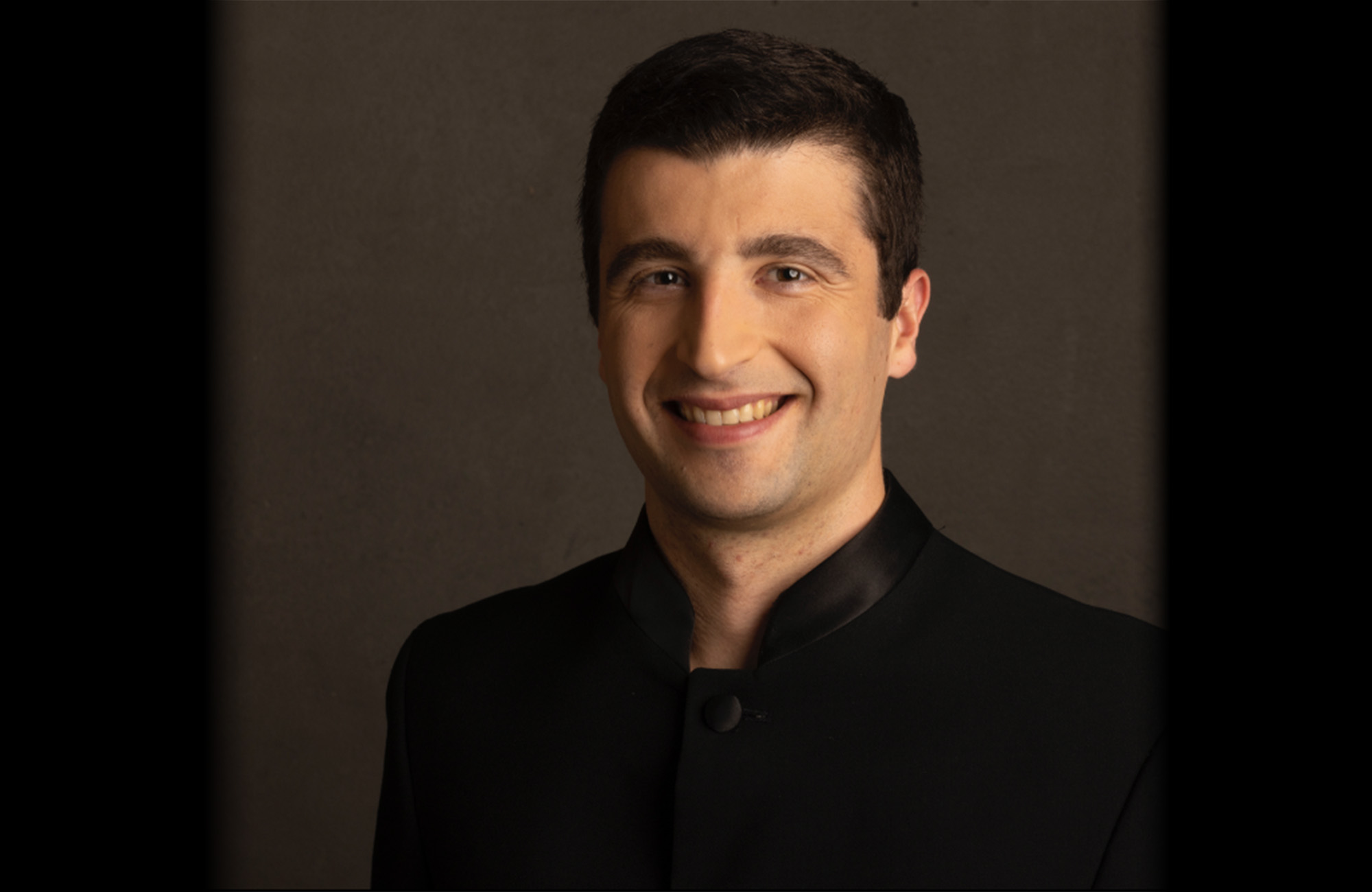
Currently serving as the Associate Conductor of the Pittsburgh Symphony Orchestra and the Music Director of the Pittsburgh Youth Symphony Orchestra, Jacob Joyce, age 31, is quickly gaining recognition as a dynamic and innovative presence on the podium. Joyce recently stepped in on short notice for performances on the PSO’s subscription series of Sibelius’s Symphony No. 5 and Bernstein’s Serenade with James Ehnes, to widespread critical acclaim. He also recently concluded his tenure as the Resident Conductor of the Indianapolis Symphony Orchestra, and has made his debut with several American orchestras in past seasons, including the Detroit, St. Louis, Houston, Colorado, Florida, Ann Arbor, and Baton Rouge symphonies. Abroad, Mr. Joyce has conducted the London Symphony Orchestra, the NDR-Sinfonieorchester, the hr-Sinfonieorchester Frankfurt, and the Frankfurt Museumsorchester. For his work in Indianapolis and around the world, he was awarded a Solti Career Assistance Award in 2020.
Mr. Joyce previously served as the Conducting Fellow for the Fort Worth Symphony, with whom he collaborates frequently, and has also held positions as the Associate Conductor of the Yale Symphony Orchestra, Music Director of the Berkeley College Orchestra, Music Director of the Opera Theater of Yale College, and Cover Conductor of the Handel and Haydn Society of Boston. An avid promoter of contemporary music, he has conducted several premieres of orchestral and operatic works. Mr. Joyce is also an advocate for bringing classical music to new audiences. He is the host and creator of the podcast Attention to Detail: The Classical Music Listening Guide, which provides people of all backgrounds with basic techniques for listening to classical music. He also works extensively with educators, music teachers, and orchestra directors, providing career advice and instruction to students across the country.
Mr. Joyce studied Orchestral Conducting with Hugh Wolff at the New England Conservatory. He has also received instruction at the Tanglewood Music Center and the American Academy of Conducting at Aspen. In recognition of his work, Joyce was awarded the Robert Spano Conducting Prize at Aspen, and was a semifinalist in the LSO Donatella Flick Conducting Competition and the Solti International Conducting Competition. Mr. Joyce graduated from Yale College in 2014, with a B.A. in Music and Economics. He also received a M.M. in Violin Performance from the Yale School of Music in 2015, studying with Syoko Aki.
As a violinist, Mr. Joyce has performed with several orchestras nationwide, and was awarded the Broadus Erle Prize for an Outstanding Violinist at the Yale School of Music. He served as the concertmaster of the Yale Symphony Orchestra, and performed regularly with the Boston Philharmonic and the Atlantic Symphony. He has previously attended the Tanglewood Music Center, the Bowdoin International Music Festival, and Encore School for Strings.
Violinist Peter Rovit (BM, Indiana University; MM, Hartt School; Professional Studies, Juilliard; DMA, SUNY Stony Brook) was among the last students of Josef Gingold at Indiana University where he also studied Baroque violin with Stanley Ritchie. Other teachers have included Mitchell Stern, Philip Setzer (Emerson Quartet), Cho-Liang Lin, Paul ...
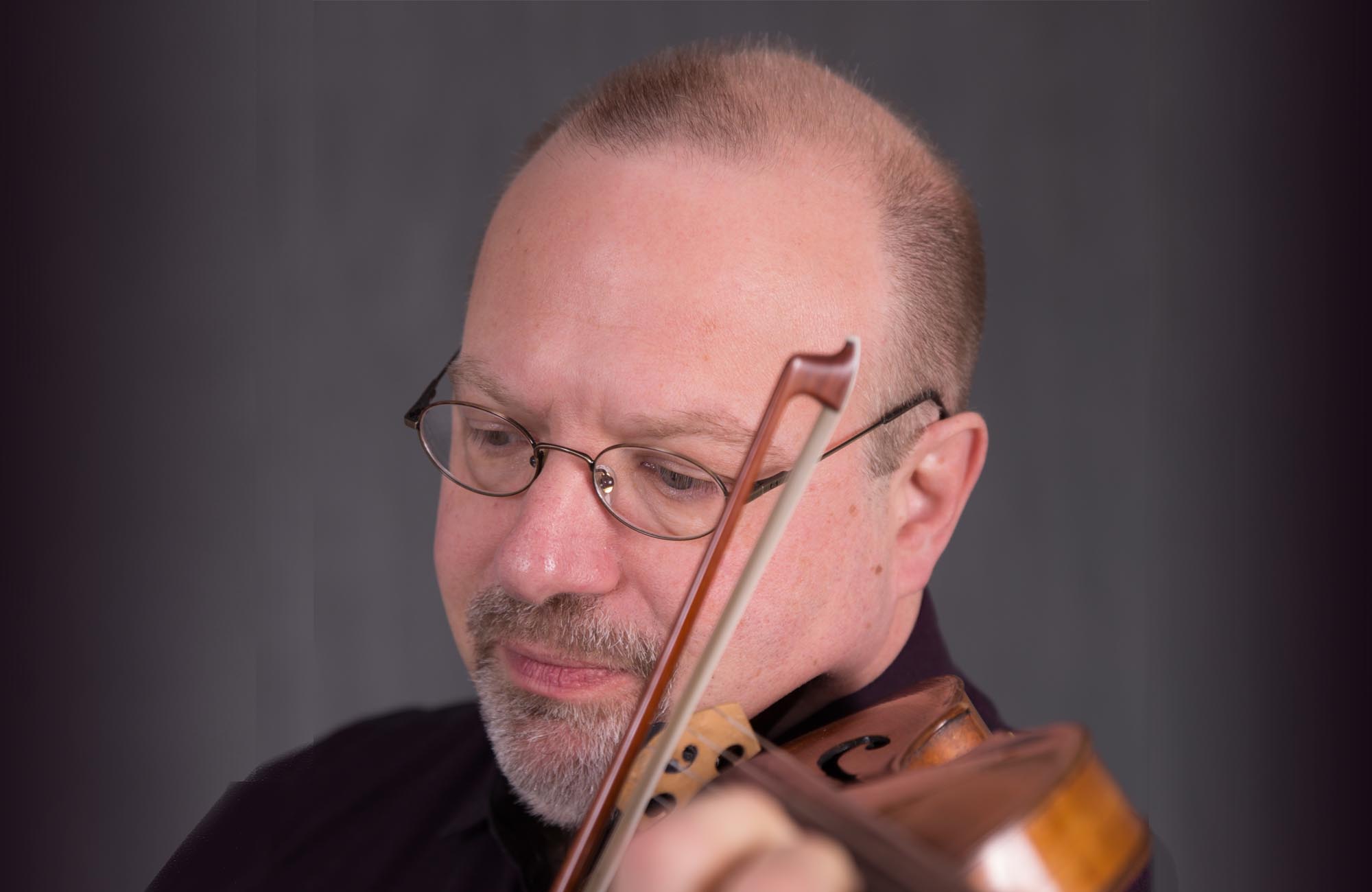
Violinist Peter Rovit (BM, Indiana University; MM, Hartt School; Professional Studies, Juilliard; DMA, SUNY Stony Brook) was among the last students of Josef Gingold at Indiana University where he also studied Baroque violin with Stanley Ritchie. Other teachers have included Mitchell Stern, Philip Setzer (Emerson Quartet), Cho-Liang Lin, Paul Kantor and Donald Weilerstein. As a chamber musician, recitalist, and soloist he has performed throughout the United States and at music festivals such as Aspen, Taos, Yellow Barn, Hot Springs, Skaneateles, and Musical Spring in Saint Petersburg (Russia). A concerto competition winner at both the Hartt School and at SUNY Stony Brook, Mr. Rovit has also performed as a soloist with the Montgomery Symphony, the Fort Smith Symphony, the Oklahoma City Philharmonic, and the Tuscaloosa Symphony. He was a recipient of the prestigious Montgomery Symphony Violin Fellowship, has been a member of the Quartet Oklahoma, Associate Concertmaster of the Oklahoma City Philharmonic, and Concertmaster of the Tuscaloosa Symphony.
Mr. Rovit also loves to share his knowledge and experience with young musicians and has been on the string faculty of the University of Oklahoma and the University of Alabama. His students have gone on to study at such schools as Juilliard and Rice, and have won positions in professional orchestras, as well as the Chicago Civic Orchestra.
In his spare time, he enjoys reading, gardening, cooking, and finding imaginative ways to cook up those garden vegetables so that his children will eat them. Since having moved to Syracuse, he and his family have also enjoyed getting involved in winter sports such as snowshoeing, skating, and skiing.
Sonya Stith Williams is assistant concertmaster of Symphoria, and was a member of the Syracuse Symphony for ten years prior to the new Symphoria. In these organizations, she has been a member of both the second and first violin sections,
and has served as guest concertmaster. She has ...
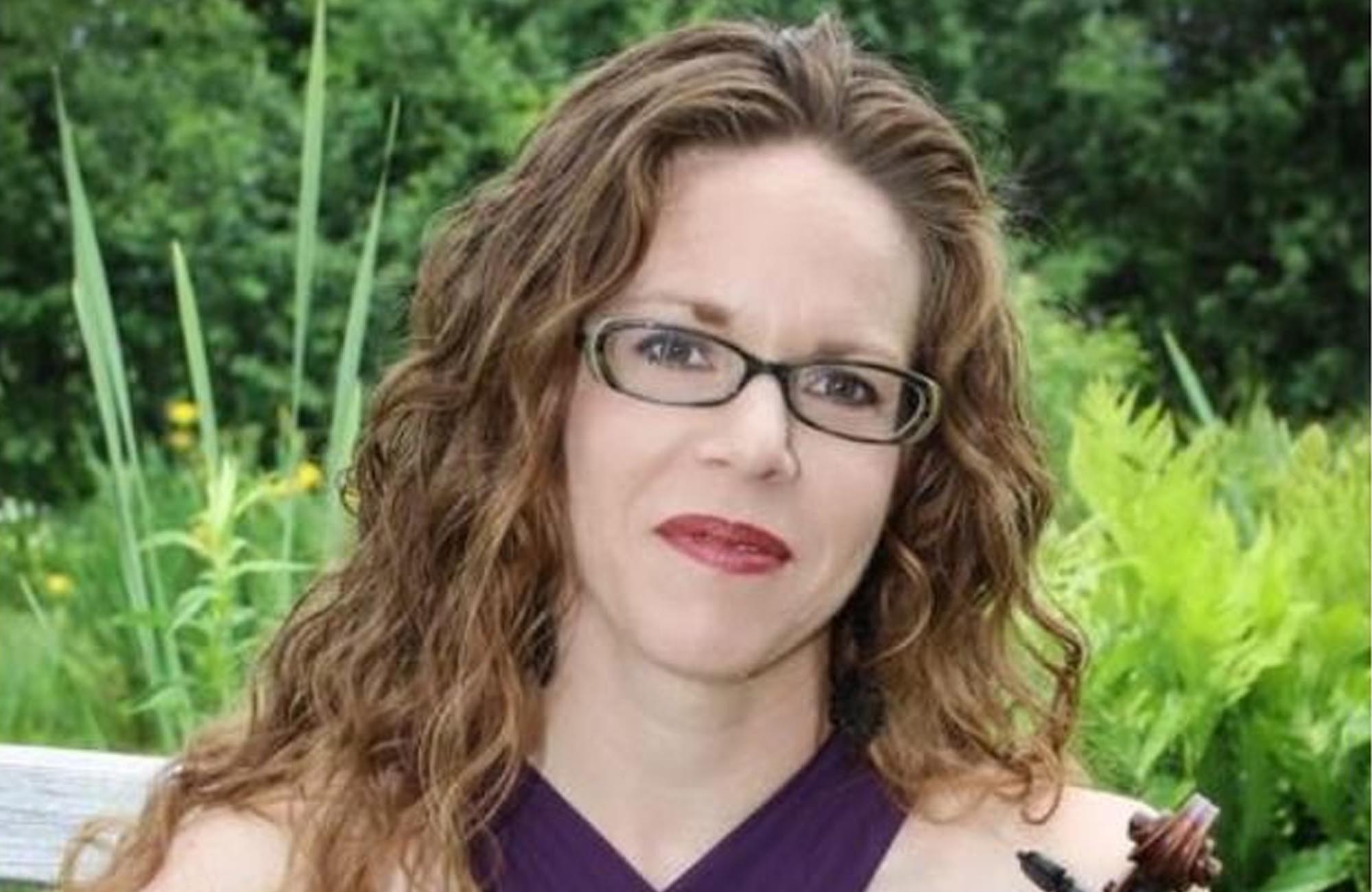
Sonya Stith Williams is assistant concertmaster of Symphoria, and was a member of the Syracuse Symphony for ten years prior to the new Symphoria. In these organizations, she has been a member of both the second and first violin sections,
and has served as guest concertmaster. She has also performed with the Buffalo Philharmonic, the Binghamton Philharmonic as guest principal second violin, the Northeastern Pennsylvania Philharmonic, and the Rochester Chamber Orchestra.
Sonya received her B.M. in violin performance and her M.M. in performance and literature from the Eastman School of Music, where her primary teachers were the esteemed teachers and performers, Zvi Zeitlin and Ilya Kaler. As part of her training, she also attended the Music Academy of the West, the Quartet Program, and the National Orchestral Institute, where she served as concertmaster. She is a member of the Symphoria String Quartet that plays concerts, educational performances, and conducts masterclasses in schools as well as in the community.
She is active in many other local ensembles such as the Skaneateles Festival, the Society for New Music, the Civic Morning Musicals Recital Series, the Syracuse Friends of Chamber Music concerts, the Clinton String Quartet, and the Temple Concord concert series. Sonya has been guest speaker at an Eastman School Arts Leadership class, and at the Syracuse University’s Women in Leadership organization, and teaches at the Eastern US Music Camp. She has served on the Board of Directors of Symphoria and was the chair of the Symphoria Education and Outreach committee. She lives in Baldwinsville, New York where she raises her three young children with her husband Matt and also teaches violin lessons out of her home.
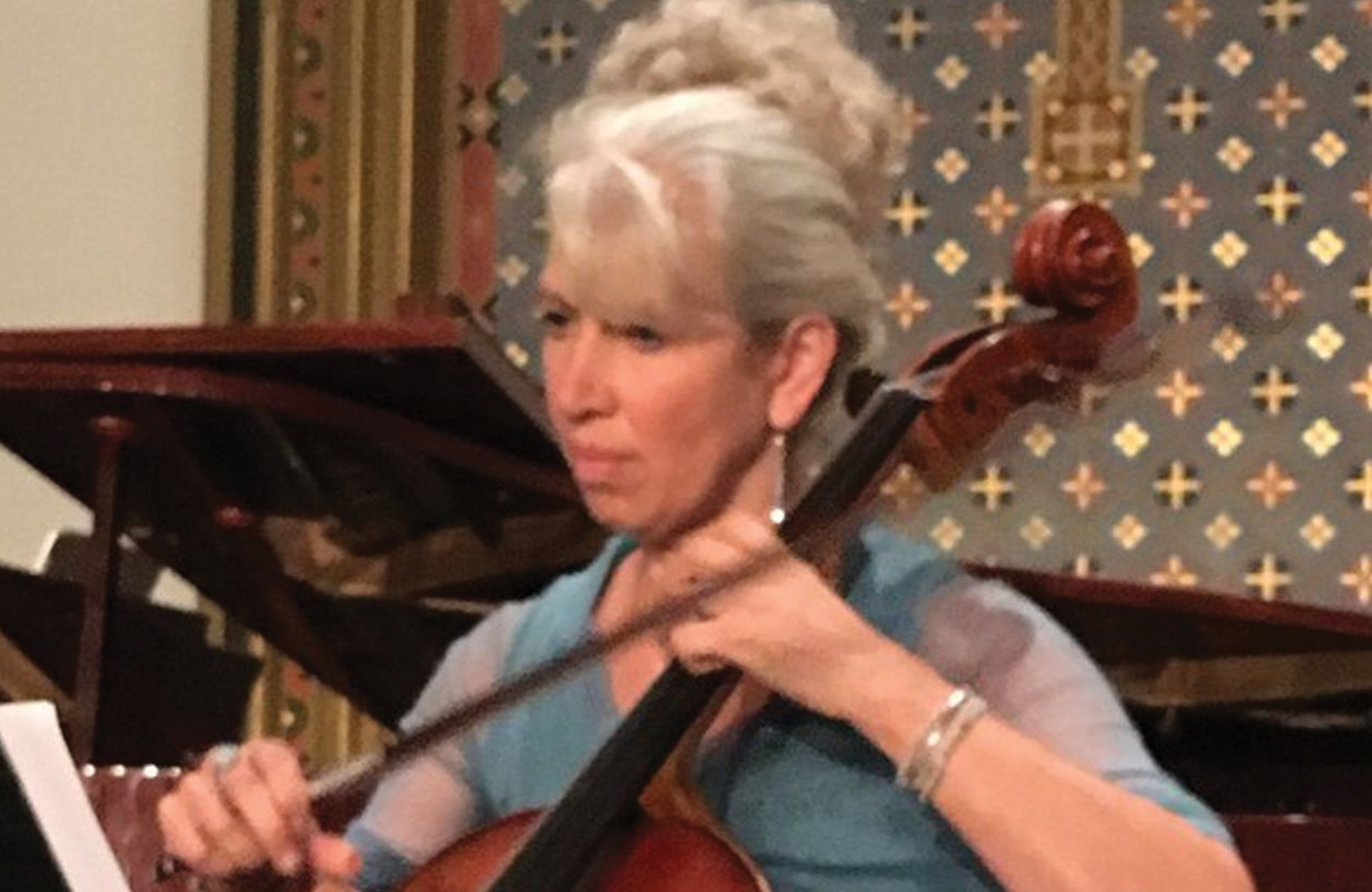
Cellist Heidi Hoffman is originally from Bainbridge Island, WA and at the age of 17 soloed with the Seattle Symphony as winner of the Seattle Young Artists Competition. She received her Bachelors of Music and Performer’s Certificate from the Eastman School of Music, and a Masters of Music and ...
Cellist Heidi Hoffman is originally from Bainbridge Island, WA and at the age of 17 soloed with the Seattle Symphony as winner of the Seattle Young Artists Competition. She received her Bachelors of Music and Performer’s Certificate from the Eastman School of Music, and a Masters of Music and Doctorate in Cello Performance from the State University of New York at Stony Brook, studying with Timothy Eddy. The summer of her sophomore year at Eastman, Heidi was awarded a Fellowship to the Tanglewood Music Festival where she performed under conductors Seiji Ozawa and Leonard Bernstein, among others.
Heidi became a member of the Syracuse Symphony cello section in 1996 and was recently appointed principal cellist of Symphoria. She has taught on the faculties of Wells College, Cornell University, and has taught at Ithaca College for the last 14 years. She was a full time member of the Grant Park Symphony Orchestra in Chicago from 1997-2004, and continues to play there in a part time capacity. She has been fortunate to play with many NYC chamber and orchestral groups, such as the American Symphony Orchestra, the Jupiter Symphony and the Tchaikovsky Chamber Orchestra, traveling to Japan, Germany, Russia, Paris, Guatemala, and Turkey.
When not playing or teaching the cello, Heidi can be found at If Only Farm Equestrian Center in Freeville, where she rides, trains and teaches dressage. Her horse, Manny, lives there too. Heidi lives in Freeville with her husband Rick, who is a clarinet professor at Ithaca College, and dog Ziggy.