

In celebration of the 250th anniversary of the Declaration of Independence, The Syracuse Orchestra performs music from around the world that celebrates freedom and our richly diverse local community.
Performances of this concert are on Saturday, April 18 at 7:00 PM and Sunday, April 19 at 3:00 PM.
PROGRAM
VERDI: Nabucco, Overture
BRAHMS: Hungarian Dances, Nos. 1, 3, 10
SIBELIUS: Finlandia, Opus 26, No. 7
LUTOSLAWSKI: Little Suite (Mala suita)
IVES: Variations on America
SKORYK: Melody
ADOLPHUS HAILSTORK: Three Spirituals (Mvt. 3 only)
MARQUEZ: Danzon No. 7
COPLAND: Rodeo, “Hoedown”
Thank you to our generous sponsors!
Thank you to our Rapid Response Monitoring Casual Series sponsors!
Title Sponsor:

Exclusive Auto Sponsor:

Thank you to our concert sponsors!



PROGRAM NOTES
Today’s Casual Concert celebrates the 250th anniversary of the signing of the Declaration of Independence—but it doesn’t focus on nationalistic potboilers from the United States. Rather, in the words of conductor José-Luis Novo, it’s an international program that celebrates the Declaration in a “less patriotic and more cosmopolitan and inclusive” manner. Thus, while the concert does include two pieces that have served to instill national pride, neither of them is from the United States. Instead, they are parts of a quilt made up of several different kinds of works, one that aims to celebrate ...
Today’s Casual Concert celebrates the 250th anniversary of the signing of the Declaration of Independence—but it doesn’t focus on nationalistic potboilers from the United States. Rather, in the words of conductor José-Luis Novo, it’s an international program that celebrates the Declaration in a “less patriotic and more cosmopolitan and inclusive” manner. Thus, while the concert does include two pieces that have served to instill national pride, neither of them is from the United States. Instead, they are parts of a quilt made up of several different kinds of works, one that aims to celebrate freedom in a variety of ways: by recognizing the diversity of America, “the heritage of all the people” who came together to make this country; by honoring resistance to oppression and expressing our support for people who don’t have freedom; and, more generally, by highlighting the ways various musical cultures contribute to one another, thus fostering that special kind of international cooperation that music provides.
The music that most obviously celebrates freedom is music that rouses its listeners to unity or political action: the “Marseillaise” and the Chilean protest song “The People United Will Never Be Defeated” (“¡El Pueblo Unido Jamás Será Vencido!”), for instance, or the finale to the Beethoven Ninth. That category certainly includes the Black spiritual Oh Freedom, which was especially popular during the American Civil Rights movement, when it was taken up by artists such as Odetta, Harry Belafonte, and Pete Seeger as well as by demonstrators and at church services across the country. We hear it tonight as it was set, very freely, as the last of the Three Spirituals (2005) by Rochester-born Adolphus Hailstork (b. 1941). Hailstork, the eminence grise among Black composers and teachers, has written absolute music and sacred music, as well as programmatic works with deep roots in U.S. history and culture (especially the history and culture of Black Americans); he is celebrating his 85th birthday on the Friday before these concerts.
Finlandia, composed in 1899 by Jean Sibelius (1865–1957), is similarly direct in its political appeal. It was composed while Finland was struggling to break free of Russia—and was explicitly intended to provide listeners with a sense of cultural unity in order, as José-Luis puts it, “to fight the oppression of someone that is preventing them from flourishing as human beings.” It has become an alternative anthem for Finland.
The famous chorus “Va, Pensiero,” from the 1841 opera Nabucco by Giuseppe Verdi (1813–1901), similarly became something of an alternative anthem in Italy—although in this case, that was not the composer’s explicit intention. On the surface, Nabucco, Verdi’s first real success, is a biblical spectacle without any direct reference to the politics of the time. However, like many works based on the Hebrew Bible (including many spirituals), it also has a metaphorical level—one that is apt to be heightened in times of political struggle. Thus, “Va, Pensiero,” inspired by Psalm 137, expresses the longings of the Jewish slaves for their homeland. Still, there’s a persistent legend that the opening night audience forced an encore of the chorus because they heard it as a coded reference to Risorgimento, the political movement for Italian unification. There’s been scholarly debate about just how accurate that story is, but in any case, as time passed, the chorus certainly did become a hymn to liberation. We performed “Va, Pensiero” two years back; tonight, we are offering the overture to the opera.
Over the past few years, the Melody by Lviv-born composer Myroslav Mykhailovych Skoryk (1938–2020) has achieved a nearly parallel status in Ukraine—unexpectedly. It is drawn from the score for a 1982 Soviet film called Vysokyy pereval (High Pass), part of the Soviet effort to stamp down Ukrainian independence. But as we know from the music of Shostakovich in particular, many composers from the Soviet Union became experts at using irony to speak to their audiences around the censorship that the regime imposed. In this case, the music—among other things—helped undermine the overt message of the film. Indeed, especially since the Russian invasion of Ukraine, this excerpt has been played around the world as a symbol of support for the Ukrainian cause.
If you were at our last Casual, you’ll remember György Ligeti’s Concert Românesc, another attempt to write around government cultural coercion—in Ligeti’s case, pressure by the Hungarian bureaucracy. Specifically, he made his point by composing a folk-inspired work that hid its radical potential. The Little Suite (1951) by Witold Roman Lutoslawski (1913–1994) was written under similar circumstances in the same year in neighboring Poland. Like Ligeti, Lutos?awski was eventually to become a world-renowned composer of ear-challenging scores—not quite as avant-garde as Ligeti’s, but a far cry from the socialist realism enforced during the Stalinist period. In this early piece, according to José-Luis, “Lutos?awski, like Shostakovich, was very smart in crafting music”—and here he managed to evoke “a very strong Polish heritage without offending the political establishment.” He took folk music from the village of Machów as his basic material—but he added brilliant coloration, along with nods to Stravinsky and Bartók.
The Variations on America by Charles Ives (1874–1954) is not a call for freedom but a celebration of it—in two ways. First, of course, it is based on a song that served as an unofficial national anthem before the Star-Spangled Banner was anointed in 1931. Second, it represents Ives’s creative freedom—a freedom bolstered by his wealth as an insurance man, which eliminated the need to ingratiate himself with audiences and performers.
His compositional practices can be idiosyncratic. Among other things, inspired as a child by hearing two bands approaching from different directions while playing different tunes, Ives enjoyed superimposing different music (often in different keys and different tempos). He also enjoyed abrupt transitions, often changing the character of his music without warning. As a result, he has the reputation of being a “difficult” composer.
But is he really so difficult? As José-Luis points out, this kind of musical multi-tasking looks ahead in an uncanny way to the spirit of our own time. Then, too, the basic material on which he builds his scores is usually pre-existing music: folk tunes, popular songs, classical favorites. (His Third Symphony, which we performed in 2022, is almost entirely based on hymn tunes.) Thus, in contrast to the music of, say, his contemporary Arnold Schoenberg, he provides plenty for our ears to catch on to.
In spirit, Ives’s music is profoundly grounded in the United States—both because of its heavy reliance on U.S. vernacular musical idioms and because of its freewheeling innovation, which we can hear already in the Variations on America, originally an organ work written in his teenage years. True, it follows traditional theme-and-variations form; but it’s already full of delightful Ivesian surprises. We’re knocked off balance, for instance, by quirky modulations and forward-thinking harmonies (a pair of interludes offer what may be his first experiments in polytonality, with the right hand in one key, the left hand and the pedals in another); and it engages in a fair degree of slapstick (one variation seems to imitate a nervous organist who rushes, stumbles, and finally skips over much of the music to finish). Don’t resist the urge to laugh. Composer William Schuman (1910–1992), on hearing this piece at one of the celebratory concerts opening Lincoln Center, fell in love with it and decided to recast it for orchestra, keeping the original material intact. That’s the version that’s heard most often and the one we’re presenting today.
Freedom rings in a rather different way in the Hungarian Dances by Johannes Brahms (1833–1897). The music began as a set of ten dances for piano duet published in 1869, aimed at the domestic market, and playing on the popularity that music with an ethnic flavor had at the time. (It was sufficiently successful that Brahms’s publisher supported both a sequel and an orchestration by a variety of hands, including Brahms’s own orchestrations of Nos. 1, 3, and 10, which we’ll be hearing on this concert). Music of the Romani people, often in somewhat distorted form, was particularly popular for a variety of reasons. First was its sheer quality: even without a homeland, the Roma managed to maintain what José-Luis calls “a strong identity” in part because of their “strong musical culture.” Second, despite the historical reality of their oppression (which rose to a horrific level during the Holocaust), Romani culture was idealized by many 19th-century and early 20th-century artists for its freedom, an idealization that reached its peak in Bizet’s Carmen. Romani idioms were infused into the music not only of Brahms but also of composers ranging from Haydn through Liszt to Ravel and beyond.
A more complex example of cross-cultural musical fertilization is heard in the Danzón No. 7 (2002) by Mexican composer Arturo Márquez (b. 1950). Over the past decade or so, Márquez’s earlier Danzón No. 2 has become a runaway hit (we’ve performed it twice). But—as often happens when a composer writes an exceptionally popular piece (for instance, the Aria from Villa-Lobos’s Bachianas Brasileiras No. 5)—the rest of his music has tended to be shunted aside. So we’ve decided to mix things up a bit and offer one of the less familiar, but equally engaging, works in the series. Danzón No. 7 features what the composer calls “a music full of sensuality and rigor, music of nostalgia and joy,” looking back (like Danzón No. 2) to earlier times. It looks well beyond Mexico, too. The Danzón—a fairly stately couples dance—probably has its origins in France. But as it wended its way to Haiti and then on to Cuba and Mexico, taking on African Caribbean elements along the way. Given its cultural breadth, it’s perhaps fitting that Danzón No. 2 got its first major boost on the world scene from a Venezuelan conductor, Gustavo Dudamel. A rich mixture.
It’s only appropriate, though, that our celebration of the Declaration of Independence ends with one of the most “American” pieces by the most canonical U.S. composer, Aaron Copland (1900–1990): the concluding Hoedown from his ballet Rodeo. Originally written in 1942 for a ballet choreographed by Agnes De Mille, it’s pure Americana—in the truest sense of “American.” Copland himself was a child of Jewish immigrants from Russia; the premiere was mounted by the Ballet Russe de Monte Carlo, an offshoot of Diaghilev’s famous French company (which premiered Stravinsky’s Rite of Spring, among many other works), a company that fled Europe in part because of the Second World War. Of the four principal dancers at that first performance, one was British and one Croatian—another was a child of Czech immigrants. The ballet corps was international, with a strong Russian contingent; the performance was conducted by an Austrian conductor. As for the music: it’s one of the works on the program that quotes pre-existing tunes, in this case, “Bonyparte” (“Bonaparte’s Retreat”) and “McLeod’s Reel,” both brought over to this country from Ireland. As José-Luis says, “The greatness of this country is what it has that has come from so many different places.” That’s surely true of Rodeo.
Peter J. Rabinowitz
Have any comments or questions? Please write to me at prabinowitz@SyracuseOrchestra.org
FEATURED ARTISTS
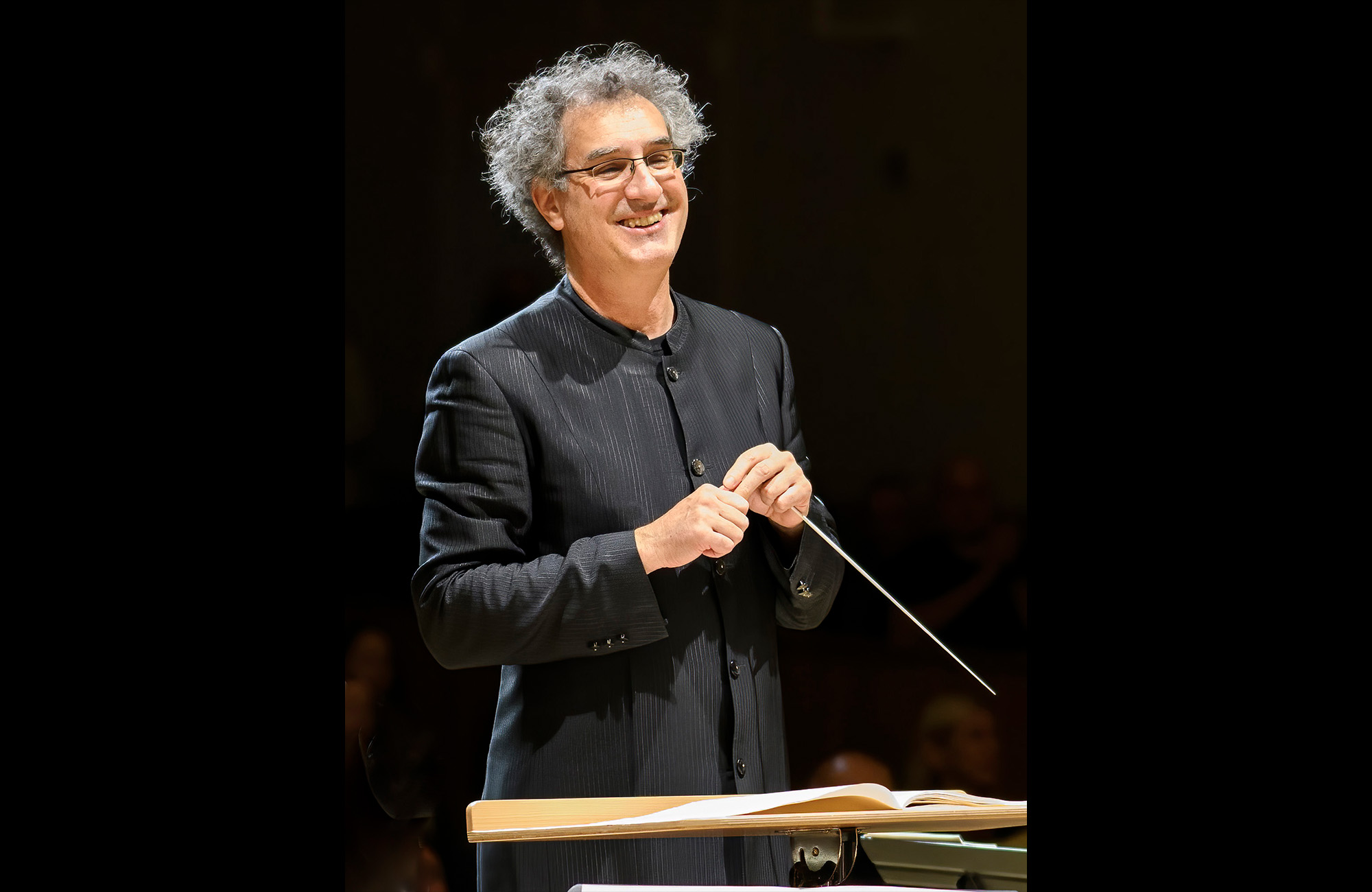
Spain’s native, JOSÉ-LUIS NOVO is currently artistic director and conductor of the Annapolis Symphony Orchestra (ASO) in Maryland and from 2003 to 2016 he held an impressive thirteen-year tenure as Music Director and Conductor of the Binghamton Philharmonic. Prior to these appointments, he served as Assistant Conductor of the ...
Spain’s native, JOSÉ-LUIS NOVO is currently artistic director and conductor of the Annapolis Symphony Orchestra (ASO) in Maryland and from 2003 to 2016 he held an impressive thirteen-year tenure as Music Director and Conductor of the Binghamton Philharmonic. Prior to these appointments, he served as Assistant Conductor of the Cincinnati Symphony Orchestra under both former Music Director Paavo Järvi and the late Music Director Emeritus Jesús López-Cobos, and the Cincinnati Pops Orchestra under the late Erich Kunzel. He has been on the conducting faculty at the Eastern Music Festival since 1999.
Highlights of Novo’s tenure with the ASO include numerous appearances at the Music Center at Strathmore with violinists James Ehnes, Anne Akiko Meyers, NoahBendix-Balgley, Chee-Yun, Leticia Moreno and Esther Yoo; pianists Olga Kern, Jon Nakamatsu, Brian Ganz and Awadagin Pratt; cellists Steven Isserlis and the late Lynn Harrell; guitarist Manuel Barrueco; pipa virtuoso Wu Man and the Naval Academy Glee Club. Also remarkable are a 2012 return appearance at the Clarice Smith Performing Arts Center with mezzo-soprano Denyce Graves, national broadcasts on NPR’s Performance Today, debut TV broadcasts on Washington’s WETA Metro PBS, the launching of the ASO’s award-winning streaming platform Symphony+, the creation of the Annapolis Symphony Academy and the ASO’s first commercial CD commemorating the 300th anniversary of the signing of the City of Annapolis’ Royal Charter. In July of 2022, Maestro Novo and the ASO stunned audiences on both sides of the Atlantic in a debut international tour to Spain with guitar virtuoso Pepe Romero as guest soloist.
Recent and upcoming guest conducting engagements include debut appearances with the Rochester Philharmonic, the Austin, Grand Rapids, Hilton Head, Palm Beach, Alexandria and South Bend Symphony Orchestras, and return appearances with the Baltimore Symphony, the Fresno Philharmonic, Symphoria, and a Kimmel Center debut in Philadelphia conducting the Curtis Institute Orchestra. After a successful debut with the Thailand Philharmonic Orchestra (TPO) for the Thailand International Composition Festival, Maestro Novo has been invited back regularly to guest conduct the TPO on several occasions. Other guest conducting engagements have included appearances with the Symphony San José; the Minnesota Orchestra; the Syracuse, Modesto, Windsor, Stamford, Tulsa, and Tallahassee Symphonies; the Cincinnati Chamber Orchestra; the Cleveland and Abilene Philharmonics, and most of the major Spanish orchestras.
Novo has also fostered a reputation as a keen educator of young musicians. He has held conducting positions with the Cincinnati Symphony Youth Orchestra, Miami University Symphony Orchestra, National Repertory Orchestra, National Youth Orchestra of Spain and the Yale Symphony Orchestra, and from 2017 to 2019 he was Interim Director of Orchestral Activities at the University of Maryland School of Music, College Park. In addition, he has conducted many noteworthy college and youth orchestras such as the Curtis Institute Orchestra, the Cleveland Institute of Music Orchestra, the Bard Conservatory Orchestra, the Ithaca College Symphony Orchestra, and the Portuguesa State Youth Orchestra of the Venezuelan El Sistema. More recently and under the auspices of the Annapolis Symphony Academy, he presided over the debut of its Orion Youth Orchestra, conducting the inaugural concert in June 2022.
Novo was featured in the League of American Orchestra’s Symphony magazine in “Podium Powers,” an article about emerging Hispanic conductors in the United States. He holds music degrees from the Cleveland Institute of Music, Yale University and the Royal Conservatory of Music in Brussels, and is the recipient of a 2010 Annie Award in Performing Arts from the Arts Council of Anne Arundel County, a 2008 American Society of Composers, Authors, and Publishers Adventurous Programming Award, and a 2005 Broome County Arts Council Heart of the Arts Award.