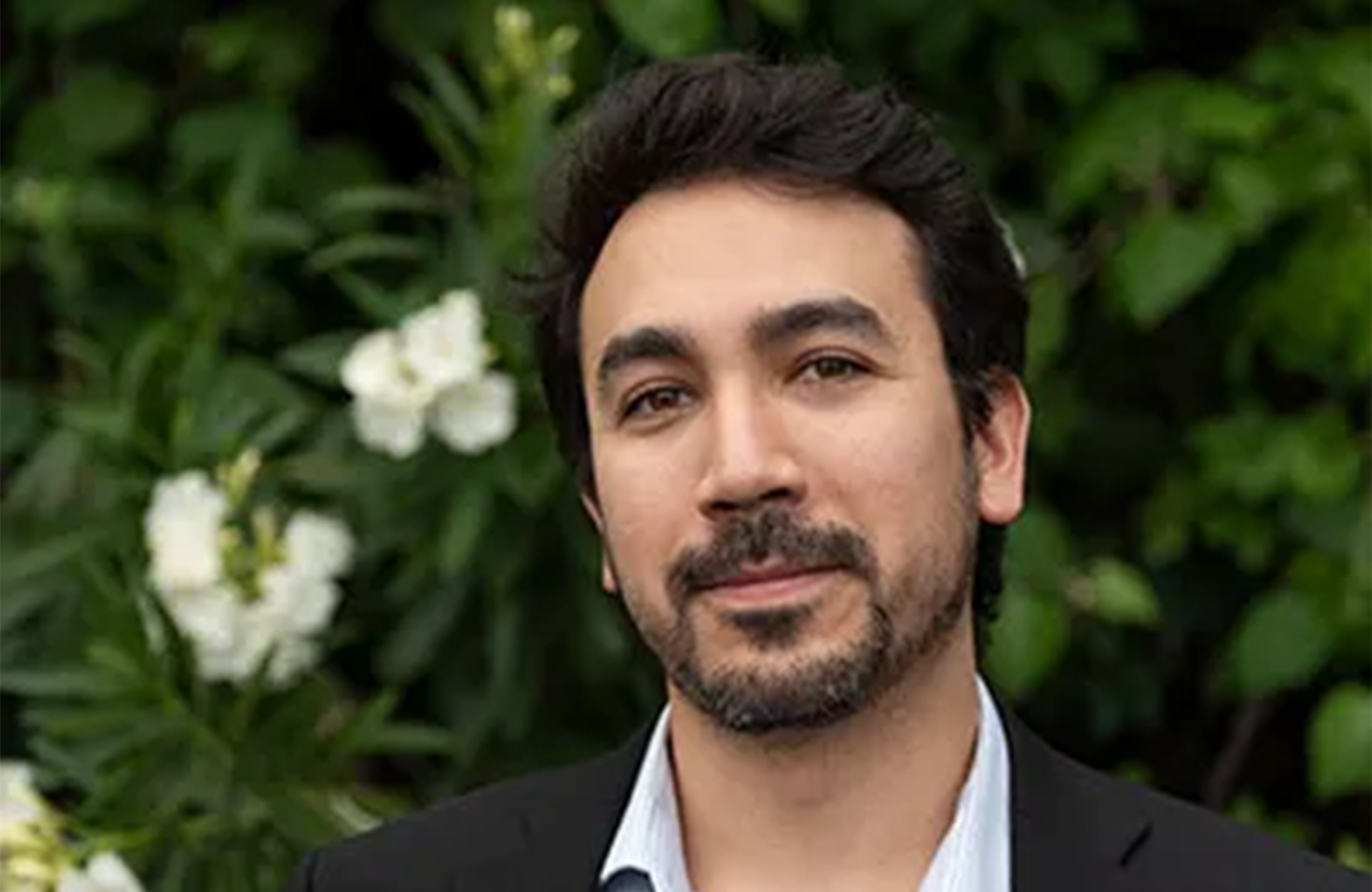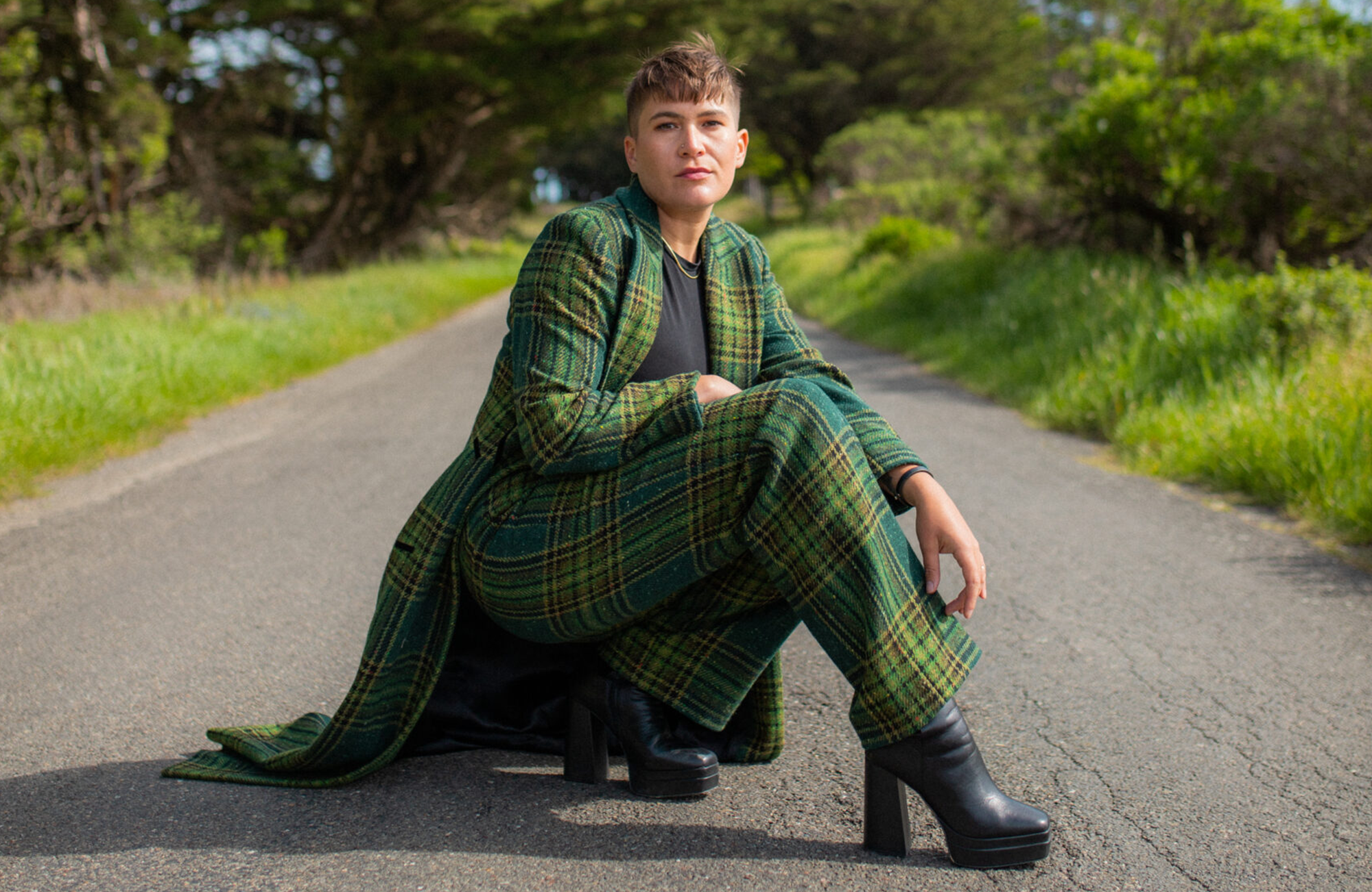

It’s a concert inspired by love! We open with Missy Mazzoli’s These Worlds in Us, expressing the love of a daughter for her father. Then Jiebing Chen, performing on the traditional Chinese instrument the erhu, joins for The Butterfly Lovers concerto, originally written for violin and based on a Chinese folklore love story. The Syracuse Orchestra finishes the program with the Scheherazade by Rimsky-Korsakov, telling the story of “One Thousand and One Nights”.
PROGRAM
MISSY MAZZOLI: These Worlds in Us
HE: Butterfly Lover Violin Concerto
RIMSKY-KORSAKOV: Scheherazade, Opus 35
Thank you to our generous sponsors!
Thank you to our Series sponsors!
Masterworks Series Title Sponsor:

Exclusive Auto Sponsor:

Masterworks Series Media Sponsor:

Thank you to our concert sponsor!

PROGRAM NOTES
Tonight’s concert is wide ranging, but as is usually the case with this orchestra, the works we’re presenting are linked in several ways. Three connections stand out. First, tonight’s offerings are all programmatic—that is, they’re all instrumental works that represent something extra-musical. More specifically, they’re all musical representations of love—although love of radically different types. Second, they’re all nourished, at least in part, by a cross-fertilization of Western and non-Western musical traditions. Finally, in terms of sheer sound, they’re all ear-opening.
The work with the clearest program is ...
Tonight’s concert is wide ranging, but as is usually the case with this orchestra, the works we’re presenting are linked in several ways. Three connections stand out. First, tonight’s offerings are all programmatic—that is, they’re all instrumental works that represent something extra-musical. More specifically, they’re all musical representations of love—although love of radically different types. Second, they’re all nourished, at least in part, by a cross-fertilization of Western and non-Western musical traditions. Finally, in terms of sheer sound, they’re all ear-opening.
The work with the clearest program is the Butterfly Lovers Concerto, jointly composed in 1959 by two students at the Shanghai Conservatory of Music, He Zhanhao (b. 1933) and Chen Gang (b. 1935). This is an explicitly narrative piece, one that recounts a traditional story that is well known in China. A young girl, Zhu Yintai, disguises herself as a boy so she can attend a boarding school. There, she befriends a boy Liang Sanbo, who does not know her secret. When Zhu eventually goes back home, Liang promises to visit her. He delays his trip, however; and when he finally does go to see her, he discovers not only that Zhu is a girl, but also that, during their separation, her parents have arranged a marriage for her. Liang and Zhu come to recognize the love they have for each other (gloriously represented in the music), and Liang dies of despair. On the way to her wedding, however, Zhu jumps into his grave, and, after a huge tam-tam crash, the two of them are transformed into butterflies.
Composed to celebrate the tenth anniversary of the Communist Revolution, the Butterfly Lovers Concerto was an experiment in writing music that uses Western instruments to imitate traditional music of China. Thus, among other things, the solo violin impersonates a traditional Chinese instrument, the erhu. (The erhu’s ancestor, the xiqin, was also imitated by a trombone in the middle movement of Tan Dun’s Trombone Concerto, performed by Ben Dettelback at our last Masterworks Concert). Tonight, though, in what conductor Maurice Cohn calls a “retranslation,” this violin concerto is being performed not on a violin but on an erhu.
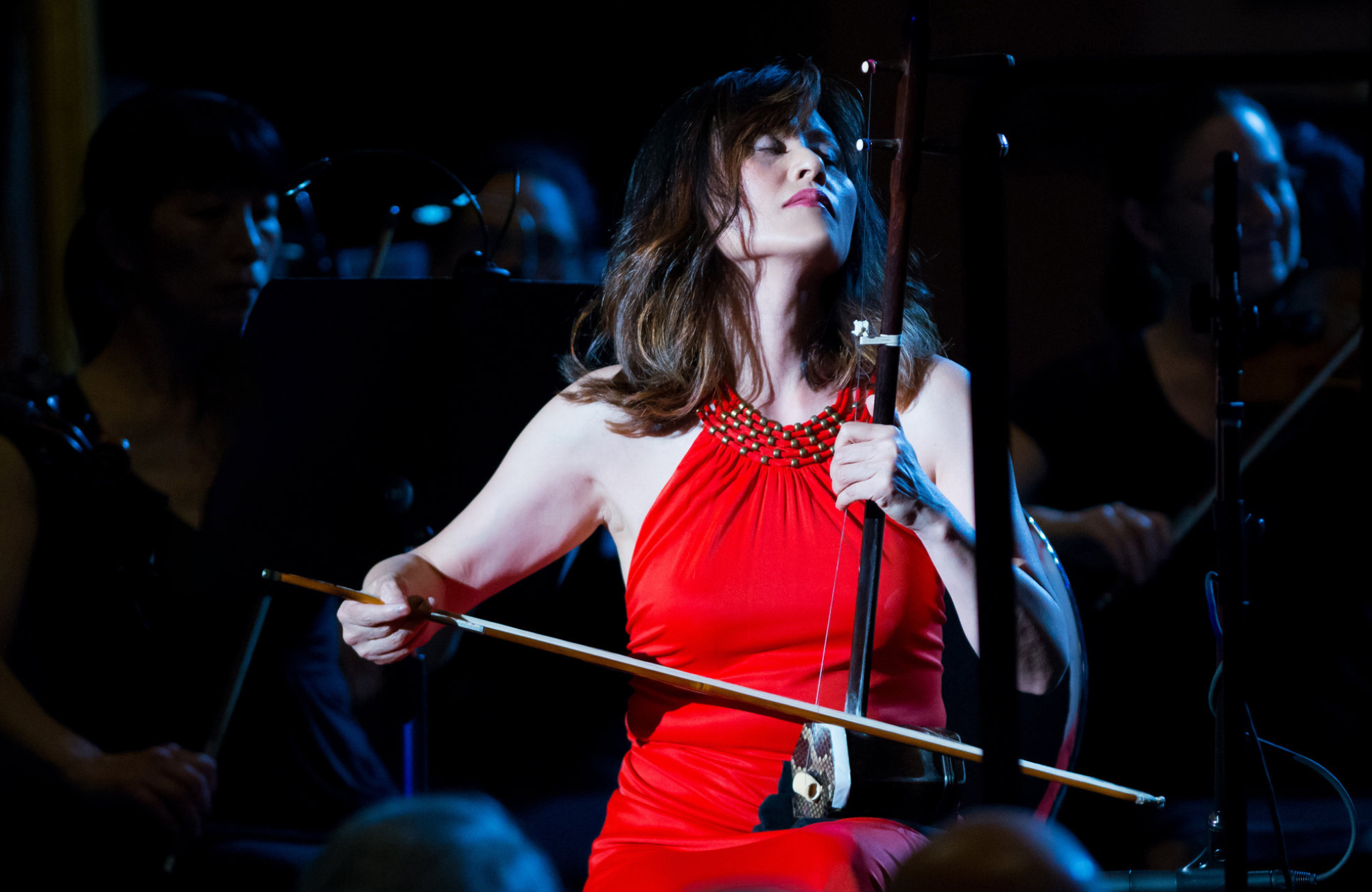
The violin and erhu are both string instruments, but as tonight’s soloist Jiebing Chen points out, they have significant differences. The erhu has two strings (as opposed to the violin’s four), tuned a fifth apart (D and A); and while it has a long neck, it doesn’t have a fingerboard. The two strings always sound together, since the bow passes between them (over one and behind the other); and since they are very close together, it may look from the hall as if there is only one of them. The erhu sounds quite different from a violin, too. If you were fortunate enough to hear Ben’s performance, you might well have been convinced by his claim that, in sound, the trombone is the closest instrument to the human voice—but after tonight, you may well feel that the erhu has a stronger claim.
How did that retranslation from violin to erhu come about? In an interview for these notes, Jiebing recounted the history behind it. She grew up in Shanghai during the Cultural Revolution (a period during which, coincidentally, this concerto was briefly banned)—and her father, a blacklisted history professor working in a labor camp, wanted to ensure that his children had some skill to fall back on. When she was about five, therefore, he insisted that they all learn musical instruments—and chose the erhu (which he built himself out of a leg from their dining-room table) for Jiebing because, he said, “the erhu is lighter and you are so little.” Little in size, perhaps, but obviously not little in talent or perseverance. For within a few years, through sheer pluck and innate musicality, she was able to convince the Navy to accept her as a member of their military band—even though she was only nine, and position was officially limited to people over the age of sixteen.
Once she retired from the Navy, she went on to the Shanghai Conservatory, where Chen Gang, one of the Butterfly Lovers’ composers, heard her and suggested that she play the concerto on the erhu. When she asked, “‘How can I do this? I only have two strings,’ he replied, ‘You can do it’”—and with his encouragement, she gave the work’s first performance on erhu in 1988. Since the music often represents the voice of one or the other of the protagonists, she will be alternating between two different instruments, with different ranges.
Like the Butterfly Lovers, Scheherazade (1888) by Nikolai Rimsky-Korsakov (1844–1908) is a programmatic work based on ancient folklore (in this case, A Thousand and One Nights)—and it, too, deals specifically with the intertwining of love and death. Here, though, they are connected in an entirely different (in fact, nearly opposite) way. Butterfly Lovers, like Wagner’s Tristan and Isolde, builds to death as the ultimate expression of love (one might even say the ultimate goal of love); Scheherazade starts out with death as the enemy of love, as something that needs to be resisted.
The frame story is familiar: as Rimsky puts it, the Sultan Schakhriar, “convinced of the perfidy and faithlessness of women, vowed to execute each of his wives after the first night.” Scheherazade, a story-teller who has a savvy ability to construct cliff-hangers, convinces the Sultan to let her live so she can continue the story she begins to tell him on the first night—and she eventually wins his love (whatever that’s worth). Scheherazade’s mercurial spirit is brilliantly conveyed by the differences in the violin solos throughout the work.
Beyond this general outline, however, Scheherazade’s program is vague. Rimsky intended the score less to suggest particular stories than to nourish subjective flights of fancy. Yes, each movement has a programmatic title (although, at times, Rimsky wished to eliminate them), but they refer to general situations, rather than particular events. Thus, while the first movement, “The Sea and Sinbad’s Ship,” evokes the sea and its changing colors, it doesn’t call up any particular story. And the love music in the third movement, “The Young Prince and the Princess,” beautiful as it is, isn’t attached to particular individuals the way the love music in The Butterfly Lovers Concerto is. The one exception is the shattering climax of the last movement, when a ship “breaks up against a cliff,” leading to a peaceful conclusion.
Like the concerto, too, Scheherazade merges European and non-Western traditions—in this case, by inflecting its clearly Western score with references to Middle-Eastern musical traditions. I use the word “references” advisedly. Like most Western composers seeking musical exoticism (Mozart in his Abduction from the Seraglio, Borodin in his Polovtsian Dances), Rimsky was not a scholar of the traditions he was incorporating. But he knew the kind of gestures that his listeners would associate with the Middle East, and he handled them brilliantly. The results are no more “authentic” than the Middle Eastern architectural features of the Landmark Theater are—but they’re just as spectacular.
Scheherazade has been an audience favorite in part because of Rimsky’s skill as an orchestrator. In fact, almost nothing composed up to that time—except Berlioz’s Symphonie fantastique—has as much coloristic ingenuity. But the piece is also popular because it allows an orchestra to show off its identity. It does so in a superficially contradictory way. On the one hand, it’s full of solos for first-desk players. On the other hand, it’s the ultimate ensemble piece. As Maurice puts it, “although Rimsky-Korsakov didn’t have the language to call it a concerto for orchestra, it really is one.” It’s the ability to navigate this combination of individuality and community that marks the best orchestras, where the players really know and listen to each other—and that ability will be on display tonight.
The concert opens with These Worlds in Us (2006) by Missy Mazzoli (b. 1980). This too is grounded in an expression of love—although in this case, it’s a child’s love for her father. The title comes from James Tate’s poem The Lost Pilot, a meditation on his father’s death in World War II; and as Mazzoli notes in the program notes appended to the score, the piece is dedicated to her father, who served in Vietnam. Like much of Mazzoli’s work—including Sinfonia (for Orbiting Spheres), which was such a hit at our Masterworks 4 two years ago—this one is fundamentally paradoxical: it’s simultaneously concentrated and vast in scope, simultaneously enigmatic and direct. More specifically, the composer says, “In talking to [my father], it occurred to me that, as we grow older, we accumulate worlds of intense memory within us, and that grief is often not far from joy. I like the idea that music can reflect painful and blissful sentiments in a single note or gesture, and sought to create a sound palette that I hope is at once completely new and strangely familiar to the listener.”
At once new and familiar: I suspect you’ll agree with her description. And, if you’re intimidated by contemporary music, perhaps you’ll be relieved as well. There was a period in the twentieth century when composers felt pressure to produce music that was intricate yet unwelcoming to listeners; but Mazzoli is at the forefront of composers who, as Maurice puts it, have managed to be “musically sophisticated without being artistically obtuse.” He continues: “It’s really great that we’re not in that period anymore, and that there’s all this amazing stuff going on—but I think a lot of people haven’t gotten the memo yet.”
In Orbiting Spheres, the orchestra was transformed into “a makeshift hurdy-gurdy, flung recklessly into space.” There are similarly wonderful sonic effects in These Worlds in Us: “The theme of this work,” says Mazzoli, “a mournful line first played by the violins, collapses into glissandos almost immediately after it appears, giving the impression that the piece has been submerged under water or played on a turntable that is grinding to a halt.” You’ll also hear important parts for melodicas (mouth organs, sort of like keyed harmonicas), which “in the opening and final gestures mimic the wheeze of a broken accordion, lending a particular vulnerability to the bookends of the work.”
Finally, as is especially appropriate on this program, you’ll also hear cross-cultural influence, perhaps reminiscent of what we heard in Ravel’s Pagodes at the last Masterworks: “The rhythmic structures and cyclical nature of [These Worlds in Us],” says the composer, “are inspired by the unique tension and logic of Balinese music.” At the same time, says Maurice, while “it’s difficult to put your finger on it, Mazzoli sounds very American—for instance, in her gestures and in the open intervals and in the kind of textures that she chooses to use. There’s a transparency to the writing, which you find in a lot of middle 20th-century music by people like Copland and Piston. She’s very straightforward, she’s not trying to hide the ball from the listener.”
All in all, then, a perfect opener that introduces, in concentrated form, so many elements of the two works that follow.
Peter J. Rabinowitz
Have any comments or questions? Please write to me at prabinowitz@SyracuseOrchestra.org
PS: SPECIAL CONTEST: I began these notes by mentioning three main connections among the pieces on the program. Maurice points to another: Mazzoli’s sweeping string writing links These Worlds in Us to Scheherazade and the Butterfly Lovers Concerto. This leads one to wonder how many other things they have in common. If you can think of any that haven’t been mentioned, send me an email after the concert—the best answer received within a week will get a pair of free tickets to any concert (other than Star Wars: A New Hope in Concert) between now and the end of the season.
FEATURED ARTISTS
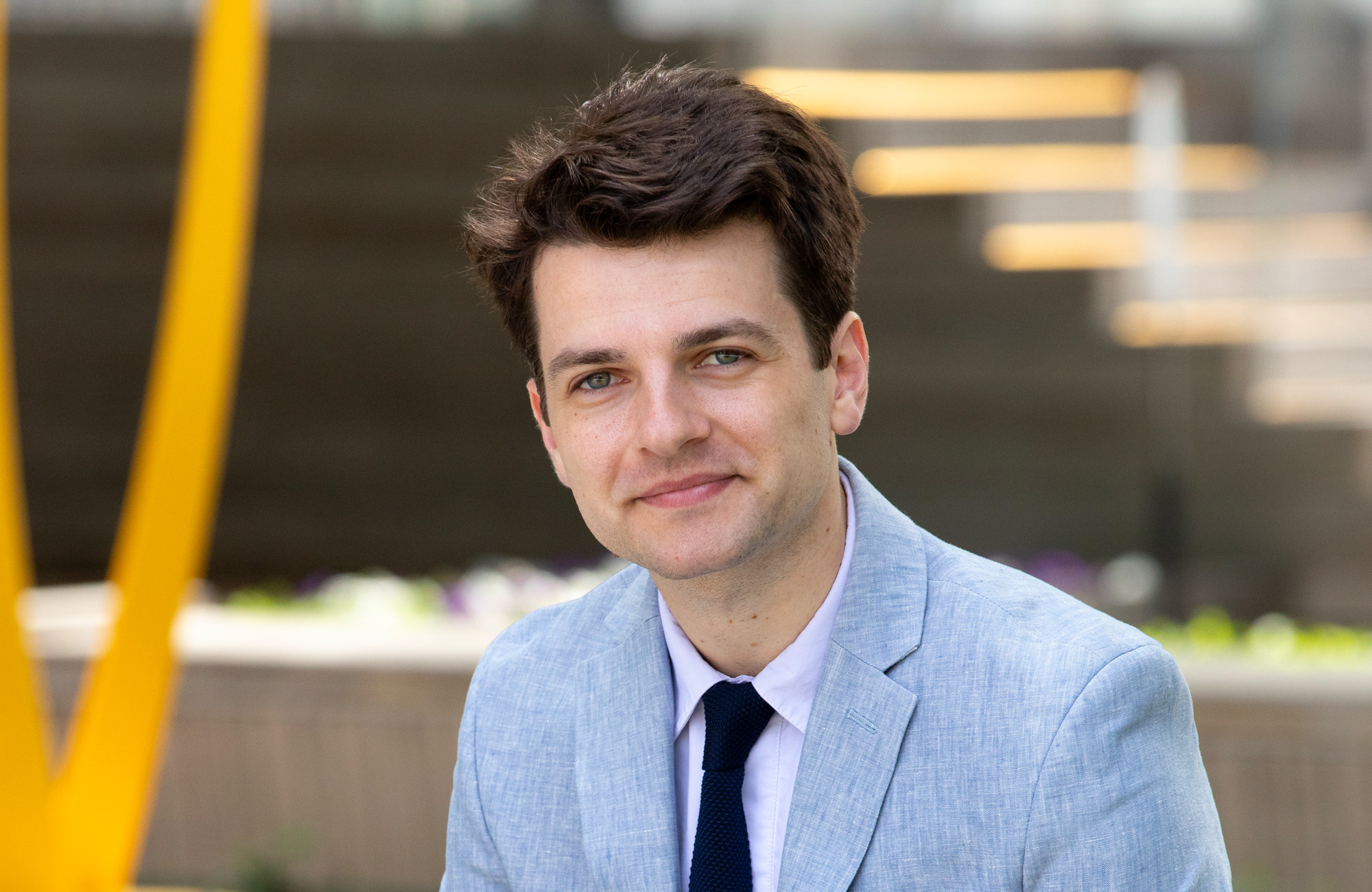
A two-time recipient of the Solti Foundation U.S. Career Assistance Award, Maurice Cohn is currently the 11th Music Director of the West Virginia Symphony Orchestra and serves as Artistic Partner and Conductor of Camerata Notturna. Alongside his work with West Virginia highlights of his 24/25 season include his debuts ...
A two-time recipient of the Solti Foundation U.S. Career Assistance Award, Maurice Cohn is currently the 11th Music Director of the West Virginia Symphony Orchestra and serves as Artistic Partner and Conductor of Camerata Notturna. Alongside his work with West Virginia highlights of his 24/25 season include his debuts with the Filharmonie Bohslava Martinů for Stravinsky’s The Firebird and Tchaikovsky’s Rococo Variations and Omaha Symphony for Kurt Weill’s Symphony No. 2.
Highlights of his 23/24 season included a successful jump-in with the Cincinnati Symphony Orchestra, a return to Aspen Music Festival to conduct the Chamber Symphony in a programme that includes the world premiere of Peng-Peng Gong’s Late Bells for Concertante Piano and Orchestra as well as conducting Mason Bates Philharmonia Fantastique and a concert performance of Terence Blanchard’s Fire Shut Up in My Bones with the Dallas Symphony Orchestra. Recent seasons include debuts with Utah Symphony, Colorado Music Festival, Symphoria New York as well as frequent appearances with the Chicago-Based contemporary ensemble Zafa Collective and the Aspen Contemporary Ensemble. Maurice served as the Assistant Conductor of the Dallas Symphony Orchestra until the end of the 23/24 season, he was also Assistant Conductor of the Aspen Music Festival in 2022 and 2023.
He received the Robert J. Harth Conducting Prize and the Aspen Conducting Prize, and an M.M. in conducting from the Eastman School of Music, where he worked frequently with the Eastman orchestras and OSSIA New Music Ensemble. He holds a B.M. in cello performance from Oberlin Conservatory and a B.A. from Oberlin College, where he studied history and mathematics.
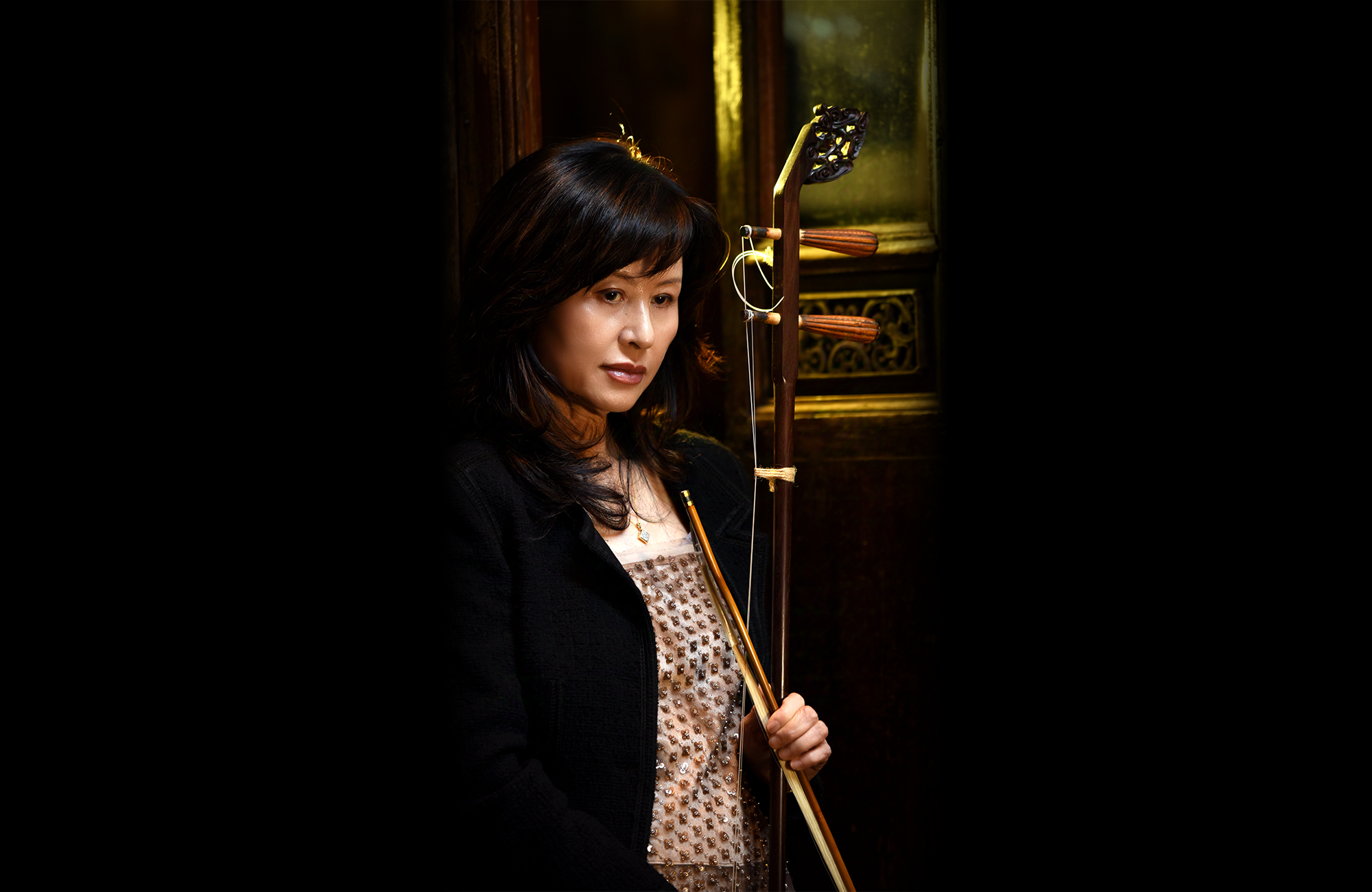
Jiebing Chen has been hailed as one of the foremost erhu virtuosos in the world. Her world-renown is based on her mastery of the classical Chinese repertory for the erhu and for her award-winning contemporary innovations using the two-stringed instrument.
Chen’s incredible musicality and interpretive skills ...
Jiebing Chen has been hailed as one of the foremost erhu virtuosos in the world. Her world-renown is based on her mastery of the classical Chinese repertory for the erhu and for her award-winning contemporary innovations using the two-stringed instrument.
Chen’s incredible musicality and interpretive skills have resulted in overwhelming international acclaim as a solo interpreter of her instrument. Beyond that, with Chinese, American and European orchestras Chen was the first to bring the erhu into the symphonic concert hall, performing as a featured soloist. Her playing brought a new sound and excitement to classical music audiences. Perhaps most compelling are her achievements as a cross-cultural performer. Chen has virtually reinvented the erhu for the 21st century, performing in partnership with some of the most notable jazz and world music artists of our time. Her artistry has made her the most recorded erhu artist in the world with over 20 CD titles available internationally. In addition to her classical repertory Chen’s work received a Grammy-nomination for Best World Music Album for her jazz improvisations with Bela Fleck and Vishwa Bhatt.
Jiebing Chen began performing at age 5 in her native Shanghai. Recognized as a child prodigy, her talent was saved during the Chinese Cultural Revolution when, at age 9, she was taken into the Chinese Navy Orchestra, (one of China’s few musical organizations at the time). As a very young musician she found herself playing martial music along with performing in the orchestra that accompanied Madame Mao’s ‘model operas’. As changes in China took place, Chen studied and graduated with top honors from the Shanghai Conservatory of Music in 1982 after studying under China’s most distinguished musicians. That same year she won first prize in China’s Ministry of Culture sponsored National Competition of Traditional Instruments. Shortly after, she made her first recording on a major label, Jiebing Chen Erhu Recital, the first solo recording of the erhu by industry leader, China Records. Five years later, Chen was the youngest performer to be named “National First Rank Performing Artist”, the highest honor the Chinese Government awards to artists in recognition of their talent and achievements.
As a soloist with the Shanghai Symphony and Chamber Orchestras at the Shanghai Concert Hall, Chen performed for the first time using the erhu as a solo instrument with Western orchestral accompaniment. These broadcasts and others on radio and television in China brought Chen enormous popular acclaim and special recognition as one of the few erhu virtuosos in China. Since 1988, Jiebing has frequently appeared as soloist with the Shanghai Symphony Orchestra, the Shanghai Chamber Orchestra and the Shanghai Opera House. Chen then began to tour Australia, Asia and Europe as a Chinese cultural exchange artist in “Marvelous Strings”.
In 1989 Chen came to the United States to study at the State University of New York in Buffalo, receiving a MA degree in Music Theory. The total freedom Chen felt in the United States deeply affected her exploration of the possibilities for her instrument and the ways in which the erhu could be integrated into the classical and contemporary repertory for orchestra, along with other music styles, including jazz and Indian classical music.
Her appearances as a featured soloist with orchestras include dates with Buffalo Philharmonic, the San Francisco Symphony, the New Moscow Symphony, the Hungarian Symphony, Taipei Municipal Chinese Classical Orchestra, Manitoba Chamber Orchestra, the New Century Chamber Orchestra, the Hollywood Bowl Orchestra, Los Angeles philharmonic, Philadelphia Orchestra and others. Besides performing as a featured soloist in classical concertos, her contemporary work as a soloist include “Double Concerto for Violin and Erhu”, “Concerto for the Erhu and Hammer Dulcimer”, “String Calligraphy”, “Awakening for Erhu and Orchestra” and “Fiddle Suite for Erhu and String Quartet”.
Stepping out in a new direction, Chen began performing a series of concerts with the Jon Jang Sextet and The Billy Taylor Trio in New York City. These successful events led to even more innovation. In Beijing in 1998, Chen performed on her erhu at the International Jazz Festival with James Newton, Jon Jang, Santi Debriano, Billy Hart and David Murray to great audience acclaim. With fast-rising recognition and success in jazz and world music, Chen recorded with the well-known American banjo player Bela Fleck, flutist James Newton and Indian violinist L. Subramanian. Her CD, Tabla Rasa, in collaboration with Bela Fleck and Vishwa Bhatt, was nominated for a 1996 Grammy Award for Best World Music album. A new and acclaimed partnership was formed in 1999 when The Beijing Trio came into being. In that year, Chen began a stellar collaboration with pianist and composer Jon Jang and legendary jazz percussionist Max Roach. Recently, Chen started a new collaboration with a Blue Grass Band Brothers Comatose and incorporated the erhu in with the American country music.
Most recently, she played at the Philadelphia Orchestra Opening Night Gala at Verizon Hall Kimmel Center in Philadelphia. In addition, some other notable performances included the Kennedy Center in DC, at the Lincoln Center as the featured soloist in the Great Wall Capriccio and the Butterfly Lovers with the Austin Symphony Orchestra in Texas. In June 2025 Jiebing’s featured erhu improvision in a short firm “Tao” won the “Best Health Film” in the World Film Festival in Cannes. And, also in 2025, Jiebing’s collaboration in “Voyager” won the title “Best of Pangea” in the InterContinental Music Award.
Chen’s accomplishments have led to three documentary television programs produced by China’s CCTV4 International Station: “Chinese World”, “Speak To The World” and “Chinese Story” to recognize her contribution to the music world.