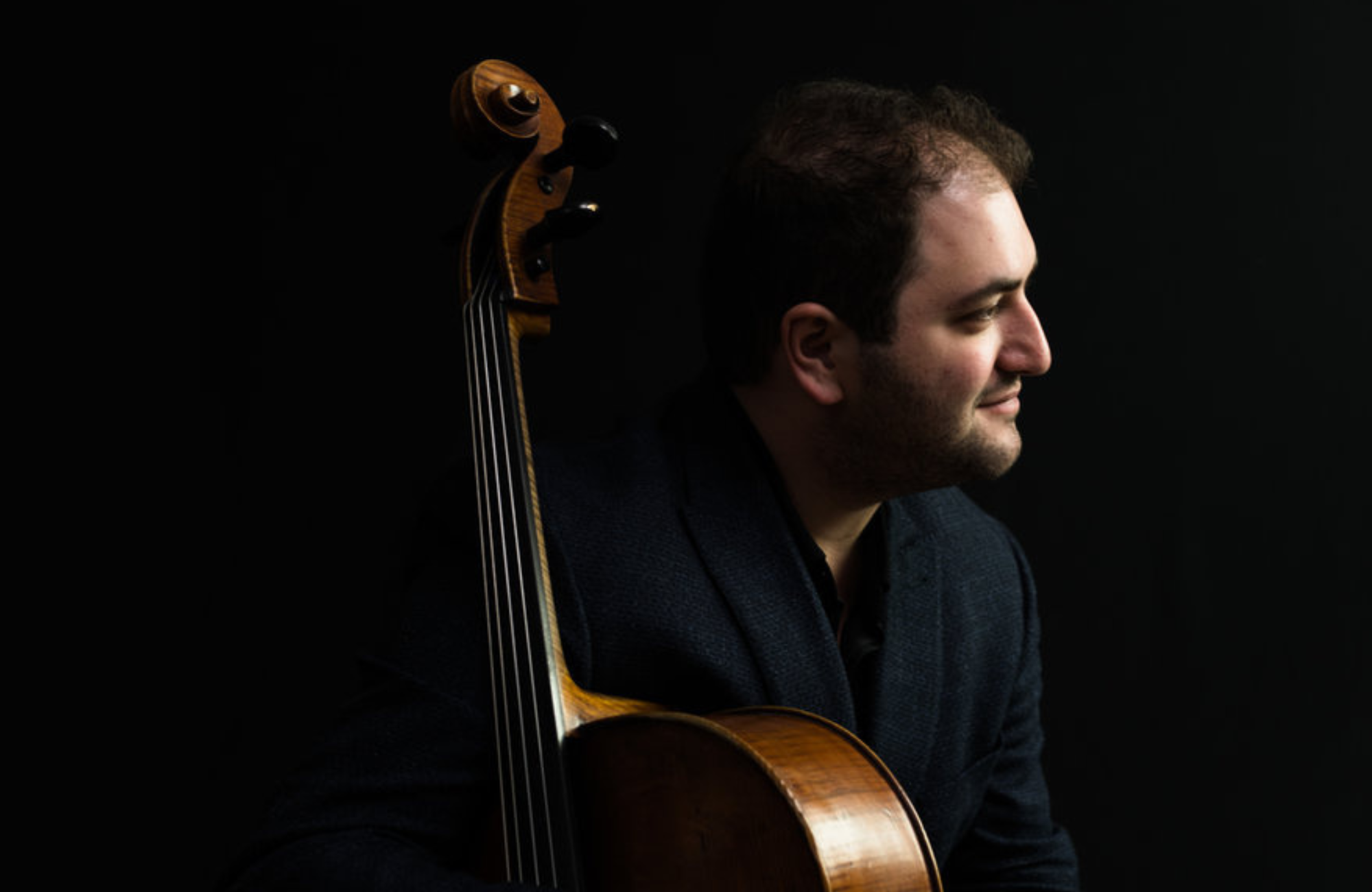

We begin with Shostakovich’s Symphony No. 1, celebrating the 100th anniversary of its premiere. In the second half, William Grant Still’s Serenade reflects American folk music. Then, listen for elements of jazz, blues, and ragtime as pianist Terrence Wilson performs Gershwin’s Piano Concerto in F Major.
PROGRAM
SHOSTAKOVICH: Symphony No. 1 in F minor, Opus 10
STILL: Serenade
GERSHWIN: Concerto in F major for Piano and Orchestra
Thank you to our generous sponsors!
Thank you to our Series Sponsors!
Masterworks Series Sponsor:

Exclusive Auto Sponsor:

Masterworks Series Media Sponsor:

Thank you to our concert sponsors!
Peter & Nancy Rabinowitz
PROGRAM NOTES
The Symphony No. 1 in F Minor, op. 10 by Dmitri Shostakovich (1906–1975) was first performed in Leningrad almost exactly a century ago, on May 12, 1926, just a few months after the Concerto for Piano and Orchestra in F by George Gershwin (1898–1937) was introduced in Carnegie Hall. Both premieres were breakthrough events for their creators—their first wide exposure as symphonic composers. The two had a lot more in common as well: Both were superb pianists who, early on, made money playing commercial music (Shostakovich knocking out accompaniments to silent movies, ...
The Symphony No. 1 in F Minor, op. 10 by Dmitri Shostakovich (1906–1975) was first performed in Leningrad almost exactly a century ago, on May 12, 1926, just a few months after the Concerto for Piano and Orchestra in F by George Gershwin (1898–1937) was introduced in Carnegie Hall. Both premieres were breakthrough events for their creators—their first wide exposure as symphonic composers. The two had a lot more in common as well: Both were superb pianists who, early on, made money playing commercial music (Shostakovich knocking out accompaniments to silent movies, Gershwin hawking songs on Tin Pan Alley); both were active in writing music for films (Shostakovich scored more than 30); both were just a decade away from writing the operas (Porgy and Bess, Lady Macbeth of Mtsensk) that are arguably the greatest twentieth-century operas of their respective countries.
The 19-year-old Shostakovich was barely known at the time the First was premiered—but he made no attempt to cajole his audience, beginning the symphony with rare audacity. A brief announcement by a solo trumpet, elbowed aside by a bassoon solo; subsequent bursts from the solo clarinet, horn, trumpet (again), and flute, all buffered by brief orchestral interventions that start and stop: This mosaic of musical shards, lasting a minute and a half, is far from a traditional symphonic introduction. And while the music eventually coalesces into the arrival of a more recognizable first theme (introduced by the clarinet) and a conventionally contrasting second (an off-kilter waltz introduced by a gorgeous theme on the flute), its nods to classical sonata form don’t quite counterbalance its tendency to knock you off balance with its fits and starts.
The Scherzo is similar in spirit. In fact, at one point, Shostakovich considered the first two movements as a “symphony-grotesque.” For tonight’s conductor Austin Chanu, “the color and the orchestration of the piece really pop out: This may be the first Concerto for Orchestra.” To my ears, it’s also a circus for orchestra, as the first-desk players vie for attention with acrobatic feats. Perfectly appropriate: as Austin reminds us, you can sense Shostakovich’s background as a movie-theater pianist. “You hear a lot of vaudeville and Charlie-Chaplinesque musical material in there.” It’s not always easy to follow, but as Austin says, “It’s okay to feel like you’re getting lost at times, because that’s a bit of the point. There’s just so much going on—it’s almost like cartoon music.”
This lack of classical balance applies not only on the micro-level but on the macro-level as well—for midway through the symphony, when we get to the Largo, the tone changes radically into something that Austin sees as operatic. “It’s almost like two different pieces, shifting to Wagner, Tchaikovsky, and Mahler influences. In the third movement, you hear so many allusions to Tristan und Isolde—say, in the opening oboe and cello solos, in the chromaticism and the shape of the line.” As for the finale: it’s a disorienting mixture of these two different pieces, intertwining the madcap spirit of the first two movements with the intense romanticism of the third. The work ends forcefully with a culmination drenched in defiant optimism.
At the time Gershwin’s concerto was first performed, the composer—in contrast to Shostakovich—was already well known. But he was known for his songs (most of which originated in Broadway shows), not as a composer of “serious” music. Yes, he had composed Rhapsody in Blue as part of an “experimental” evening put together by Paul Whiteman; but for all the attraction of its individual sections, the Rhapsody lacks formal integrity. Even Leonard Bernstein, who loved the piece (and performed it often), felt that it was not an “organic work,” but rather a collection of “beautiful tunes,” great moments that can be rearranged (or even cut out) without destroying the effect. Gershwin’s melodic gift (on a level, as Bernstein said, with Schubert’s and Tchaikovsky’s), coupled with his rhythmic genius, is enough to carry the music without either Beethoven’s formal ingenuity or Bach’s counterpoint.
The Concerto was substantially different. He was still using jazz idioms; but here, as Austin says, he was aiming for a tighter structure. He had certainly never written anything this extended or this beholden to classical procedures. Nor did he have much experience in orchestration. As is usually the case on Broadway, Gershwin had farmed out the task of orchestrating his shows, and the orchestration of Rhapsody in Blue (originally for piano with a small jazz-band ensemble) was the work of Ferde Grofé.
Yet the resulting work, both sonically and formally, is a masterpiece. As tonight’s soloist, Terrence Wilson, puts it, “The second movement—which is lyrical, very beautiful—has some of the best orchestration from Gershwin, or anybody else, for that matter.” And the music’s wide expressive range—including what Terrence calls the contrast between “the tender, lyrical, moments of grand romantic gesture” and “the more punchy, urban, Art Deco elements of the piece”—is held together with remarkable formal acumen.
The Concerto is in the traditional three movements—fast, slow, fast—with the first inspired by the Charleston, the second (more melodic in spirit) by the blues, and the finale, in the composer’s words, “an orgy of rhythms,” all linked by a number of thematic and rhythmic connections. (Most obvious, perhaps, is the way the attention-grabbing timpani gesture that opens the piece returns at the end). Walter Damrosch, who was responsible for commissioning the work and who conducted the premiere, said he’d been motivated by a desire to “wean” Gershwin “from Broadway,” which he felt was constraining his talents. Fortunately, he didn’t quite succeed—otherwise, such works as Oh, Kay, Strike Up the Band, and Of Thee I Sing would never have been written. At the same time, we’re fortunate that he did encourage Gershwin’s concert scores, or we’d be without An American in Paris and Porgy and Bess.
In between these two pieces, we have the 1957 Serenade by William Grant Still (1895–1978), who was known, for decades, as the “Dean of African American Composers.” Born in a small town in Mississippi, and raised in Little Rock, he was a wide-ranging musician who’s impossible to categorize. In his early years, like Shostakovich and Gershwin, he earned a living as a performer—as well as by serving as an arranger for pop, jazz, and blues artists (including Paul Whiteman, W.C. Handy, and Sophie Tucker), and by working as a radio conductor. Even after his career as a classical composer blossomed under the mentorship of such very different teachers as the conservative Howard Hanson and the avant-gardist Edgard Varèse, he continued to work in more popular areas such as music for film and television.
He broke social boundaries as well. He was the first African American to conduct a major American symphony orchestra, the first to have an opera staged by a major opera company, and more. Yet despite his numerous triumphs in Jim Crow America, despite his numerous awards, his life and career suffered under the restrictions imposed by racism. Thus, the 1939 World’s Fair selected his “Rising Tide” as a theme song to be performed (continuously) at the “Democracity” (City of Tomorrow) exhibit. But according to his granddaughter, he couldn’t attend the Fair to hear his own music without police protection, unless he went on “Negro Day.” And even though his reputation is anchored in a vast classical output (which includes five symphonies, several operas, and a great deal of chamber and vocal music), his reputation, like that of many pioneering Black composers, has never matched the quality of his music.
Some of that is, fortunately, changing now—and Austin has been involved in this re-emergence of his music. “During my time at The Philadelphia Orchestra,” he says, “I co-led a project with our principal librarian, Nicole Jordan. We got a grant from the Pew Center for Arts and Heritage to help rebuild and restore a few of Still’s larger works. But during my time in the archives, I got to look at all of his sketches, and I found this short piece called Serenade, which was written a little bit later in his life.” Like Still’s work more generally, it’s fundamentally melodic in spirit. “What I love about Still’s writing,” says Austin, “is that as a composer he always said that melody is king. Everything else falls into place when you write melody.” Although the Serenade is a simple ABA piece, it reflects a number of different perspectives. You can hear its connection to a variety of American vernacular idioms (“Still was being influenced by his time with W.C. Handy, blues, Black spiritual, American folk music…”); but in the B section, “you also hear all of these more dissonant harmonies from his studies with Edgard Varèse in the 1920s.”
On tonight’s concert, the Still Serenade serves as a cushion between the two larger and more sensational pieces that surround it—and as a transition from the chatter of intermission as we move back to the concert. But it serves another function as well, reminding us that Gershwin was inspired by what Still and other Black composers were doing in the 1920s. One story Austin tells can serve for many: “Gershwin would go to clubs in Harlem and be influenced by jazz. But as a Broadway writer himself, he also used to go to a lot of Broadway shows. And one of the shows he attended was Shuffle Along”—often considered the first Black Broadway musical. “Still was the orchestrator for that show, and he also played oboe in the pit. He would improvise and riff. He started doing one of these little riffs every single night”—and that motif served as the original catalyst for “I Got Rhythm.” (It also shows up in Still’s First Symphony.)
Catalyst? Influence? Source? Any discussion of Gershwin in the context of his Black contemporaries raises the vexed question of cultural appropriation. Did Gershwin engage in the theft of Black music? The debates about cultural appropriation have been ongoing, and there are no easy, universal answers, especially when you think broadly about Gershwin, about Copland’s use of Mexican tunes in El Salón México, about Shostakovich’s use of Jewish traditions, about Brahms’s “Hungarian” music incorporating Romani idioms (we’ll be hearing some examples at our next Casual Concert). In any case, while Terrence finds certain Black-influenced music by other White composers “egregious” (Debussy’s “Golliwog’s Cakewalk,” for instance), he doesn’t consider Gershwin guilty of cultural appropriation. “You have to be careful before you accuse an artist of cultural appropriation, because in some cases, depending on the quality of the piece, and the beauty of the piece, it can actually be the most beautiful expression, a tribute of admiration. Gershwin had a genuine infatuation with African American culture and musical idioms. Porgy and Bess, for example: That opera is a beautiful tribute. For me, the point is not the ‘authenticity’; the point is the love note that’s evoked in music.”
Peter J. Rabinowitz
Have any comments or questions? Please write to me at prabinowitz@SyracuseOrchestra.org
FEATURED ARTISTS
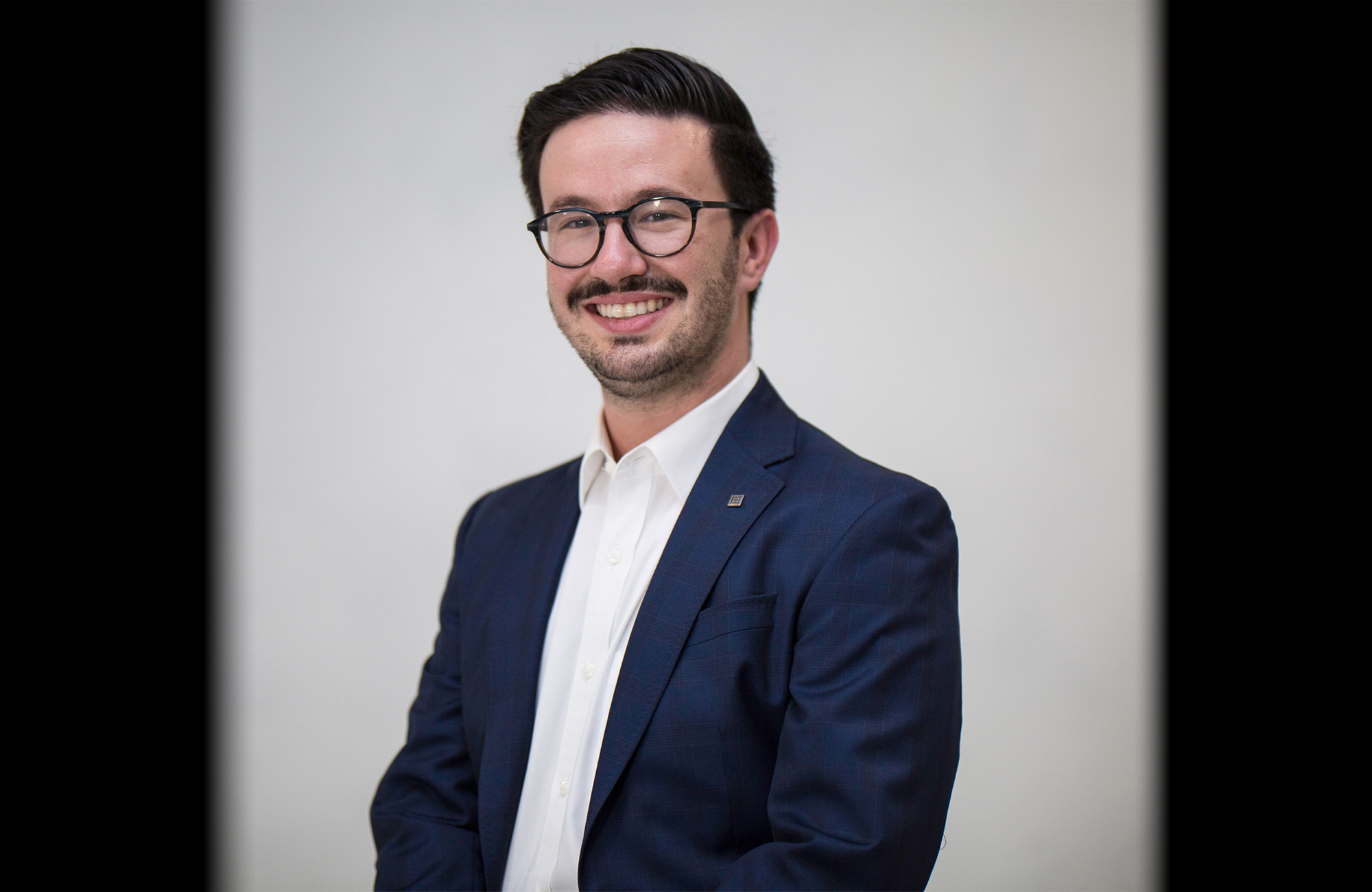
A recipient of the 2024 and 2023 Career Assistance Award from the Solti Foundation U.S., Brazilian-American conductor Austin Chanu just concluded his tenure the Assistant Conductor of The Philadelphia Orchestra, where he assisted Music Director Yannick Nézet-Séguin.
Austin made his subscription debut with The Philadelphia Orchestra ...
A recipient of the 2024 and 2023 Career Assistance Award from the Solti Foundation U.S., Brazilian-American conductor Austin Chanu just concluded his tenure the Assistant Conductor of The Philadelphia Orchestra, where he assisted Music Director Yannick Nézet-Séguin.
Austin made his subscription debut with The Philadelphia Orchestra in April 2023 conducting Igor Stravinsky’s The Rite of Spring. Critics commended his interpretation saying, “the orchestra never sounded better as Chanu led with primal energy and shamanistic insight into the music…the orchestra matched Chanu’s confident leadership in a performance of searing energy and heart-thumping passion” (Broad Street Review).
Austin recently placed 3rd in the Korean National Symphony Orchestra International Conducting Competition where he also was awarded the orchestra prize. He has appeared as a guest conductor with the Filarmonica Banatul Timișoara, Baltimore Symphony Orchestra, St. Louis Symphony Orchestra, Rochester Philharmonic Orchestra, and Omaha Symphony. He has worked with prominent conductors including Esa-Pekka Salonen, Herbert Bloomstedt, Stéphane Denève, and Marin Alsop.
Austin is currently co-leading a project with The Philadelphia Orchestra to restore, rebuild, and elevate the underperformed works of American composer William Grant Still. Austin recently led the world premiere of a newly restored edition of Still’s Wood Notes that he helped create.
Austin has a passion for contemporary music, stemming from his own background as a composer. He served as a teaching artist and conductor for the LA Philharmonic Association’s Associate Composer Program, as well as a Conducting Fellow at the 2022 Cabrillo Festival of Contemporary Music, where he studied with conductor Cristian Măcelaru. He was commissioned by the Eastman School of Music to compose an orchestral work for the school’s centennial celebration and conducted its world premiere in the Fall of 2021.
Previously, Austin was Music Director for the Los Angeles Music and Art School, where he conducted and developed the artistic direction for the youth orchestra, choirs, and jazz band. Austin found it rewarding to draw on his Latino heritage to foster representation for the predominantly Latinx students and families in the program through repertoire selection.
In addition to his orchestral background, Austin has extensive experience in jazz and musical theatre styles. While living in Los Angeles, he was a high-call woodwind performer for musical pit orchestras and jazz ensembles.
Austin received a B.M. in Music Composition from the USC Thornton School of Music in 2015, graduating Magna cum Laude. He graduated from the Eastman School of Music in 2021 with an M.M. in Orchestral Conducting.
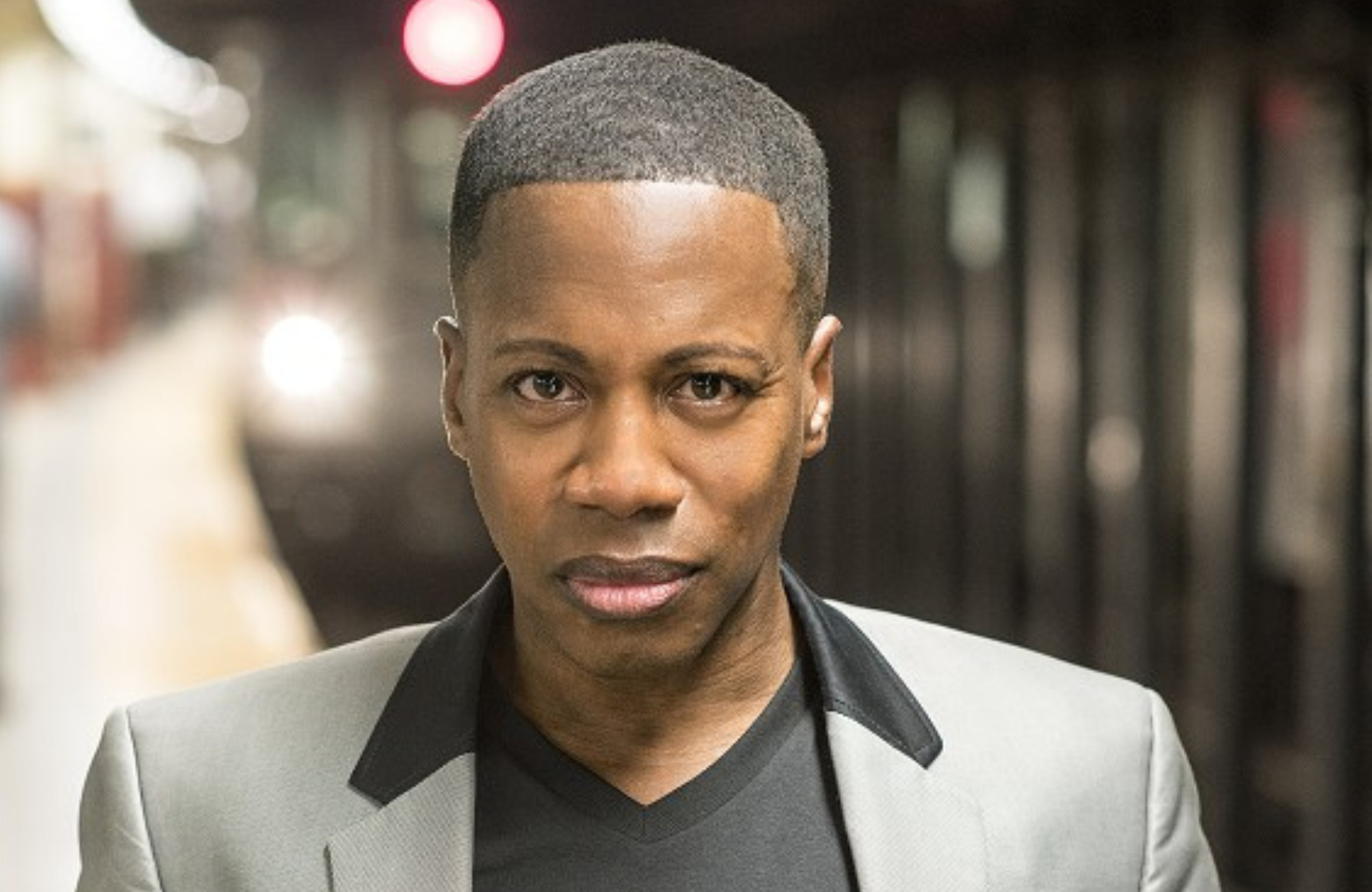
Acclaimed by the Baltimore Sun as “one of the biggest pianistic talents to have emerged in this country in the last 25 years” pianist Terrence Wilson has appeared as soloist with the symphony orchestras of Atlanta, Baltimore, Cincinnati, Dallas, Detroit, Houston, Washington, DC (National Symphony), San Francisco, St. Louis, and ...
Acclaimed by the Baltimore Sun as “one of the biggest pianistic talents to have emerged in this country in the last 25 years” pianist Terrence Wilson has appeared as soloist with the symphony orchestras of Atlanta, Baltimore, Cincinnati, Dallas, Detroit, Houston, Washington, DC (National Symphony), San Francisco, St. Louis, and with the orchestras of Cleveland, Minnesota, and Philadelphia and the Saint Paul Chamber Orchestra. Conductors with whom he has worked include Christoph Eschenbach, Alan Gilbert, Neeme Järvi, Jesús López-Cobos, Lawrence Renes, Robert Spano, Yuri Temirkanov, Stanislaw Skrowaczewski, Gunther Herbig and Michael Morgan.
Abroad, Terrence Wilson has played concerti with such ensembles as the Lausanne Chamber Orchestra in Switzerland, the Malaysian Philharmonic, the Royal Scottish National Orchestra, and the Orquestra Sinfonica do Estado de Minas Gerais in Belo Horizonte, Brazil. He has toured with orchestras in the US and abroad, including a tour of the US with the Sofia Festival Orchestra (Bulgaria) and in Europe with the Baltimore Symphony Orchestra conducted by Yuri Temirkanov.
An active recitalist, Terrence Wilson made his New York City recital debut at the 92nd Street Y, and his Washington, DC recital debut at the Kennedy Center. In Europe he has given recitals at the Verbier Festival in Switzerland, the Lourvre in Paris, and countless other major venues. In the US he has given recitals at Lincoln Center in New York City (both Alice Tully Hall and Avery Fisher Hall), the Ravinia Festival in Chicago, the Caramoor Festival in Katonah, NY, San Francisco’s Herbst Theatre, and for the La Jolla Chamber Music Society. An avid chamber musician, he performs regularly with the Ritz Chamber Players. Festival appearances include Aspen, Blossom, Grant Park, Tanglewood and Wolf Trap.
During the 2023-2024 season, Wilson performed as soloist with the Symphony Orchestras of Anchorage, Brevard (FL), Greensboro, Harrisburg, Memphis, Portland (ME), Raleigh and Wichita to name a few. He also appeared as soloist with the Madison Symphony in their gala season-opening concert in September 2023. Other highlights of the season included a multi-city chamber music tour with Imani Winds with performances at such venues as the Isabella Stuart Gardner Museum in Boston and the 92nd Street Y in New York City, a recital tour culminating with a recital at the prestigious Ravinia Festival, and a return as soloist with the Grant Park Orchestra in Chicago with performances of Beethoven’s “Emperor” Concerto with Music Director Designate, Giancarlo Guerrero.
The 2024-2025 season takes Wilson to perform with Symphony Tacoma as well as the Symphony Orchestras of Roanoke and Toledo among others. The season will also include recital appearances in Brookings, OR and chamber music performances with the Escher Quartet in New Orleans and Montréal.
Committed to education, Wilson serves as a member of the piano faculty at the Brevard Music Center (BMC) Institute and Festival in Brevard, NC for three weeks each summer. In July 2024, he was featured as faculty soloist with the Brevard Chamber Symphony at Whittington-Pfohl Auditorium at BMC. He is also a frequent guest teacher, lecturer and adjudicator in numerous international piano competitions.
Terrence Wilson has received several awards and prizes, including the SONY ES Award for Musical Excellence, an Avery Fisher Career Grant, and the Juilliard Petschek Award. He has also been featured on several radio and television broadcasts, including NPR’s “Performance Today,” WQXR radio in New York, and programs on the BRAVO Network, the Arts & Entertainment Network, public television, and as a guest on late night network television. In 2011, Wilson was nominated for a Grammy in the category of “Best Instrumental Soloist With an Orchestra” for his (world premiere) recording with the Nashville Symphony conducted by Giancarlo Guerrero of Michael Daugherty’s Deus ex Machina for piano and orchestra – written for Wilson in 2007.
Terrence Wilson is a graduate of The Juilliard School, where he studied with Yoheved Kaplinsky. He has also enjoyed the invaluable mentorship of the Romanian pianist and teacher Zitta Zohar. A native of the Bronx, he resides in Montclair, New Jersey. In March 2021, Wilson was appointed to the piano faculty at Bard College Conservatory of Music.